

 When educators are equipped to teach green chemistry, they don’t just change lessons—they shape the next generation of scientists, innovators, and environmental stewards. Through the Green Chemistry Education Awards, Beyond Benign provides funding to faculty and institutions around the world to embed sustainability into chemistry education. These awards help educators redesign labs, reimagine curricula, and create powerful, real-world connections for students. Among the 2023–2024 recipients were several Minority-Serving Institutions (MSIs), whose funded projects are expanding access to green chemistry in diverse learning environments.
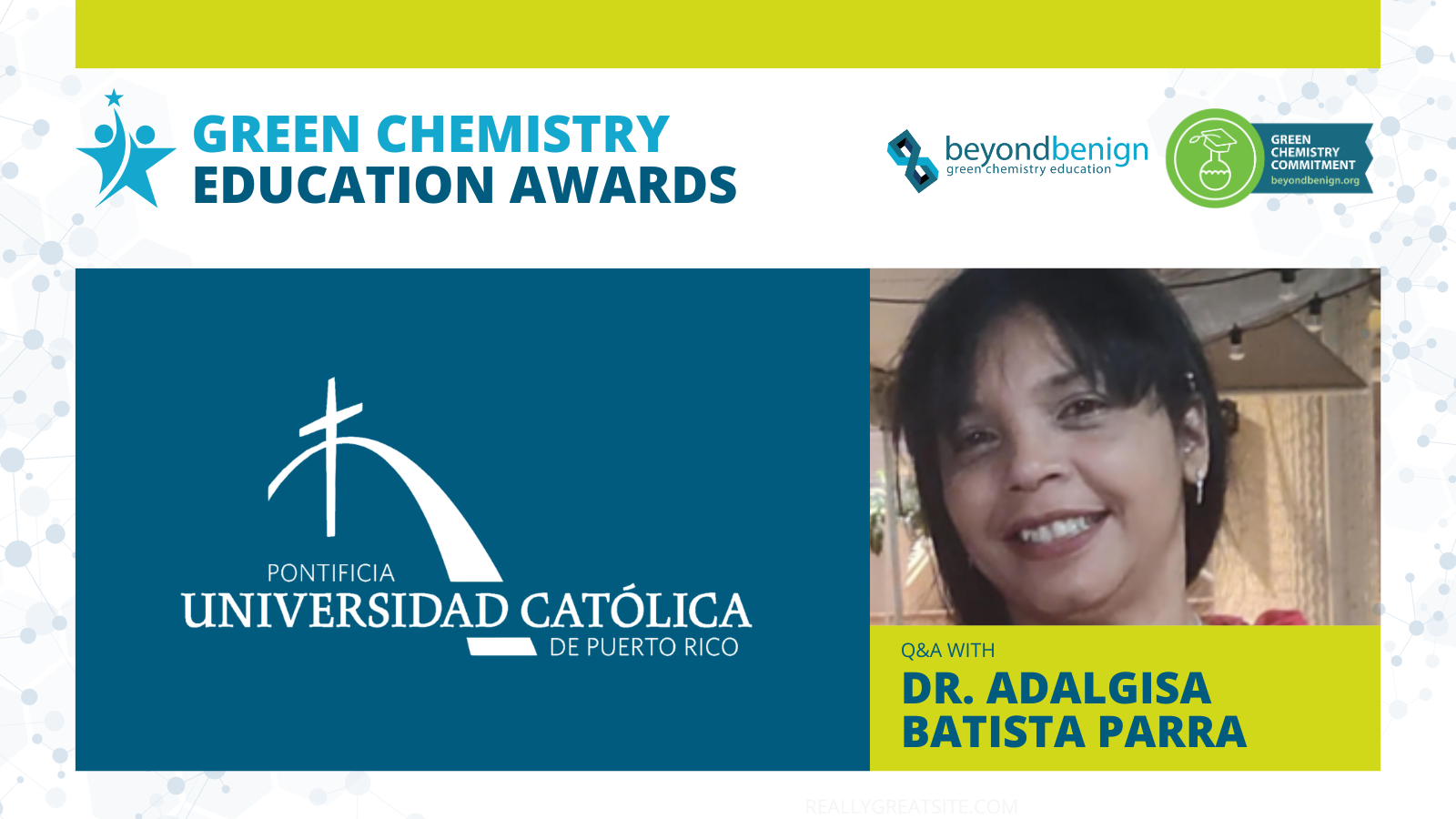
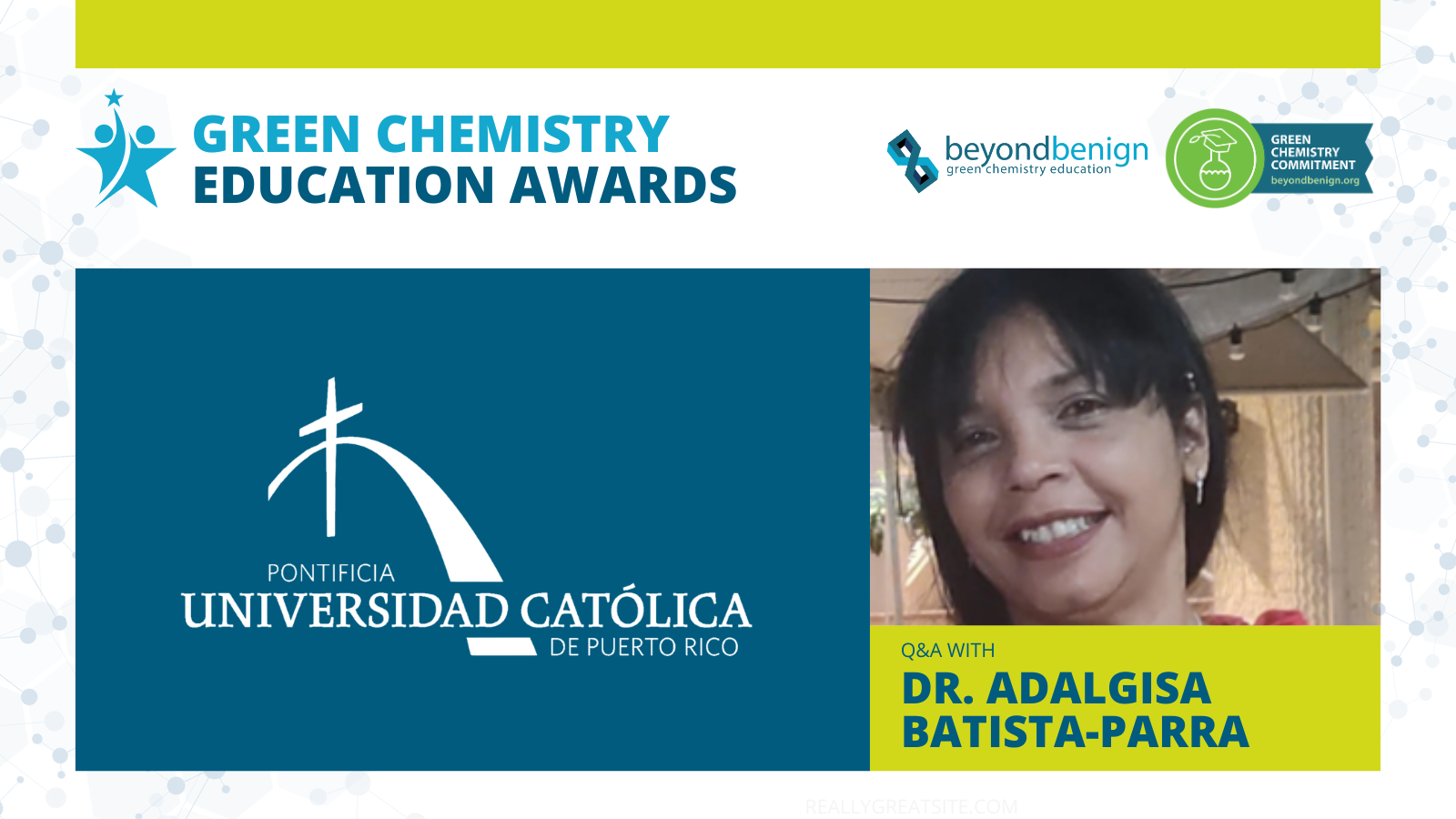
Award recipient Dr. Adalgisa Batista Parra, Professor of Chemistry and Organic Chemistry Researcher at Pontifical Catholic University of Puerto Rico, says green chemistry sparked meaningful discussions among students about their role in shaping a more sustainable future. “What began as a curriculum redesign became an opportunity to reflect on our values, our impact, and the kind of legacy we want to leave for our students,” she says. “This project is about more than just redesigning lab experiments—it’s about planting the seeds of a cultural shift toward sustainability in science education and beyond.”
In the Q&A below, Adalgisa shares more about her green chemistry efforts and how they have influenced her instruction, her students, and her university colleagues.
What began as a curriculum redesign became an opportunity to reflect on our values, our impact, and the kind of legacy we want to leave for our students. This project is about more than just redesigning lab experiments—it’s about planting the seeds of a cultural shift toward sustainability in science education and beyond.
Can you provide a brief overview of your project, including the key objectives you aimed to achieve with the funding and any significant outcomes or milestones you have reached so far?
Our project centers on redesigning the undergraduate organic chemistry laboratory curriculum to incorporate green chemistry principles with the goal of aligning instruction with emerging trends in sustainable chemistry education while actively reducing environmental impact.
With the support of funding, our primary objectives are to:
- implement greener synthesis routes to promote sustainability,
- adopt safer solvents to minimize health and environmental risks, and
- reduce chemical waste through optimized experimental procedures.
These changes were piloted with a select group of students to evaluate effectiveness and feasibility. Currently, the changes are being implemented in the organic chemistry laboratory curriculum.
Significant milestones achieved to date include:
- The completion of a pilot redesign for several laboratory experiments using safer solvents and greener synthetic techniques.
- The collection of baseline data on waste output and solvent usage, which will inform future impact assessments.
- The development of new student learning outcomes emphasizing sustainability, green chemistry practices, and responsible chemical handling.
What motivated the redesign of the organic chemistry laboratory curriculum to incorporate green chemistry principles, and how does it differ from the previous curriculum?
The primary motivation for redesigning the organic chemistry laboratory curriculum was the growing need to align educational practices with the principles of green and sustainable chemistry. Traditional laboratory experiments often rely on hazardous solvents, generate significant chemical waste, and lack emphasis on environmental responsibility. As chemistry evolves to address global environmental challenges, it is essential that our teaching laboratories reflect these priorities and prepare students for a future where sustainability is integral to scientific practice. Additional motivators included:
- Limited student exposure to environmentally responsible techniques and real-world applications of green chemistry.
- A desire to reduce the environmental footprint of the teaching laboratory and model more sustainable behavior within the academic setting.
The redesigned organic chemistry laboratory curriculum differs significantly from the previous version by shifting the focus toward sustainability, safety, and real-world relevance. Whereas the traditional curriculum relied heavily on hazardous solvents and reagents, the updated version introduces greener, safer alternatives that reduce health and environmental risks. The new approach emphasizes sustainability metrics, such as atom economy and waste reduction, alongside reaction success. Students now engage in experiments that are optimized not only for chemical outcomes but also for minimizing waste and maximizing efficiency.
What feedback have you received from students participating in the pilot testing of greener synthetic routes, and how has this influenced the curriculum?
Feedback from students participating in the pilot testing of greener synthetic routes has been overwhelmingly positive and insightful. Many students expressed appreciation for working with safer, less toxic materials, noting that it made the lab environment feel more secure and modern. Several also shared that learning about the environmental impact of chemical processes made the course more meaningful and relevant to current global challenges.
As a result of this feedback, the curriculum will be refined to include more structured opportunities for students to analyze the environmental impact of each experiment. We will also develop supporting materials to better explain green chemistry principles and ensure students can connect theory with practice.
How do you see this project preparing students to be leaders in the sustainable workforce of the future? Have you seen any signs of students beginning to envision their role in sustainability-focused careers?
This project is equipping students with the mindset and skills needed to become leaders in a sustainability-focused workforce. By integrating green chemistry principles into their lab experiences, students are learning to prioritize environmental responsibility alongside scientific rigor. They are not just memorizing reactions—they’re critically evaluating the impact of their work, exploring alternatives, and thinking innovatively about how chemistry can contribute to a more sustainable world.
We’ve already seen encouraging signs that students are beginning to envision themselves in sustainability-driven roles. Some have expressed interest in pursuing careers in environmental science or regulatory policy. Others have mentioned how this experience reshaped their understanding of chemistry’s role in solving real-world problems, inspiring them to look for research or industry opportunities aligned with sustainability.
Overall, the project is doing more than teaching chemistry—it’s helping to shape responsible, forward-thinking scientists who understand that sustainable practices are not just an option, but a necessity for the future of science and society.
Can you share any early data or insights related to waste reduction, solvent use, or other environmental benefits of the greener procedures? How do these results reinforce the value of integrating green chemistry into undergraduate labs?
Preliminary data from the pilot implementation of greener synthetic procedures shows promising environmental benefits. For example, in one redesigned experiment, we replaced toluene with water, a significantly safer solvent. In another case, the total mass of chemical waste generated per student was cut by more than 95% compared to the traditional version of the same experiment. These early results reinforce the value of integrating green chemistry into undergraduate labs by demonstrating that sustainability and scientific integrity can go hand-in-hand. Students still meet learning objectives and achieve strong outcomes, but in a way that aligns with modern environmental standards. Moreover, the measurable reductions in hazardous waste and solvent use highlight how small curricular changes can have a meaningful cumulative impact when scaled across multiple lab sections and semesters.
How do you plan to share the comprehensive report with university stakeholders, and what impact do you hope it will have on broader university practices?
We plan to share the comprehensive report through a combination of formal and informal channels. This includes presenting key findings at departmental meetings, curriculum committee sessions, and university-wide faculty development workshops. A digital version of the report will be made available through the university’s internal repository and shared directly with administrators and faculty. A snapshot of this work will be presented during the in-person 2025 Green Chemistry Commitment Summit on June 22nd in Pittsburgh, Pennsylvania.
The goal is not only to showcase the pilot’s success but also to initiate broader conversations about integrating sustainability across science education. We hope the report will inspire other departments to adopt similar practices, encourage investment in sustainable lab infrastructure, and strengthen the university’s overall commitment to environmental responsibility. Ultimately, we envision this project serving as a model for curriculum innovation, reinforcing the university’s leadership in both academic excellence and sustainable practices.
By integrating green chemistry into our program’s curriculum, we aim to model how environmental responsibility can be embedded into academic practices without compromising educational quality.
How do you hope this project shifts the culture around sustainability—not just in your department, but across the university? Have you seen early signs of that shift already?
By integrating green chemistry into our program’s curriculum, we aim to model how environmental responsibility can be embedded into academic practices without compromising educational quality.
We hope this initiative encourages other programs to evaluate their own practices through a sustainability lens—whether in teaching, research, procurement, or waste management. Our vision is to help foster a university-wide mindset where sustainability is not seen as an add-on, but as a core value guiding decisions and innovation across disciplines.
We’ve already seen early signs of this shift. Faculty from other science programs have expressed interest in our green chemistry strategies. Additionally, students are exploring how to apply green principles in other academic settings and how they can apply green principles in other courses and research projects, showing that the impact is already expanding beyond the lab.
In the long term, we hope this project contributes to a broader institutional culture that prioritizes environmental stewardship, interdisciplinary collaboration, and the preparation of students to be leaders in a sustainable future.
Why was this funding critical to the success of your project? Were there barriers you were facing that this support helped you overcome—either for you, your students, or your institution?
This funding was essential to the success of our project, enabling us to overcome key barriers that had previously limited our ability to modernize the organic chemistry lab curriculum. Prior to this support, we faced significant resource constraints—from the cost of safer, greener reagents and solvents, to the need for updated lab equipment and training materials.
The grant allowed us to pilot greener experiments without compromising instructional quality, and to collect baseline data on environmental impact—something we hadn’t had the capacity to do before. It also supported faculty development, helping instructors gain the knowledge and confidence needed to implement and teach green chemistry principles effectively.
For our students, the funding made it possible to gain hands-on experience with modern, sustainable lab techniques—an opportunity they wouldn’t have had under the traditional curriculum. More broadly, it gave our institution a model for what a sustainable lab redesign can look like, helping us take the first step toward long-term, campus-wide transformation.
Is there anything else you’d like to share about your experience with this grant—something unexpected, personally meaningful, or something you learned along the way?
It was incredibly rewarding to see students not only adapt to the new experiments but also ask more thoughtful questions, show greater environmental awareness, and express genuine excitement about being part of a positive change. It reminded us that when given the tools and the context, students rise to the occasion—they want to do work that matters.
Along the way, we also learned that change is possible, even in well-established systems, when you have the right support, clear goals, and a shared sense of purpose. This grant didn’t just fund a project—it empowered a shift in mindset that we hope will continue to grow across our department and beyond.
How to get involved:
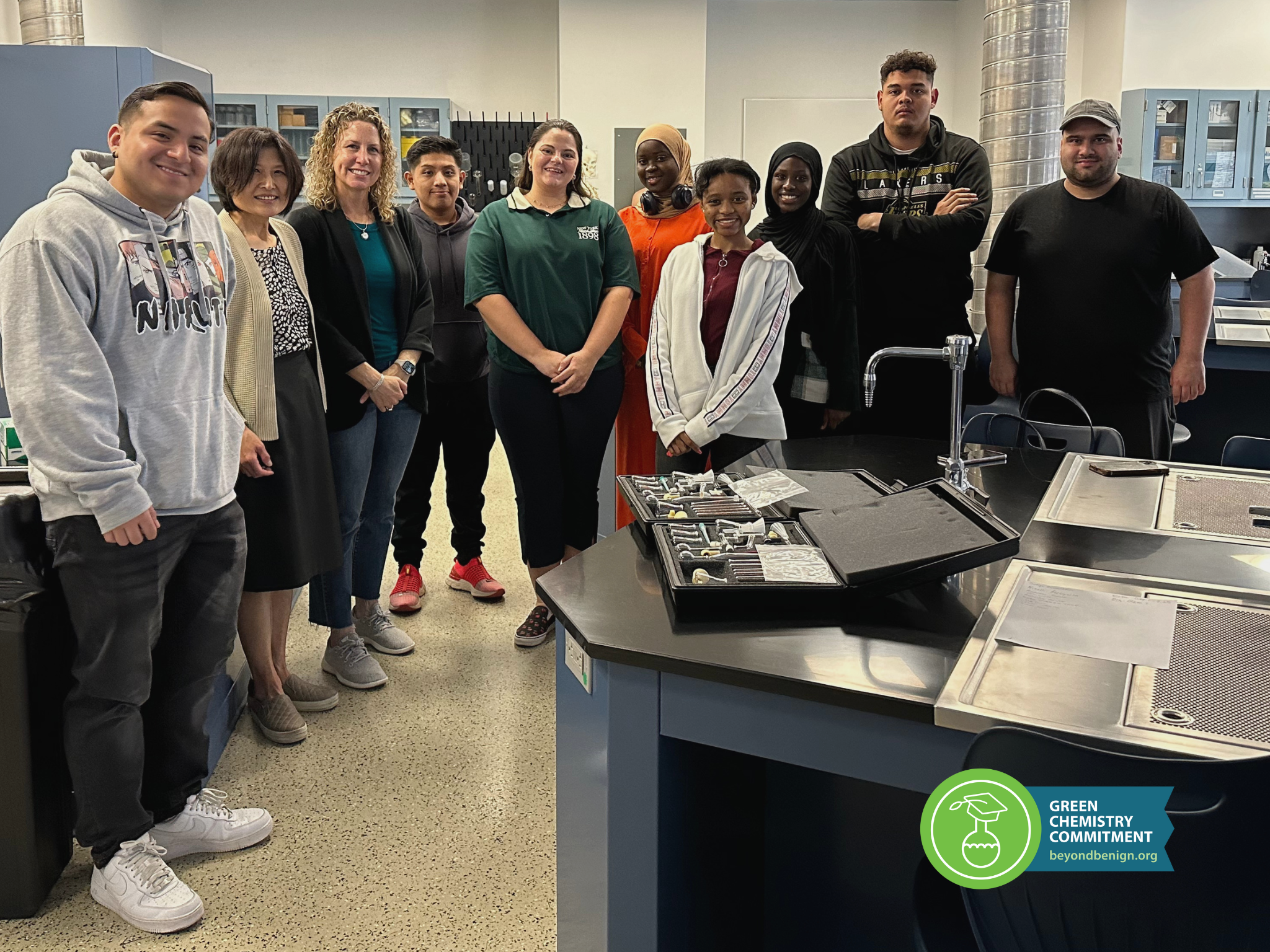
- Explore how award recipients are bringing green chemistry to life at Stella and Charles Guttman Community College and California State University, San Marcos.
- Subscribe to Beyond Benign’s newsletter for the latest updates from the green chemistry community and to be the first to know when Green Chemistry Education Awards are open.
- Not yet part of the Green Chemistry Commitment (GCC)? Learn how your institution can become a signer and provide students with essential skills and training for today’s workforce.



 Depaul University



 Giovanni Brito



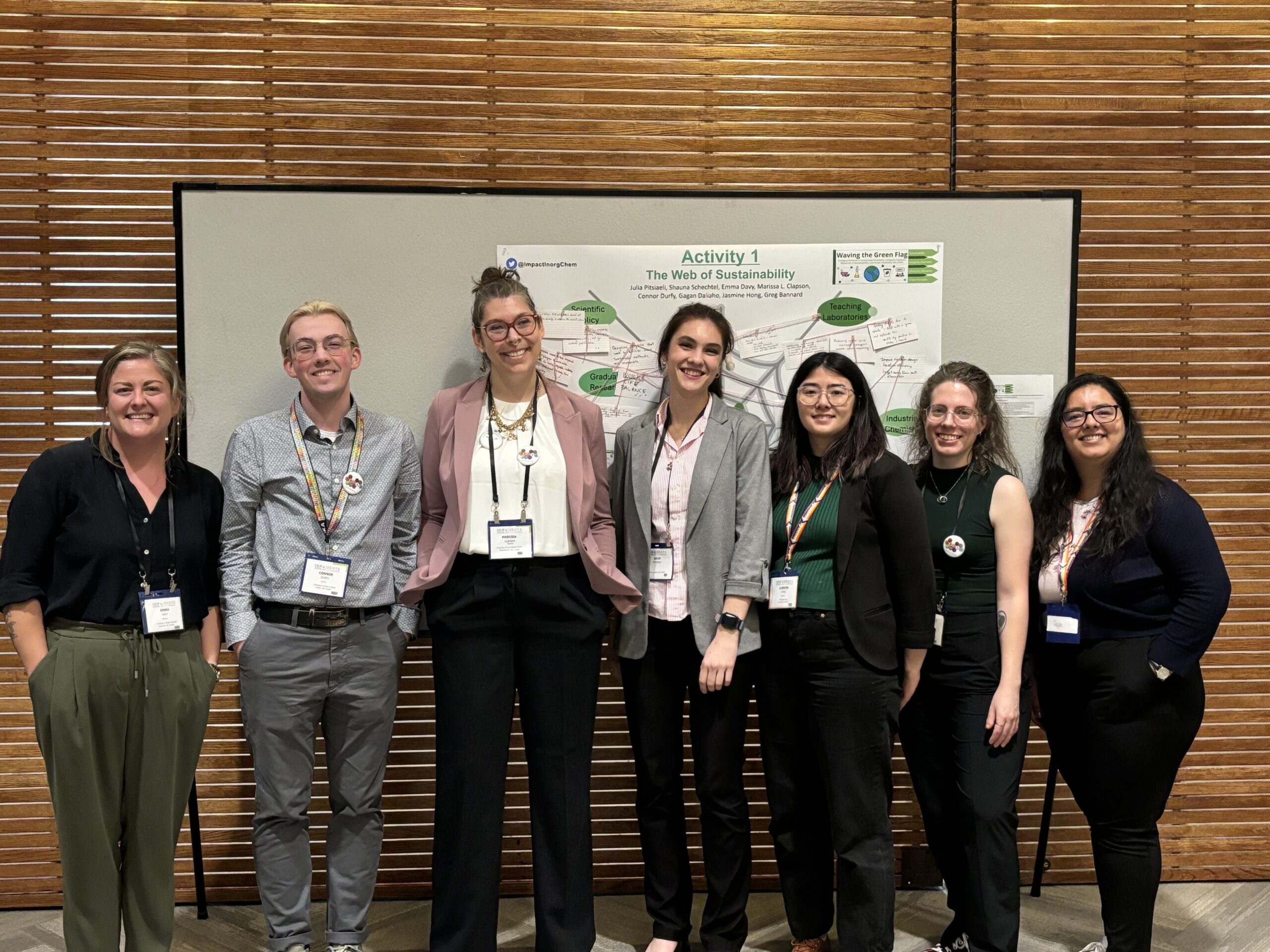
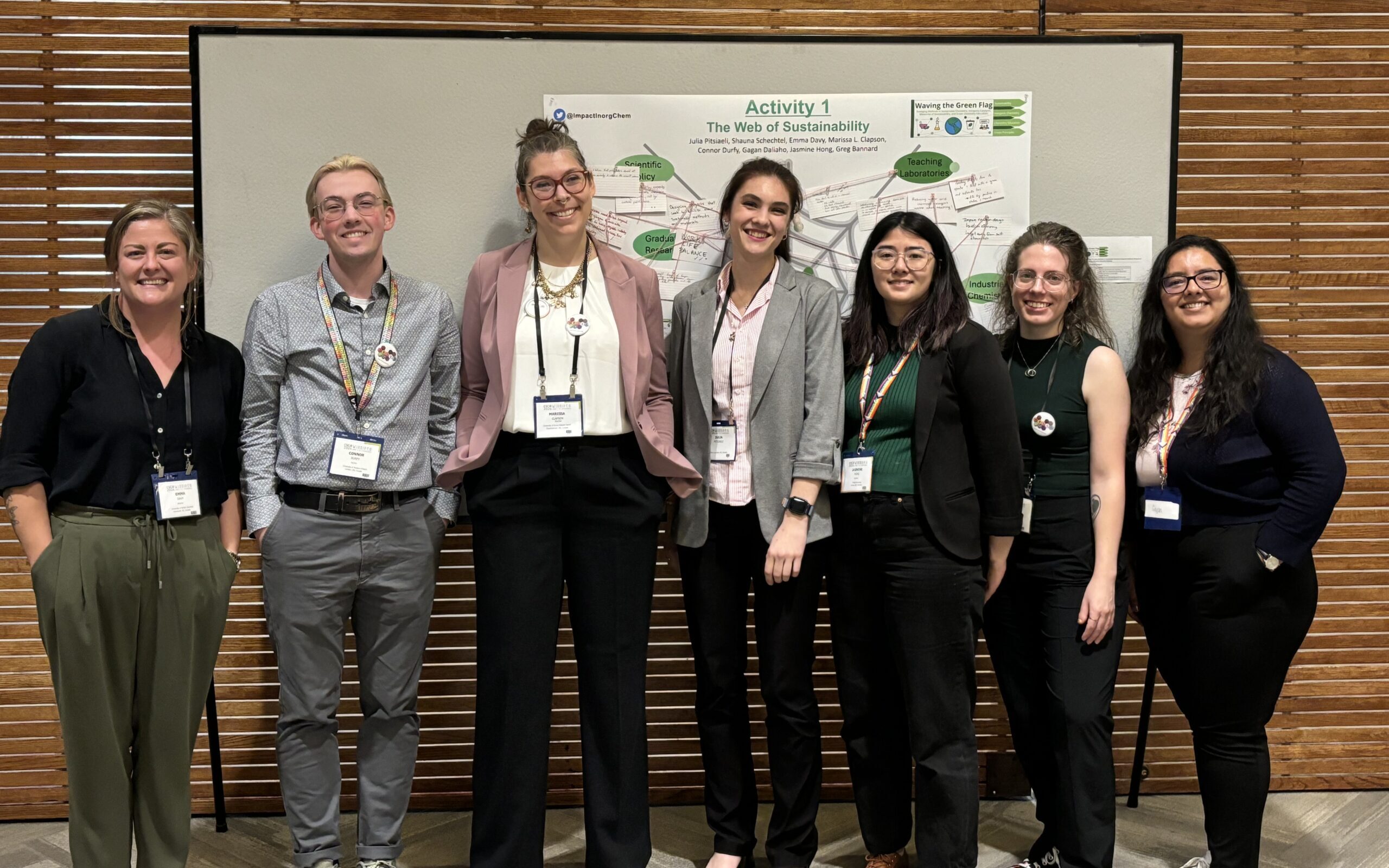
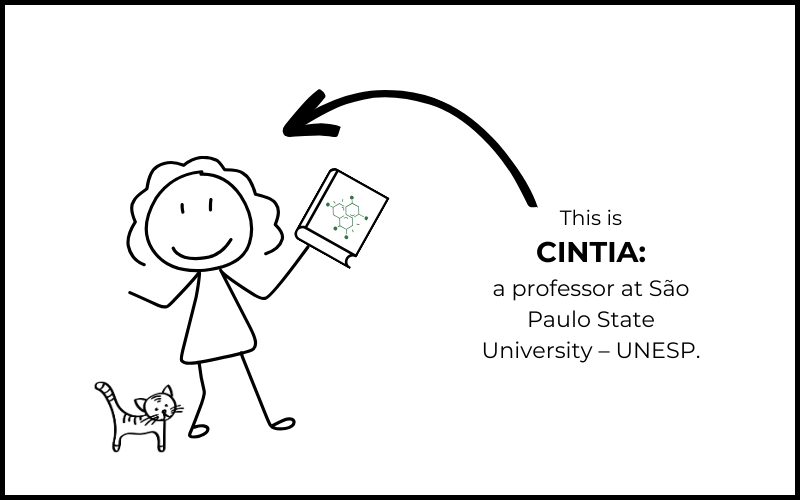
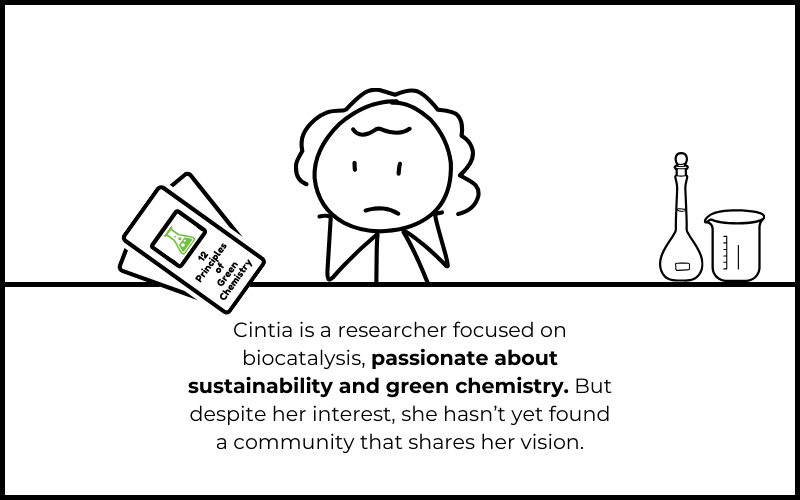
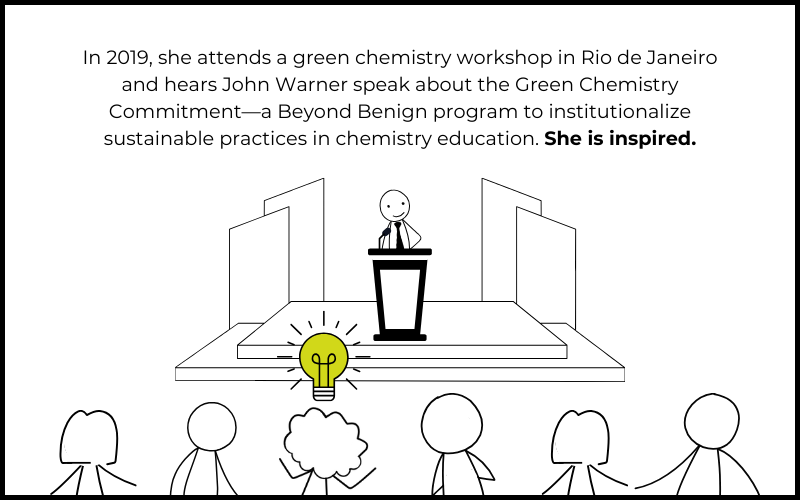
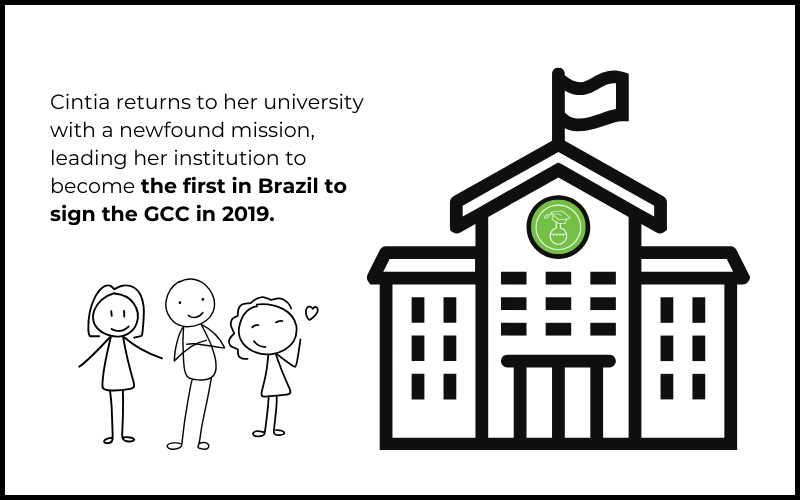
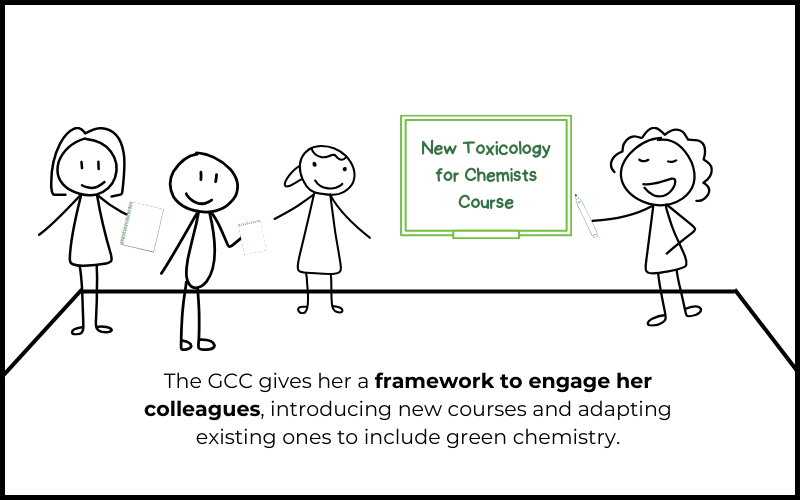
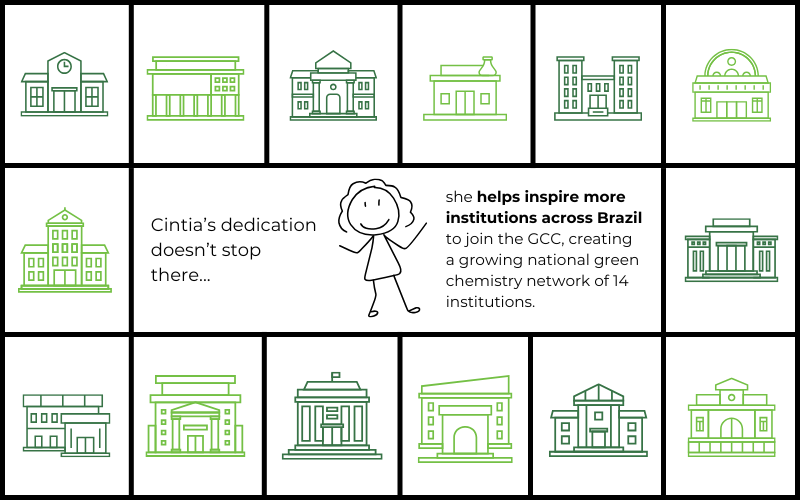
 Green chemistry and disability advocacy share a common goal: improving well-being by creating inclusive, sustainable solutions that benefit everyone. Ensuring that students with disabilities are able to learn and thrive in accessible learning environments is crucial to creating an inclusive and sustainable future.
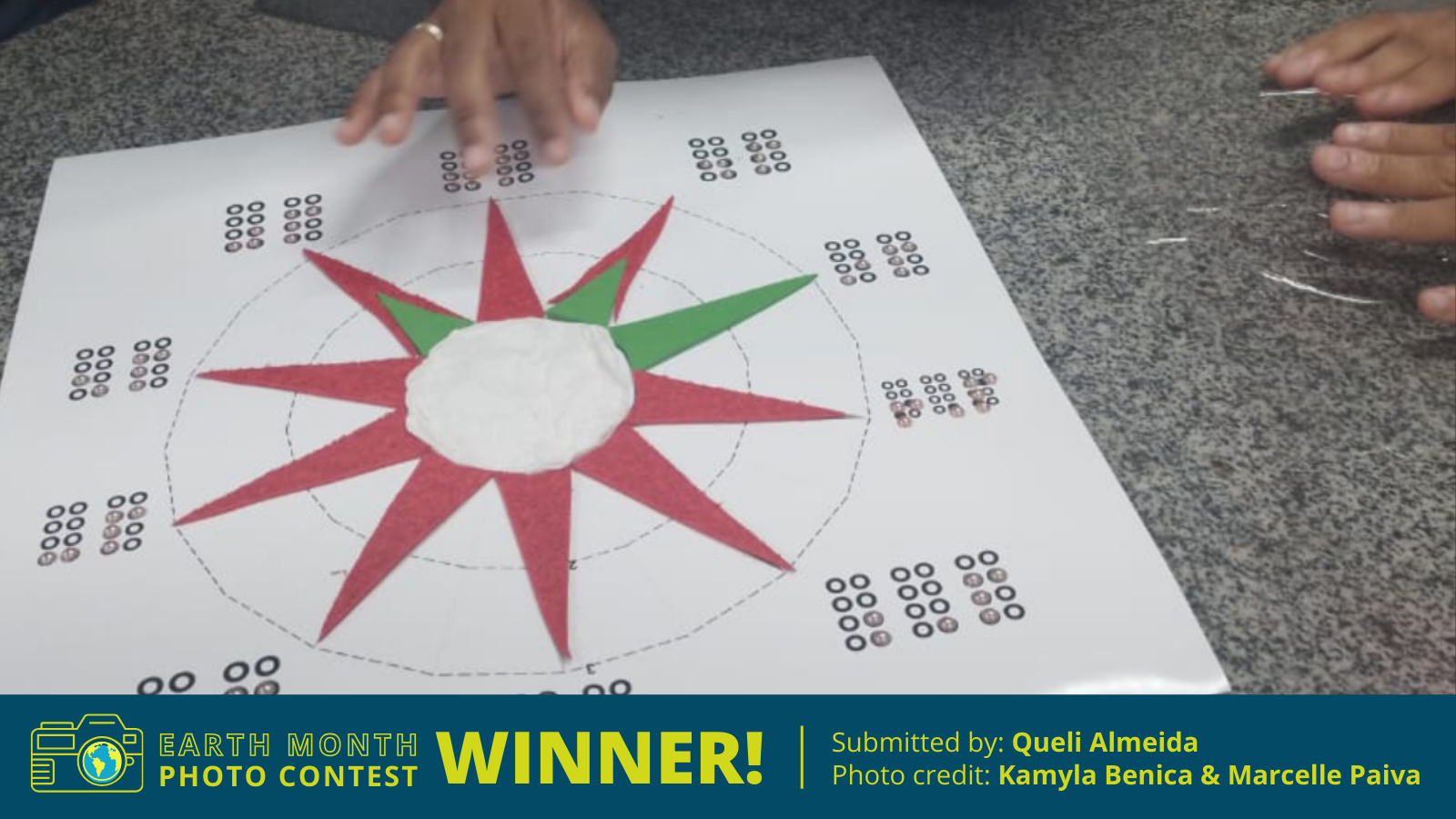 Professor Queli Almeida, a member of the Beyond Benign community, is doing incredible work in Rio de Janeiro, Brazil, by advancing green chemistry education and increasing access to green and sustainable labs for students who are visually impaired. Almeida won Beyond Benign’s 2024