

In 2022, more than 400 million people worldwide present disabling hearing loss, and it is estimated that by 2050 over 900 million people will have deafness [1]. Thousands of these citizens are students who are enrolled in high school and higher education programs in Brazil. Unfortunately, traditional Chemistry is not particularly inclusive and sustainable. In the context of the teaching Chemistry and Environmental Education, Green Chemistry must be worked on in an integrated, continuous, and permanent manner.
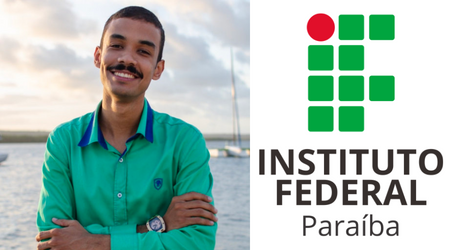
Carlos Alberto da Silva Júnior is an Assistant Professor at the Federal Institute of Paraíba, who believes that supporting Inclusive Green Chemistry should be a commitment we all make to society. In 2017, Carlos Alberto started his research in teaching Green Chemistry to deaf students.
In 2020, the project “Teaching Green Chemistry to Deaf Students: A Brazilian Case Study” was presented by Carlos Alberto in the Postgraduate Summer School on Green Chemistry (Venice, Italy), and received a Best Poster award. This pioneer inclusive method was developed and applied to facilitate the teaching and learning process of deaf students. The project was divided into four stages: (i) survey questions, (ii) case study, (iii) visual-educational activity, and (iv) experiments. Didactic resources were adapted to facilitate the access of hearing and deaf students in this important theme.
Anastas and others propose that a systems thinking approach is also required for a sustainable future [2]. Results showed that the strategy used by Carlos Alberto resulted in a positive impact on the learning of students and a greater interest in the subjects of Green Chemistry. This case study is a good example to introduce all (hearing and deaf) students to the 12 Principles of Green Chemistry as well as important general chemistry concepts with a stimulating educational environment [3].
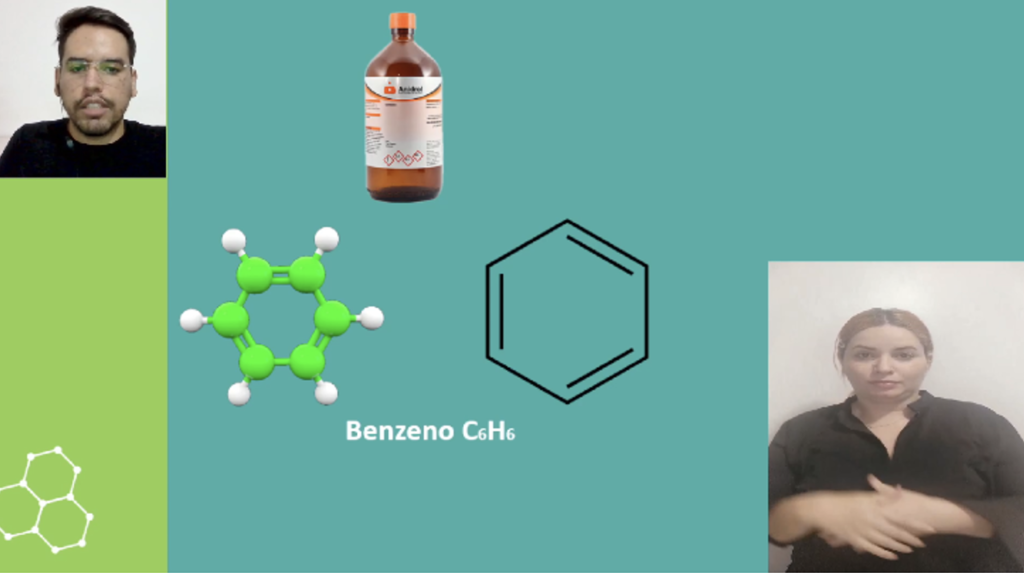
Online class to deaf students during the pandemic in 2021. Brazilian Sign Language is part of this inclusive approach.
Currently, Carlos Alberto and his research group are developing virtual resources to help deaf students learning Green Chemistry (Figure 2). “Being an inclusive teacher during the pandemic was a great challenge because students haven’t had the same access to internet. Inclusion is more than a destination; it is a journey following by courage and love”, says Carlos Alberto. Most importantly, discovering new approaches to provide improved access in Green Chemistry for an effective cultural heritage and global social well-being should be a priority.
References:
[1] World Health Organization (WHO), Retrieved from: https://www.who.int/news-room/fact-sheets/detail/deafness-and-hearing-loss, 2022.
[2] Anastas, P. T. Trends in Chemistry, 2019, 1, 145-148.
[3] Sheldon, R. A. Green Chem., 2017, 19, 18-43.
 Green Chemistry gains another recognition! The
 How did you become interested in science?
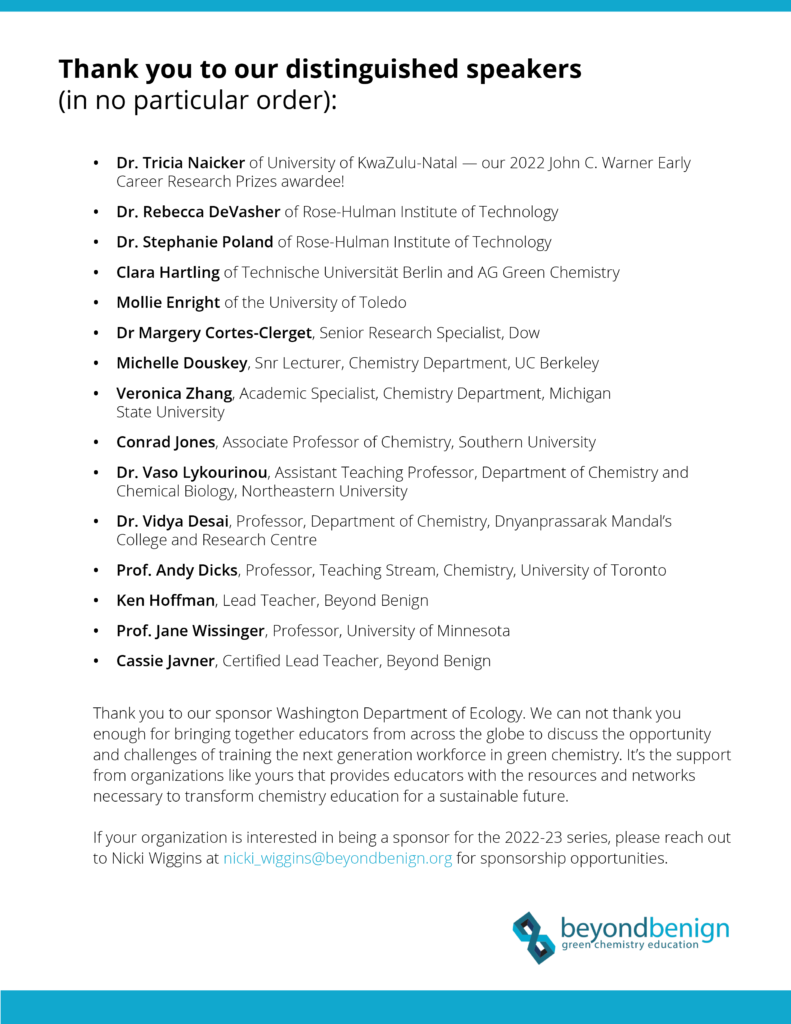
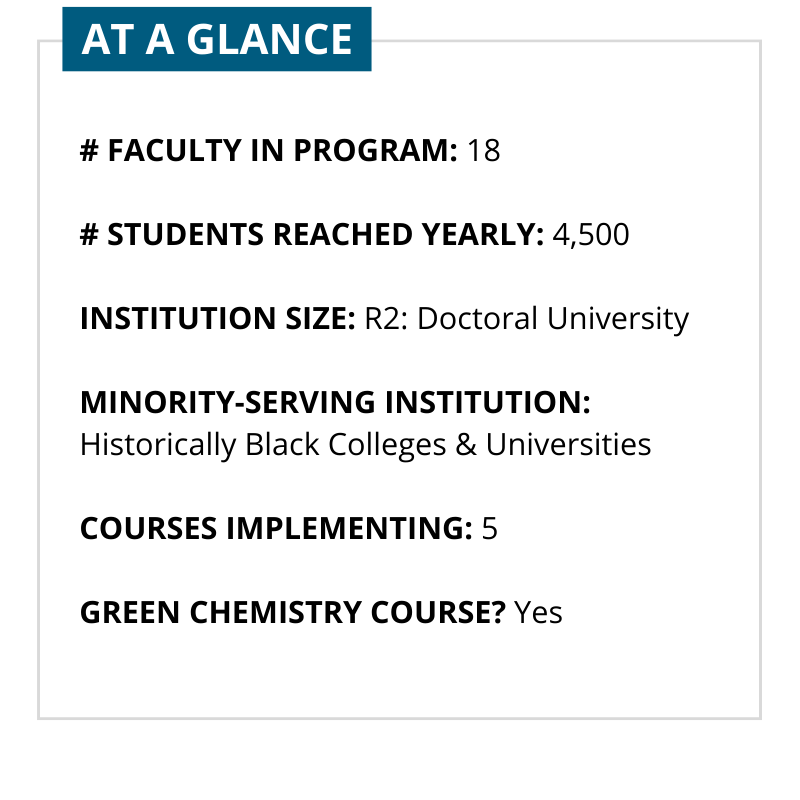 In 2013, Beyond Benign created the Green Chemistry Commitment (GCC) program with guidance from higher education institutions as a framework to unite the global Green Chemistry community. The GCC goal is to infuse Green Chemistry into Higher Education and give scientists the required skills to design processes and products less hazardous to human health and the environment.
 Southern University: A 2021 Green Chemistry Commitment (GCC) signer, Southern University will use its award to design a 3-year project to implement green chemistry across the entire Chemistry department. Fundamental concepts and real-life applications of green chemistry will be introduced and taught in these courses to provide students an insightful perspective of the significant role green chemistry plays in solving environmental issues such as global warming and pollution, along with hands-on approaches in chemistry laboratory courses.
 Michigan State University: A GCC Signer since 2018, MSU is using the award to pilot and evaluate green chemistry and project-based laboratory curriculum designed for organic laboratory courses for STEM and BA chemistry majors. This award will support the work of undergraduates as they beta-test the student-facing curricular materials to plan and carry out each investigation and to design protocols to evaluate each project on key green & sustainable chemistry principles, using appropriate metrics.
 University of California Berkeley: UC Berkeley, a founding GCC Signer since the program launched in 2013, has been a leader in green chemistry education. With this award, the University will build upon the work it has done to integrate green chemistry in first year- level general chemistry. Through this award, the University will start a complete redesign of the curriculum for its sophomore-level organic course to explicitly integrate GCC Student Learning Goals.
 Cintia Milagre
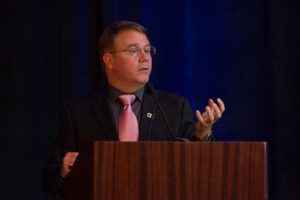 Last week, our Board Member and Co-Founder Dr. John Warner participated on the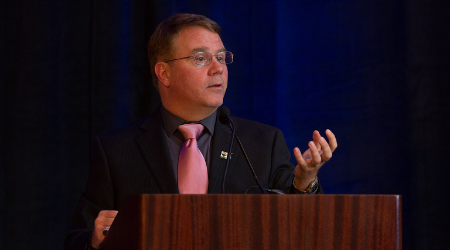
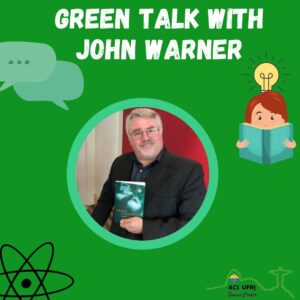 Teaching, Everyday Life and Science Education in Green Chemistry: These are the themes our Board Member, our Co-Founder, and the Co-Founder of Green Chemistry Dr. John Warner discussed with students and faculty of the Federal University of Rio de Janeiro (UFRJ), in Brazil!