

Supporting the advancement of Black and Indigenous scientists is a critical part of creating the future of green chemistry and sustainable science. To work toward that goal, through support from the Lemelson Foundation, Beyond Benign recently teamed up with the National Organization for the Professional Advancement of Black Chemists & Chemical Engineers (NOBCChE) and Society for Science to host the Pathways to Sustainable Invention Speaker Series, a five-part webinar series designed to elevate the stories of inventors (including student inventors) from diverse backgrounds.
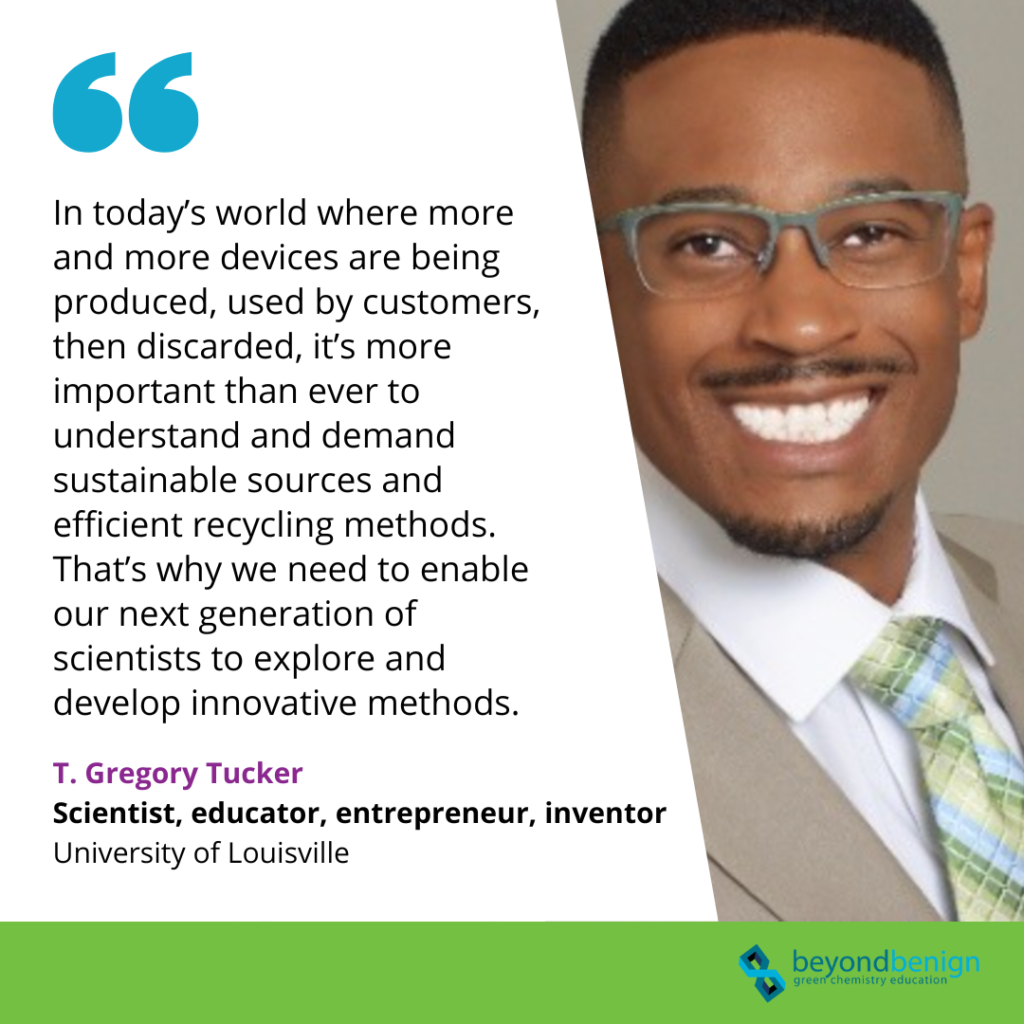
Through bimonthly webinars featuring a multi-generational panel of inventors sharing their experiences, the Pathways to Sustainable Invention series aimed to inspire youth to engage and invent for a sustainable future. Dr. T. Gregory Tucker, Ph.D., is a scientist, educator, entrepreneur and inventor who works at the University of Louisville. He helped design the event and was a panelist on the webinar topic, “Black Inventors Pathways to Patents.”
In this Q&A, Dr. Tucker shares some of his favorite takeaways from the series, and why he is so passionate about inspiring the scientists of tomorrow.
Why are green chemistry and sustainable invention so important right now?
In today’s world, science profoundly affects us all. Chemistry is important to understand, even for people without a technical or science background, because of the power we see it deliver in our everyday lives, through electronics, devices, even electric vehicles (EVs).
Many people associate chemistry with vague high school memories of the periodic table, but chemistry and science innovation are relevant to all of our daily lives and the future of our planet. In today’s world where more and more devices are being produced, used by customers, then discarded, it’s more important than ever to understand and demand sustainable sources and efficient recycling methods. That’s why we need to enable our next generation of scientists to explore and develop innovative methods.
 How did you become interested in science?
Growing up I was always interested in being an applied scientist. I was inspired by learning about the work of other scientists—such as Nikola Tesla harnessing the power of alternating current electricity in my hometown, which led me to pursue research in electrochemical devices, or Lewis Latimer contributing to the invention of a new filament to improve the light bulb (fun fact: both scientists worked with Thomas Edison). More recently, I was inspired by meeting the inventor of the blue LED, Nobel Laureate Dr. Shuji Nakamura. His work is incredibly impactful as we use LEDs in nearly all flat screen displays today.
Why was the Pathways to Sustainable Invention series important?
There was a pandemic of racial inequality and lack of resources in certain communities well before the COVID-19 pandemic. The COVID pandemic further compounded these issues to a critical point of social unrest. I considered this series a way to address this in my (our) own capacity as educators.
Through the series, we aimed to empower younger BIPOC by sharing the professional journeys, personal experiences, and unique techniques the panelists have used to achieve success as Black professionals, inventors, and entrepreneurs. Designed for a diverse audience of young people, the series highlighted a variety of topics on the cutting edge of technology, along with the possibilities and practical steps of starting a business. The virtual platform offered accessibility, inclusivity, and convenience, which enabled panelists from across the world to share their valuable messages, ideas, innovations, and sustainable projects.
What made you want to be involved?
As a scientist, I feel a call of duty to help cultivate the next generation of scientists. It’s becoming more apparent that a good number of jobs in the near future will involve some kind of fundamental chemical know-how — such as for battery packs replacing gasoline, polymers of various plastics substituting in for metals, and considering how potentially hazardous byproducts are affecting the air and environments of our local communities. These jobs and skills are critical for our world, as we collectively watch the acidification of the ocean and an increase in the greenhouse gasses causing global warming.
What were some of your favorite aspects of the series?
I truly appreciated — and I know the audience did, too — the perspectives offered through the multigenerational approach. Each session included three panelists, who ranged from early career such as high schoolers, mid-career such as recent college grads, and late career folks sharing their years of wisdom. For me personally, it was incredible to hear the forward-thinking and heartfelt stories from the youngest panelists about their research tackling some of the biggest global concerns. For example, one younger person shared their work on a digital app to ensure enough clean water. Behind the scenes, I enjoyed lending assistance to prepare some of our presenters to effectively convey their gifts in the virtual environment.
What advice or encouragement might you give to a young Black person interested in getting involved with STEM?
Well, a great starting point is to listen to the recording of the Pathways to Sustainable Invention series, which touches on a wide variety of topics — from tech apps to aerial drones, coding to cosmetics, solar energy to food science. Next, research the topics the panelists discussed that sparked your interest and get immersed immediately. Look up the companies where these people work and the organizations they’re members of, such as NOBCChE, Beyond Benign, and Society for Science. They all have chemistry-related programs you can join and start actively participating in right away.

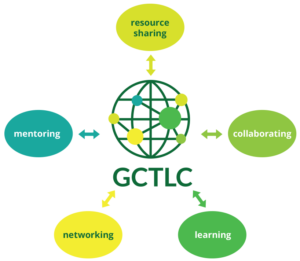
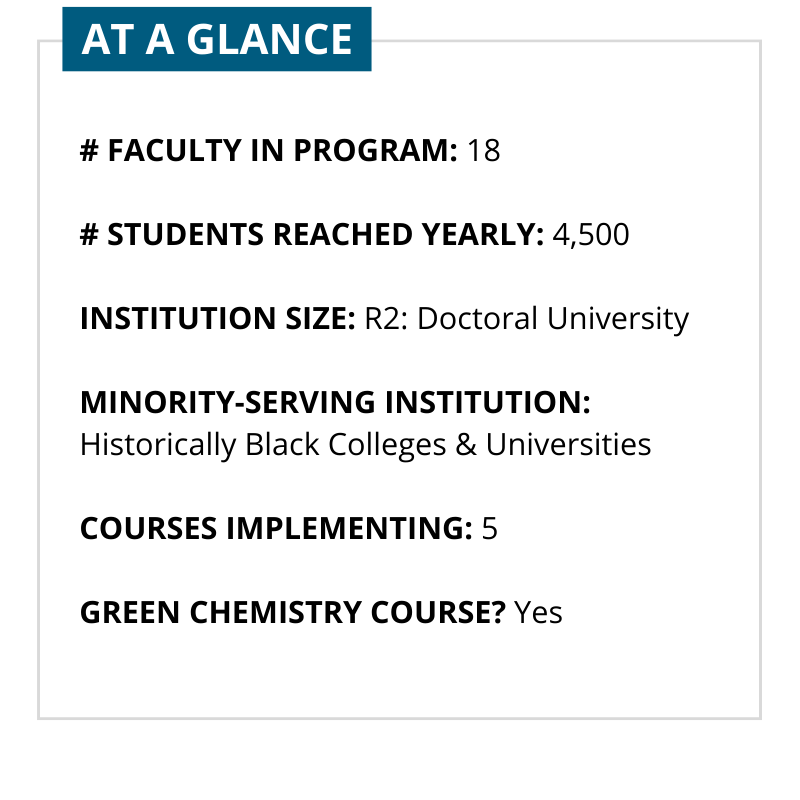 In 2013, Beyond Benign created the Green Chemistry Commitment (GCC) program with guidance from higher education institutions as a framework to unite the global Green Chemistry community. The GCC goal is to infuse Green Chemistry into Higher Education and give scientists the required skills to design processes and products less hazardous to human health and the environment.
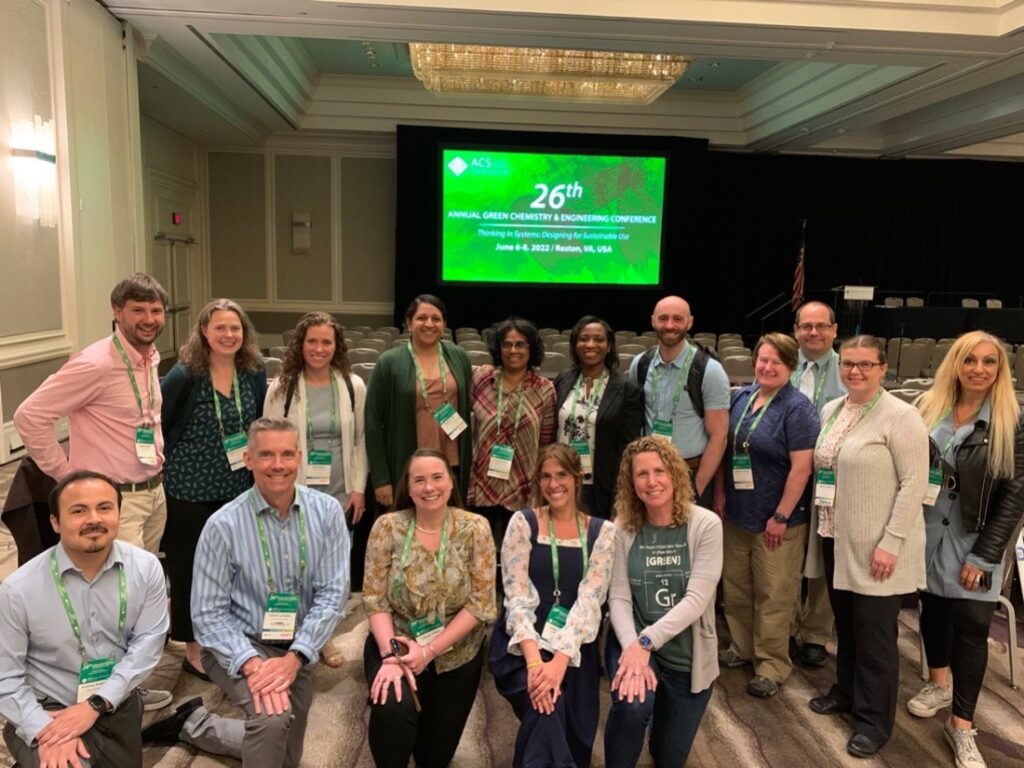
 Southern University: A 2021 Green Chemistry Commitment (GCC) signer, Southern University will use its award to design a 3-year project to implement green chemistry across the entire Chemistry department. Fundamental concepts and real-life applications of green chemistry will be introduced and taught in these courses to provide students an insightful perspective of the significant role green chemistry plays in solving environmental issues such as global warming and pollution, along with hands-on approaches in chemistry laboratory courses.
 Michigan State University: A GCC Signer since 2018, MSU is using the award to pilot and evaluate green chemistry and project-based laboratory curriculum designed for organic laboratory courses for STEM and BA chemistry majors. This award will support the work of undergraduates as they beta-test the student-facing curricular materials to plan and carry out each investigation and to design protocols to evaluate each project on key green & sustainable chemistry principles, using appropriate metrics.
 University of California Berkeley: UC Berkeley, a founding GCC Signer since the program launched in 2013, has been a leader in green chemistry education. With this award, the University will build upon the work it has done to integrate green chemistry in first year- level general chemistry. Through this award, the University will start a complete redesign of the curriculum for its sophomore-level organic course to explicitly integrate GCC Student Learning Goals.
 Cintia Milagre
 Last week, our Board Member and Co-Founder Dr. John Warner participated on the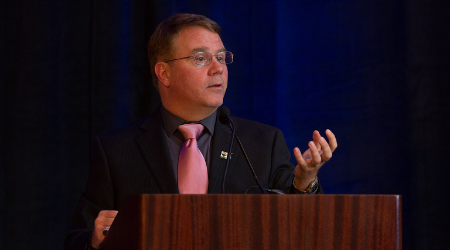
 Teaching, Everyday Life and Science Education in Green Chemistry: These are the themes our Board Member, our Co-Founder, and the Co-Founder of Green Chemistry Dr. John Warner discussed with students and faculty of the Federal University of Rio de Janeiro (UFRJ), in Brazil!