

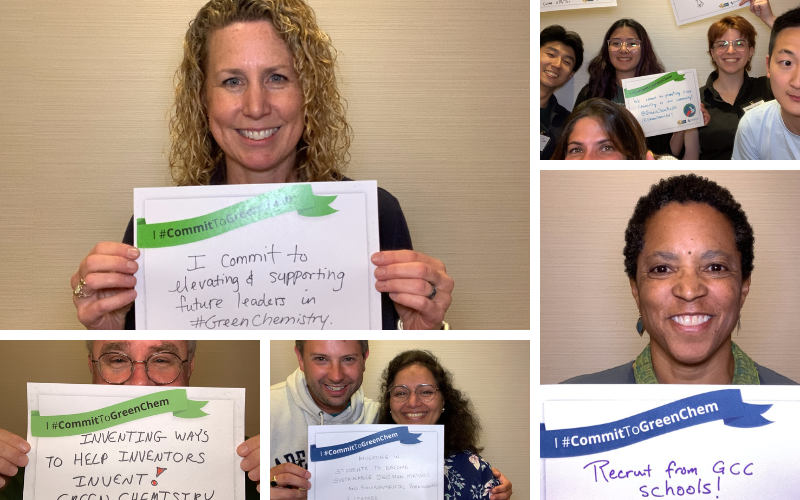
In June of this year, we launched the #CommitToGreenChem campaign: an opportunity for our green chemistry community members to share the ways in which they plan to engage with green chemistry in the following year. The responses from community members near and far were inspiring, and we encourage you to hop onto Twitter and Instagram to see the full range of commitments.
At our 2023 Green Chemistry Commitment Summit, we hosted a photo booth to capture some of our attendees’ campaign commitments in real time. In this video, check out their awesome responses.
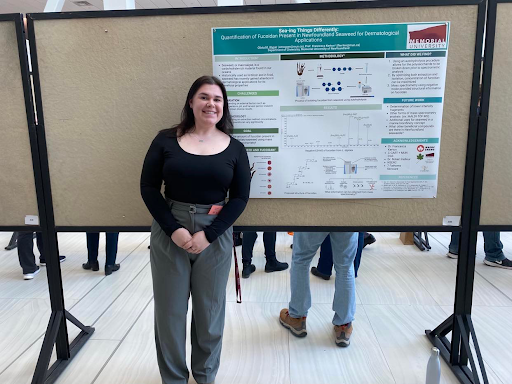 After moving into the Ph.D. program last September, Olivia’s research has moved toward using algae as a renewable energy source, which is in collaboration with the Department of Engineering and Applied Sciences at Memorial University of Newfoundland. This work will look at pre-treatment options for seaweeds to optimize bioethanol and biohydrogen yields. Both of these projects are being actively worked on.
 Olivia Wyper is currently a Ph.D. student in the Green Chemistry and Catalysis Group at Memorial University of Newfoundland under the supervision of Prof. Francesca Kerton. She completed her B.Sc (Hons) with Prof. Kerton in the area of renewable catalysts, which led to her interest in green chemistry. Currently, Olivia is looking at Newfoundland seaweed, Laminaria digitata, in dermatological and biorefinery applications. Since the start of her graduate studies, she has been heavily involved in outreach, such as organizing the Global Womens Breakfast in 2022 and 2023, an event organized by IUPAC. Previously, she gave a talk at the Global Conversation on Sustainability and has been involved with Science Rendezvous, an organization that aims to strengthen science knowledge in youth.
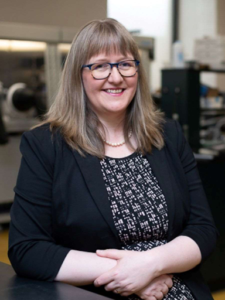 Francesca Kerton is a professor of Chemistry at Memorial University of Newfoundland and has a global reputation for her innovative research on sustainable chemistry related to the oceans. She is a Fellow of The Royal Society of Chemistry and is a member of many scientific panels and committees worldwide. She currently chairs IUPAC’s standing committee on Chemical Research Applied to World Needs (CHEMRAWN) and is chair of the 27th Annual Green Chemistry & Engineering Conference, which will be held in June 2023. She is an Advisory Board member for Reaction Chemistry & Engineering and an Associate Editor for RSC Sustainability. She will chair the 2027 IUPAC World Chemistry Congress and General Assembly, which will be held in Montreal, Canada.
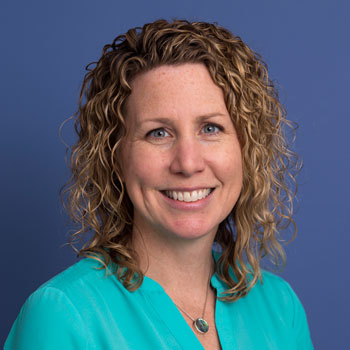 Over the past year, we teamed up with the UMass Lowell Center for Sustainable Production to form an Expert Committee on Sustainable Chemistry (ECOSChem), a group of 20 leading representatives from industry, government, academic, and non-profit organizations from across the world, to develop an actionable definition and criteria for “sustainable chemistry.” This definition and criteria are to help inform policymakers, industry researchers, educators and so many others in building a more sustainable future through chemistry.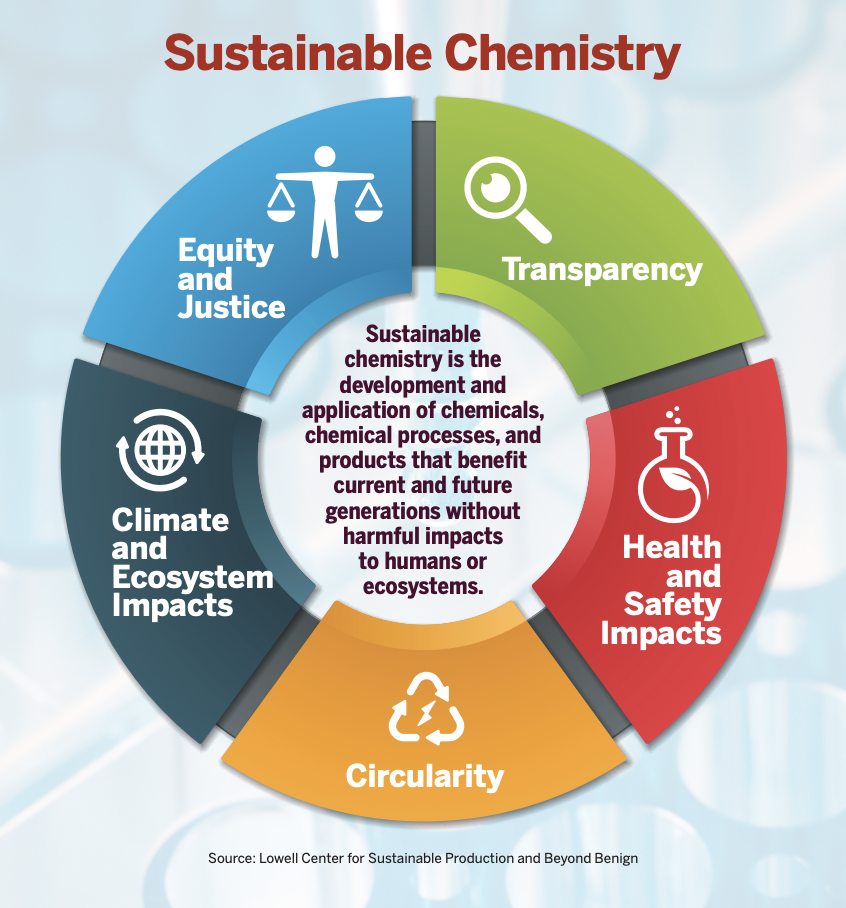
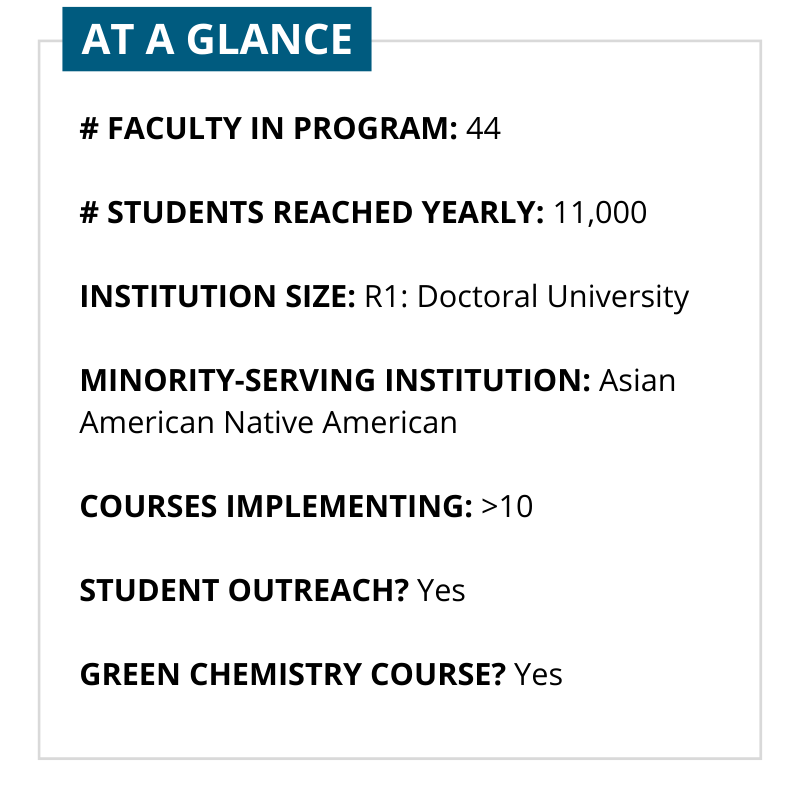 In 2013, Beyond Benign created the Green Chemistry Commitment (GCC) program with guidance from higher education institutions as a framework to unite the global Green Chemistry community. The GCC goal is to infuse Green Chemistry into Higher Education and give scientists the required skills to design processes and products less hazardous to human health and the environment.

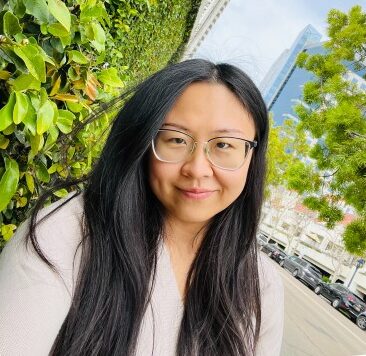
 Below, we talk with Williams about her life and work.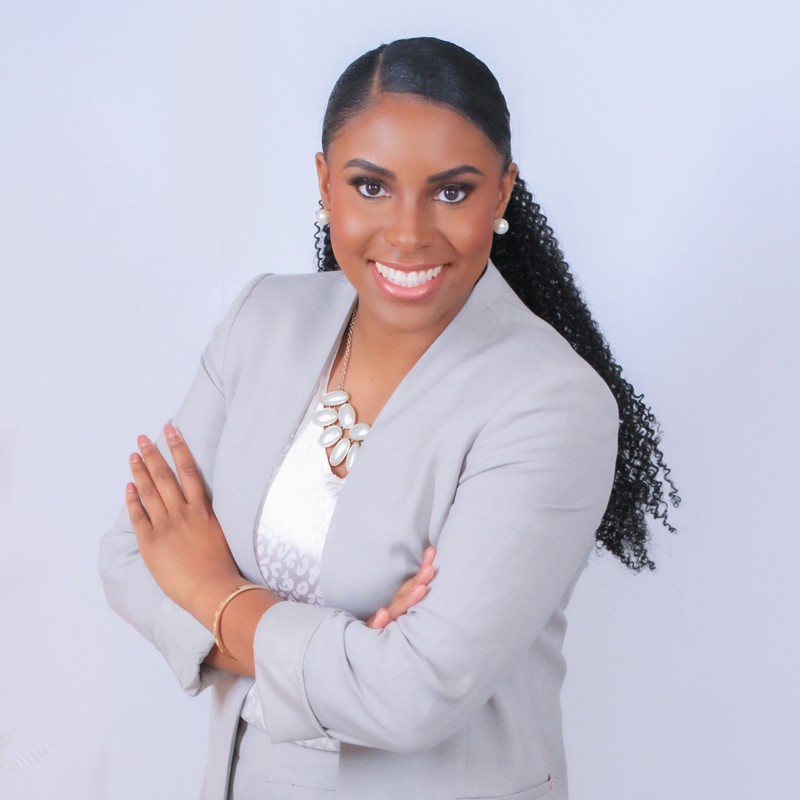
 “In an ideal world, Green Chemistry wouldn’t exist as a sub-discipline. We need to move to a way of thinking where sustainability is considered as part of everything we do. Signing this commitment is symbolic of the growing integration of Green Chemistry across all Chemistry teaching and research at York. The next generation of chemists have enormous potential to accelerate the shift to greener chemistry, and it’s an honour to be part of that process.” – Professor Helen Sneddon, Head of the GCCE.
 Sustainable action begins with a conversation.
 Green Chemistry gains another recognition! The