





Green Chemistry Education in the News:
Select a Category
10 Years of Embracing Inspiration and Building Community: Reflecting on the 2023 Green Chemistry Commitment Summit
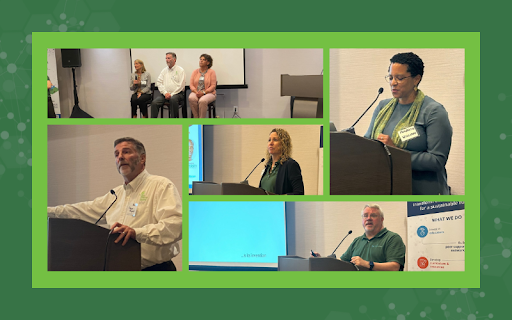
The Green Chemistry Commitment (GCC) Summit held in June brought together passionate leaders and experts in the field of green chemistry, delivering thought-provoking presentations that left a lasting impact. With an emphasis on community support, this event celebrated the GCC’s 10th anniversary and the transformative power of collective action within the green chemistry community.
The summit showcased visionary speakers who ignited inspiration among attendees with their remarkable achievements and innovative ideas. Their words echoed a common theme: the urgent need for a strong sense of community and collaboration within the green chemistry movement. By uniting professionals, educators, and advocates under a shared vision, the summit emphasized that progress in green chemistry goes beyond individual efforts and requires collective support and knowledge sharing.
The GCC launched in June of 2013 with 13 founding signatories. The program was designed around four student learning objectives — theory, toxicology, laboratory skills, and application — as a framework of departmental change at higher education institutions. The GCC program is the result of collaboration between leaders in the green chemistry community, and to date, 130 institutions have signed on, representing approximately 2,900 of faculty members who teach approximately 733,000 students every year. The Commitment is free and open to all chemistry departments.
In this article, we delve into highlights and insights from the GCC Summit, exploring the groundbreaking discussions that took place. By celebrating the contributions of these visionary speakers, we uncover the immense potential for revolutionizing our world toward achieving a sustainable future through green chemistry.
Sign up for our newsletter to learn how to attend future GCC Summit events.
IN THEIR OWN WORDS
Amy Cannon, Co-Founder & Executive Director of Beyond Benign:
“Let’s take a minute to think big. Imagine that you’re not the only champion for green chemistry at your institution. There’s a future where this can happen. Imagine if you didn’t have to explain the value of green chemistry to colleagues or other professionals. Imagine if we had a common grounding in green chemistry. Imagine if research and implementation within the laboratory setting just included toxicity and hazard as key design criteria. Imagine if students entering professional careers were prepared with these skills. Imagine if green chemistry was just the norm, not the exception.
We’re getting closer. How do we get to this future that we can all envision? Our vision is that the molecular building blocks of products that we use every day are safe and healthy for humans and the environment. We think this has to start with education. It has to start at the beginning. And that’s our mission. That’s why we do what we do.
There’s another key piece here, and that’s innovation. These two pieces together, education and innovation, are essential for making that future in which green chemistry is the norm. It starts with all of you.”
Natalie O’Neil, Director of Higher Education at Beyond Benign:
“It starts with you, but it doesn’t end with you. What’s really impactful about the people here is that they bring green chemistry to their own work, and they don’t stop there. You’re out there championing for others to do it too because you truly believe it’s the way that they should teach chemistry. You are my heroes. You are the ones that see the barriers and continue to charge toward them. Thank you for all that you do for you but also for others.”
John Warner, Co-Founder of Beyond Benign:
“There are so many approaches to sustainability. It makes me so sad that we’re in a society where people have decided that some approaches are correct and some are wrong. ‘This is better, and this is not.’ Our world has a diverse set of problems. We humans are a diverse species. Everything is worthy. We just need to find a way to work together to support each other.
Society has reached a point where everything is polarized. But we in chemistry have an entire 150 year history of not taking sides. There’s a lot of serious stuff happening in the world right now. We can’t afford polarization. We need to be disciplined not only in how we communicate to the outside world, but in how we treat one another.
Imagine if tomorrow everyone woke up and wanted sustainability. Every consumer insisted on buying, every retailer insisted on selling, and every manufacturer insisted on creating sustainable technologies. We’ve got a lot of work to do. The vast majority of these technologies haven’t been invented yet. We make a mistake when we think of this as a crisis of desire.”
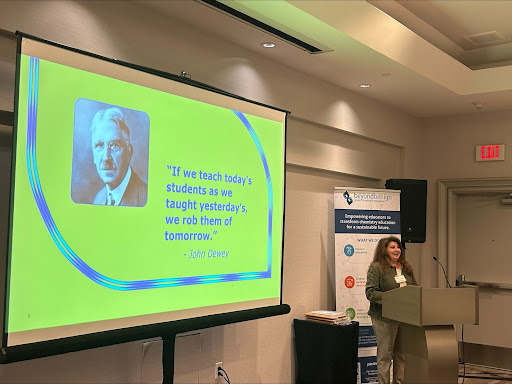
Areej Nitowski, Green Chemistry Education Manager for MilliporeSigma:
“Education plays a vital role in countering the distrust of science and connecting students with tangible solutions. We must update our curricula to emphasize the importance of chemistry in affecting positive change in our world. By signing the Beyond Benign Green Chemistry Commitment, educators are not entering into a binding contract, but rather expressing their willingness to incorporate green chemistry principles into their teaching practices. As educators, we have a profound influence on students, and we must not lose sight of the impact we can have.
The current perception of science is distorted, and we face challenges in gaining public trust and credibility. Students often question the relevance of what they learn, and we must bridge the gap between their lives and the significance of green chemistry. John Dewey, considered the father of public education, said, “If we teach today as we taught yesterday, we rob our children of tomorrow.” It resonates with me because, as a chemistry educator, I see the need for change in curriculum. I compare the curriculum I studied in the 1980s with today’s, and it is disheartening to find that it remains largely unchanged. We need to make the connection between chemistry and environmental science to empower students to make a difference.
It’s crucial that we amplify our voices and take action. Implementing green chemistry in the curriculum may seem challenging, but it is a necessary step toward a more sustainable future. By taking the Beyond Benign Green Chemistry Commitment, we enhance our institutions’ reputations, curriculums, and degree programs. It also attracts students who are increasingly interested in sustainability. Sustainability cannot be achieved without green chemistry, and we need to make students aware of the professional opportunities and personal impact that green chemistry offers. Let’s continue to inspire and educate, recognizing the multiplier effect our efforts can have.”
Paul Anastas, Professor in the Practice of Chemistry for the Environment at Yale:
“You are all giants. What I mean by that is the challenge you’re undertaking is immense. It’s not just about the daily work; it’s about bringing about a conceptual and cultural change. Your colleagues, although brilliant and accomplished, often know very little about green chemistry. Convincing them to embrace this new way of thinking is not easy. It challenges their intellectual status quo and their sense of importance. Persuading students to embrace green chemistry is also a significant challenge, as it touches their identity. However, I have seen many of you slowly make progress by acknowledging and appreciating their efforts and highlighting the importance of green chemistry. It’s inspiring to witness.
Another remarkable thing I’ve observed is that you are driving a shift in mindset. Rather than focusing solely on measuring the extent of problems related to sustainability, environmental issues, and human health, you are actively seeking solutions. Understanding the problem deeply is crucial, but the ultimate goal is to empower and inform the solution. This change in mindset is essential, and it’s incredible to witness your dedication to thoughtful design and green chemistry solutions.
However, there is always room for improvement. We need to rethink how we teach introductory chemistry and engage students more effectively. We should encourage them to think beyond the prescribed curriculum and ask insightful questions that trigger bigger ideas. While technology like AI can provide answers, it cannot generate the thought-provoking questions that foster deeper thinking. Asking the right questions and guiding students to transform data into knowledge and wisdom is where your expertise truly shines.
I want to reference Isaac Newton’s famous quote about standing on the shoulders of giants. By saying that you are giants, I mean that you are willing to lift others onto your shoulders so they can see new horizons. Knowledge is not isolated; it’s about relevance and sharing wisdom. As giants in your field, you have the power to help students see new possibilities, understand why they matter, and inspire action. Remember, giants may not see the horizon themselves, but they enable others to see it and make a difference.”
INSPIRING SESSION SUMMARIES
Meredith Williams, Director of the California Department of Toxic Substances Control:
In her presentation, Meredith highlighted the work of the Department of Toxic Substances Control (DTSC) in managing toxic chemicals in California. The DTSC is responsible for remediating the effects of past industrial practices, overseeing cleanup efforts for contaminated lands, and ensuring the safe management of hazardous materials. The DTSC also emphasizes their commitment to promoting safer consumer products by encouraging companies to adopt green chemistry practices and eliminate toxic materials from their products. In her talk, Meredith mentioned the challenges identified in a report commissioned by the California legislature, including gaps in chemical investigation and disclosure, safety measures, and technology innovation. The DTSC has been actively addressing these gaps through regulations, partnerships with academic institutions, and collaborations with other regulatory authorities.
In addition, Meredith discussed the importance of data disclosure and transparency, advancements in computational toxicology, and the role of green chemistry in driving innovation and finding alternatives to harmful chemicals. The DTSC is committed to a precautionary approach, focusing on comprehensive hazard assessments and promoting the use of safer chemicals.
Jane Wissinger, Distinguished University Teaching Professor at the University of Minnesota:
During her presentation, Jane highlighted the importance of green chemistry education at the University of Minnesota. She discussed various initiatives and achievements related to green chemistry within her department and shared how students’ excitement about green chemistry experiments fueled their research program. Jane emphasized the involvement of students, faculty, and the ACS student chapter in promoting green chemistry education. She also mentioned the incorporation of green chemistry principles in lecture and lab courses, as well as the University’s focus on safety and collaboration with Dow Chemical. Lastly, Jane discussed the establishment of a Sustainable & Green Chemistry Committee (SGC) and graduate students’ initiatives in social environmental justice and sustainable research labs. Students’ enthusiasm and involvement, along with faculty support and safety programs, have contributed to the integration of green chemistry principles in various aspects of the University of Minnesota’s curriculum and operations.
Dalila Kovaks, Professor at Grand Valley State University:
At the Summit, Dalila discussed the chemistry department at Grand Valley State University, a predominantly undergraduate institution, focusing on their student population and programs. She highlighted the history of the green chemistry initiative at the university, including the introduction of special topic classes that generated student enthusiasm and led to the development of additional courses. Dalila emphasized the importance of partnerships with local businesses, collaboration with the Michigan Green Chemistry Education Network, and support from the university administration and ACS Green Chemistry Institute. She discussed the challenges she faced in making changes to the school’s curriculum and attracting the attendance needed to keep new courses in session. She also explained the value of the green chemistry certification, and survey responses from local businesses regarding their interest in hiring individuals with green chemistry knowledge. She noted the need for expertise in specific areas, such as polymers, and encourages collaboration and future improvement in green chemistry education and research.
Douglas Raynie, Department Head & Professor Emeritus at South Dakota State University:
In his presentation, Doug discussed his journey with green chemistry over the past 10 years and the challenges he faced in getting administrators on board. He emphasized the importance of administrators embracing green chemistry principles and recommended watching John Warner’s inspiring talks on YouTube. Doug highlighted the integration of green chemistry into his curriculum, including the introduction of the 12 principles in general chemistry courses, toxicology in organic chemistry experiments, and a standalone toxicology course. He mentioned his involvement in research projects and the success of his students’ affiliate club in receiving the green chemistry award. Doug reflected on the debate of standalone green chemistry courses versus integration throughout the curriculum and stressed the need for champions, but involving everyone in the process as champions can not be relied upon. He explored future opportunities such as implementing virtual reality in chemistry education, the potential relationship between the ACS Bridge Program and green chemistry, and the proposal for an online graduate certificate in green chemistry education. Finally, he shared and celebrated the newly updated ACS CPT Guidelines for Bachelor’s Degree Programs. The New CPT Guidelines were released in January of 2023, signposting green chemistry and sustainability as a critical requirement for chemistry coursework at institutions. Additional mention of green chemistry is included as normal expectations and markers of excellence. This is a long needed carrot for the chemistry education community and an indicator that green chemistry is becoming more of the rule, rather than the exception.
10 Years of Embracing Inspiration and Building Community: Reflecting on the 2023 Green Chemistry Commitment Summit
July 25, 2023
The Green Chemistry Commitment (GCC) Summit held in June brought together passionate leaders and experts in the field of green chemistry, delivering thought-provoking presentations that left a lasting impact. With […]
Categories:
Green Chemistry Connections Webinars: A Look Back at the 2022-2023 Series
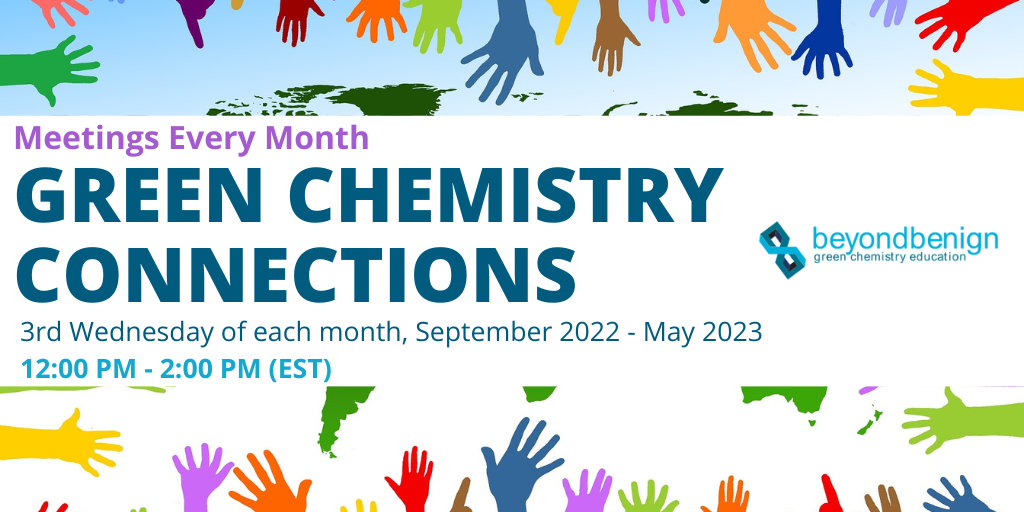
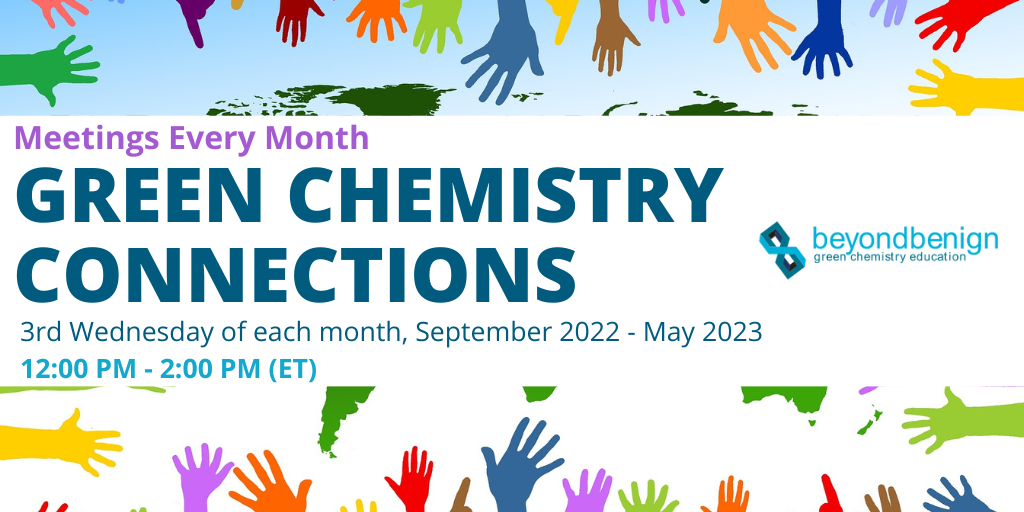 Our higher ed team hosted monthly Green Chemistry Connections events, where higher education and industry leaders actively practicing green chemistry and/or Toxicology shared their experiences. These events provided an opportunity for small group discussions, networking, and resource sharing, following the Green Chemistry Students Learning Objectives as a framework. Throughout the year, we hosted 244 faculty and students during our Connections series, 38% of which attended more than one meeting, for a total of 422 engagements across 9 meetings. Meeting topics ranged from favorite resources, to implementation models from around the world, to useful green chemistry tools used in real-world industry practice. If you’d like to discover our 2022-2023 GCC Connection series, please check out the archived webinar to watch the presentations.
Don’t miss out on next year’s Connection series, which will feature green chemistry leaders, opportunities to interact with the community, and plenty of resources to share! Register for the free series here!
Discover our 2022-2023 GCConnections series:
Theme: Fabulous Fabrics
with Dr. Julian Silverman (Assistant Professor, Fashion Institute of Technology NY) and Dr. Dean Campbell (Professor, Bradley University).
Theme: Implementation of the Green Chemistry Commitment
with Dr. Nasrin Mirsaleh-Kohan (Associate Professor, Texas Woman’s University – TWU), Niki Juhl, and Tisha Mendiola Jessop (Senior Instructors, University of Colorado Colorado Springs – UCCS).
Theme: Green Chemistry in Latin America
with Dr. Edson Grandisoli (Education Coordinator and Ambassador, Circular Movement), Leticia Dantas and Fernando Maturi (São Paulo State University – UNESP), Sabrina Ferreira, Gabriela Trisch de Quadros (Federal University of Pelotas – UFPel), Maria Victória Barros, Thalia Ayane, Larissa Nogueira, and José Victor Lopes (Federal Institute of Rio de Janeiro – Duque de Caxias, IFRJ).
Theme: Tools in Green Chemistry
with Tony Phan (Naturals Production and Methods Manager, MANE), Dr. Philippa Payne (Associate Director, Gilead Sciences), Dr. Shegufa Merchant (Assistant Professor, Memorial University of Newfoundland), Dr. Alexey Leontyev and Krystal Grieger (Assistant Professor and Graduate Student, North Dakota State University).
Theme: Towards a Global Community of Transformation in Green Chemistry Education (Part I)
with Dr. Karolina Mellor (Program Director, Yale University) and Dr. Samson Alayande (Associate Professor, First Technical University).
Theme: From Land to Sea: A Connection Between Decolonization and Renewable Resources
with Dr. Avtar Matharu (Professor, University of York) and Dr. Tova Williams (Assistant Professor, North Carolina State University).
Theme: Towards a Global Community of Transformation in Green Chemistry Education (Part II)
with Dr. John De Backere (Assistant Professor, University of Toronto), Dr. Edu Inam (Professor, University of Uyo), Dr. Vânia Zuin Zedler (Professor, Leuphana University), Dr. Mageswary Karpudewan (Associate Professor, Universiti of Sains Malaysia).
Theme: Local and Global Actions for a Sustainable Future
with Dr. Francesca Kerton with (Professor, Memorial University of Newfoundland), Christina Greever (Senior Programs Manager, My Green Lab), Graziana Gigliuto (International Secretary, Green Sciences for Sustainable Development – GSSD – Foundation), Dr. João Borges (Senior Researcher, University of Aveiro).
Green Chemistry Connections Webinars: A Look Back at the 2022-2023 Series
July 25, 2023
Our higher ed team hosted monthly Green Chemistry Connections events, where higher education and industry leaders actively practicing green chemistry and/or Toxicology shared their experiences. These events provided an opportunity […]
Categories:
How You #CommitToGreenChem
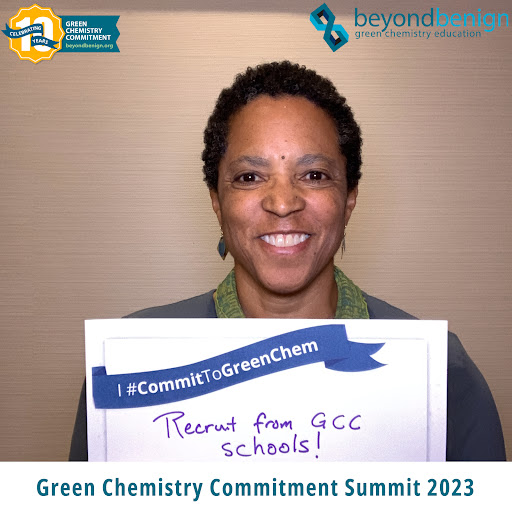
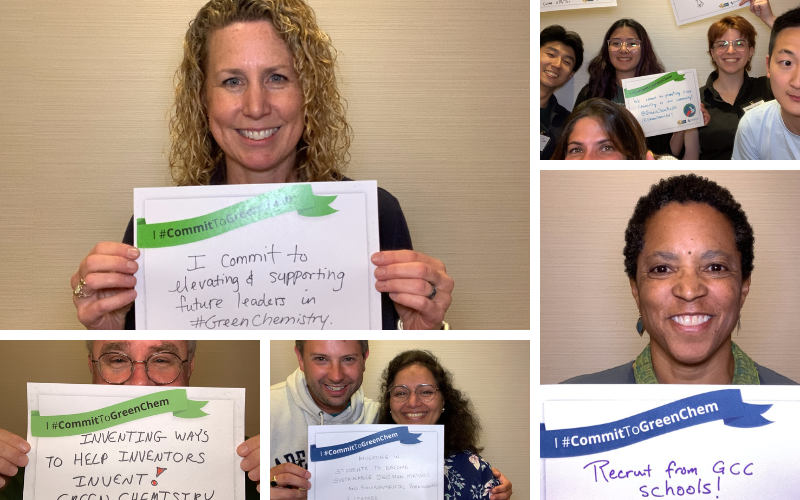
In June of this year, we launched the #CommitToGreenChem campaign: an opportunity for our green chemistry community members to share the ways in which they plan to engage with green chemistry in the following year. The responses from community members near and far were inspiring, and we encourage you to hop onto Twitter and Instagram to see the full range of commitments.
At our 2023 Green Chemistry Commitment Summit, we hosted a photo booth to capture some of our attendees’ campaign commitments in real time. In this video, check out their awesome responses.
How You #CommitToGreenChem
July 14, 2023
In June of this year, we launched the #CommitToGreenChem campaign: an opportunity for our green chemistry community members to share the ways in which they plan to engage with green […]
Categories:
3BL | Access for the Next Generation of Leaders: Episode 5 of Science Will Tell Podcast
Originally published on 3BL Media
According to the U.S. Bureau of Labor Statistics, in the last decade, there has been considerable concern regarding a shortage of Science, Technology, Engineering, and Mathematics (STEM) professionals. As a science and technology company, we want to help spark curiosity in children and young people for the fascinating world of science so they can continue to push the field’s boundaries even further.
Season two of the Science Will Tell podcast series from the Life Science business of Merck KGaA, Darmstadt, Germany, explores global access to science education, including the impacts of implementing diversity, equity and inclusion practices in STEM education to accelerate innovation and increase multicultural representation.
For its fifth podcast episode, hear the conversation with:
- Dr. Amy Cannon, Executive Director and Co-Founder of Beyond Benign
- John Armstead, Assistant School Leader at KIPP St. Louis
In this episode, you’ll learn about:
- Beyond Benign’s mission to transform chemistry education to better prepare the next generation of scientists with skills to address sustainability through chemistry.
- How KIPP St. Louis is devoted to creating joyful, academically excellent schools that prepare students with the skills and confidence to pursue the paths they choose—college, career, and beyond.
- The greener practices in chemistry education accessibility challenges commonly faced by students and how Beyond Benign is providing expanded access to resources and support needed.
- The value of amplifying diverse voices in the scientific community to solve the world’s toughest challenges
Listen to the episode here: https://sciencewilltell.podbean.com/
3BL | Access for the Next Generation of Leaders: Episode 5 of Science Will Tell Podcast
June 22, 2023
Originally published on 3BL Media According to the U.S. Bureau of Labor Statistics, in the last decade, there has been considerable concern regarding a shortage of Science, Technology, Engineering, and Mathematics […]
Categories:
Reflecting on 10 years of the Green Chemistry Commitment: A Conversation with Dr. Amy Cannon
Ten years ago, we launched the Green Chemistry Commitment (GCC) — a framework to advance green chemistry in higher education. Today, more than 100 organizations from across the globe have signed the commitment, supporting a more sustainable future for us all.
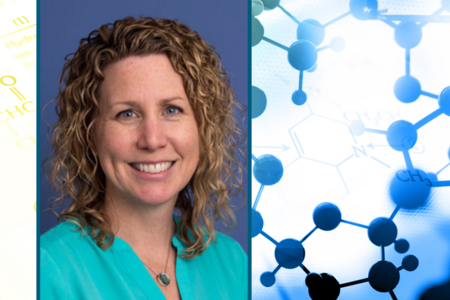
As we gear up to celebrate 10 years of the GCC, we sat down with Beyond Benign Co-Founder Dr. Amy Cannon to reflect on how the GCC has grown in the last decade and look toward the future of green chemistry education.
Amy is the first person to achieve a Ph.D. in green chemistry and is a leader in advancing the field. But for Amy, advancing green chemistry is a community effort. In this conversation, Amy shares more about the beginnings of the GCC and Beyond Benign’s goals to support green chemistry in higher education.
This summer, Beyond Benign is celebrating 10 years of the Green Chemistry Commitment (GCC). How are you feeling about this milestone for the green chemistry movement?
It’s a really exciting time, particularly because we’ve seen so much growth in the past couple of years. There’s still so much more to do, but there’s been a lot of momentum in academia toward greener chemistry.
Part of the goal of the GCC was to foster and support systemic change in chemistry education, and I think we are getting closer to that. It’s a super hard thing to do. But we’ve come a long way.
At the beginning of the GCC, was it difficult to find institutions willing to sign on?
When we first created the Green Chemistry Commitment, folks were really worried that it was a prescriptive approach. We had to do a lot of communication around the fact that it isn’t prescriptive. The diversity of approaches that people use to bring green chemistry to their teaching and practice is something we want to celebrate and elevate and highlight. It’s so valuable for others to recognize their own path.
Why did you decide to create a “commitment” instead of just providing institutional support?
We were trying to support the individual champions of green chemistry. Oftentimes green chemistry starts with one faculty member who’s working by themselves to bring green chemistry to what they do. We wanted to think of ways to support that one individual in bringing green chemistry to their whole department. Otherwise, when that individual leaves that institution, what’s left behind? Are we actually creating change?
When you say that the GCC is “by the community, for the community,” what does that mean in practice?
When we first had this idea, I wanted to share it with our community and get their feedback. I wanted to know if they thought it was a good idea and how they would set it up. So we created a faculty advisory board that could take the idea, break it down, and put it back together in a structured way that could work for institutions. From the beginning, we’ve really listened to the community.
Now we try to keep listening to understand what needs the signers have. What things will help support faculty to make these changes? The mini-grants we’re able to give out to signers came from listening to the community.
It seems like community and collaboration are a huge emphasis in your leadership style.
I don’t think any one person can do any of this alone. No one organization can do any of this alone. So it’s really important to find others who can lead in these spaces. I continue to work on finding new leaders that can step up, and I focus on elevating their voices. That diversity of voices is so important.
We also partner with other organizations on a regular basis, because we’re a small nonprofit. We have limited resources. We have limited bandwidth. Other organizations bring in really unique expertise that we might not have. We can complement each other and elevate our collective missions.
There are so many people working in this space that bring so much value to the equation. It doesn’t make sense to not work together.
Do you think you’ve changed as a leader over the course of time that you’ve been leading at Beyond Benign?
Probably. I definitely didn’t know what I was doing when I started. And I still feel that way in some instances. But I think admitting that you don’t know is a good skill. That’s when you need other perspectives. It’s important to ask for support and admit you don’t know it all. In my opinion, that’s one of the most valuable things that leaders can do: listen.
One of the things I’m trying to be better at is recognizing that I do have a lot of experience in this space. Traditionally I’m a little bit more passive. I’m working on realizing when I should step up and say, “We have expertise in this space. Let’s share that expertise. Let’s lead here.” Leading doesn’t mean plowing over others. It’s about coming to the table and offering that expertise.
You were the first Ph.D. in green chemistry. How have you seen the field change over time?
Originally, people had this perspective that having a green chemistry degree as opposed to just straight chemistry would somehow restrict or limit my opportunities. And I thought that was really interesting. I remember getting a question like, “Don’t you feel like getting a Ph.D. in green chemistry will limit your job opportunities?” And my answer was “Why would I ever want to work for someone if they didn’t want me to do green chemistry?”
I think that has changed a lot. I graduated with my Ph.D. in 2005, and there were a lot of misconceptions around what green chemistry was. Some people thought that it was somehow not-as-good chemistry. Now it’s been proven throughout the years that it’s actually an advantage. It can be an advantage for innovation, and it can be an advantage for job opportunities, because you bring a different skill set to the table.
What progress has Beyond Benign made toward its 25 by 25 goal?
Each year in the U.S., we graduate about 22,000 chemists. We wanted to put a stake in the ground for what we’re trying to achieve. The goal to have 25% of graduates versed in green chemistry came out of wanting to build a critical mass of institutions that are teaching green chemistry and preparing students with green chemistry skills to enter the workforce and create change.
We’re not there yet. We’re just over 10%. There’s a lot of work to do in that space. I’m not sure we’ll get there within the time frame that we’re hoping for, but I think it’s a goal that calls out this need. Chemistry as a profession is a small percentage of the general population, but it can have huge impacts. It’s central to so many of the products that we use on a daily basis. The potential impact that green chemistry training can have on the global workforce and the chemical enterprise is tremendous. I think it’s worth creating ambitious goals.
Why did Beyond Benign launch the Minority Serving Institution (MSI) Initiative?
The MSI Initiative is an intentional approach for reaching out to, engaging with, and elevating minority serving institutions in the green chemistry education community. We not only want to invite them into the community, but we want to elevate the diversity of voices within this community.
When we talk about supporting the community and supporting colleges and universities, we want to make sure that we are offering support and pathways and programming that meet the needs for the whole diverse set of institutions and people involved in academia. We know that there’s underrepresentation within the chemical sciences. We don’t want to be part of that problem. Instead, we want to help bring more institutions and people to the table.
What do the next 10 years of the GCC look like?
I hope we’ll have a good percentage of colleges and universities involved with the program. I want to continue to support change in chemistry education. We hope we can offer more mini grants to enable institutions to make these changes.
Through the launch of the Green Chemistry Teaching and Learning Community (GCTLC) online platform, I think we’re going to bring even more educators into the community. We’re going to see a lot of growth, not just driven by us but driven by the community. That’s very much where this needs to go.
I do feel like we’re at a tipping point at the moment. We’re definitely seeing some good growth, and I think we have good momentum.
Reflecting on 10 years of the Green Chemistry Commitment: A Conversation with Dr. Amy Cannon
May 23, 2023
Ten years ago, we launched the Green Chemistry Commitment (GCC) — a framework to advance green chemistry in higher education. Today, more than 100 organizations from across the globe have […]
Categories:
‘Observe, Wonder, Think’ Webinars: A Look Back at the 2022-2023 Series
During the 2022-2023 school year, Beyond Benign launched a monthly K-12 professional development series called “Observe, Wonder, Think: A Green Chemistry Interactive Webinar Series”. This series was designed to bring the green chemistry community together to advance the field and share ideas and resources to inspire students through green chemistry.
The ongoing objective is to encourage and help educators create safer, more engaging learning environments by integrating green chemistry and sustainable science principles into their classrooms. Following NGSS best practice techniques, the webinar series supports K-12 educators in fostering the idea of “Observe, Wonder, Think!” with their students. Presenters demonstrate hands-on labs and highlight real-world green chemistry technologies. Beyond Benign hosts educational leaders who are actively practicing green chemistry in their classrooms as they walk through their favorite green chemistry labs and experiments. The series is intended to be interactive, allowing time for breakout sessions, Q&A and networking opportunities.
The inaugural webinar series saw 20 – 35 participants for each webinar, including members from the K-12 and higher education communities as well as industry professionals for a cumulative total of 274 registered attendees. 13 guest lecturers discussed no less than 7 topics, including curriculum support, social justice and cultural relevance. We had representation from 33 states and 26 countries spanning 6 continents.
Beyond Benign would like to extend our gratitude to the following “Observe, Wonder, Think” presenters from the 2022 – 2023 season. Click the links to watch a recording of each session.
- NCW/Fabulous Fabrics
- Annette Sebuyira, Certified Lead Teacher, Beyond Benign
- Sustainability in Elementary Education//Plate to Planet
- Veronica Weeks, Lead Teacher, Beyond Benign, Bretton Woods Elementary
- Bob Baldo, Certified Lead Teacher, Beyond Benign
- Laura Kliman, Director, New Product Development, Impossible Foods
- Culturally Relevant Teaching in Chemistry
- Raksmey Derival, Certified Lead Teacher, Beyond Benign, Innovation Academy
- Dr. Rasheda Likely, Kennesaw State University
- Understanding Hazards with Students
- Nina Meltzer, Lead Teacher, Beyond Benign, Quincey High School
- Stefanie Loomis, Lead Teacher, Beyond Benign, Catskill Sr. High School
- Aligning your practice with Green Chemistry
- Ken Hoffman, Lead Teacher, Beyond Benign
- Scott Carlson, Certified Lead Teacher, Beyond Benign, W.H. Maxwell H.S.
- Sustainable Invention
- Greg Sloan, Lead Teacher, Beyond Benign, Woodrow Wilson M.S.
- Erin Mayer, Lead Teacher, Beyond Benign, Casey M.S.
- Green Chemistry Teaching and Learning Community
- Jonathon Moir, Project Manager, GCTLC, Beyond Benign
Please plan to join us in the fall as we continue the “Observe, Wonder, Think” webinar series next school year. Sign up for emails to be the first to know when registration opens.
Watch all recorded sessions of “Observe, Wonder, Think” here.
‘Observe, Wonder, Think’ Webinars: A Look Back at the 2022-2023 Series
May 18, 2023
During the 2022-2023 school year, Beyond Benign launched a monthly K-12 professional development series called “Observe, Wonder, Think: A Green Chemistry Interactive Webinar Series”. This series was designed to bring […]
Categories:
VIDEO: John Warner on the Materials Metabolism at Bioneers 2023
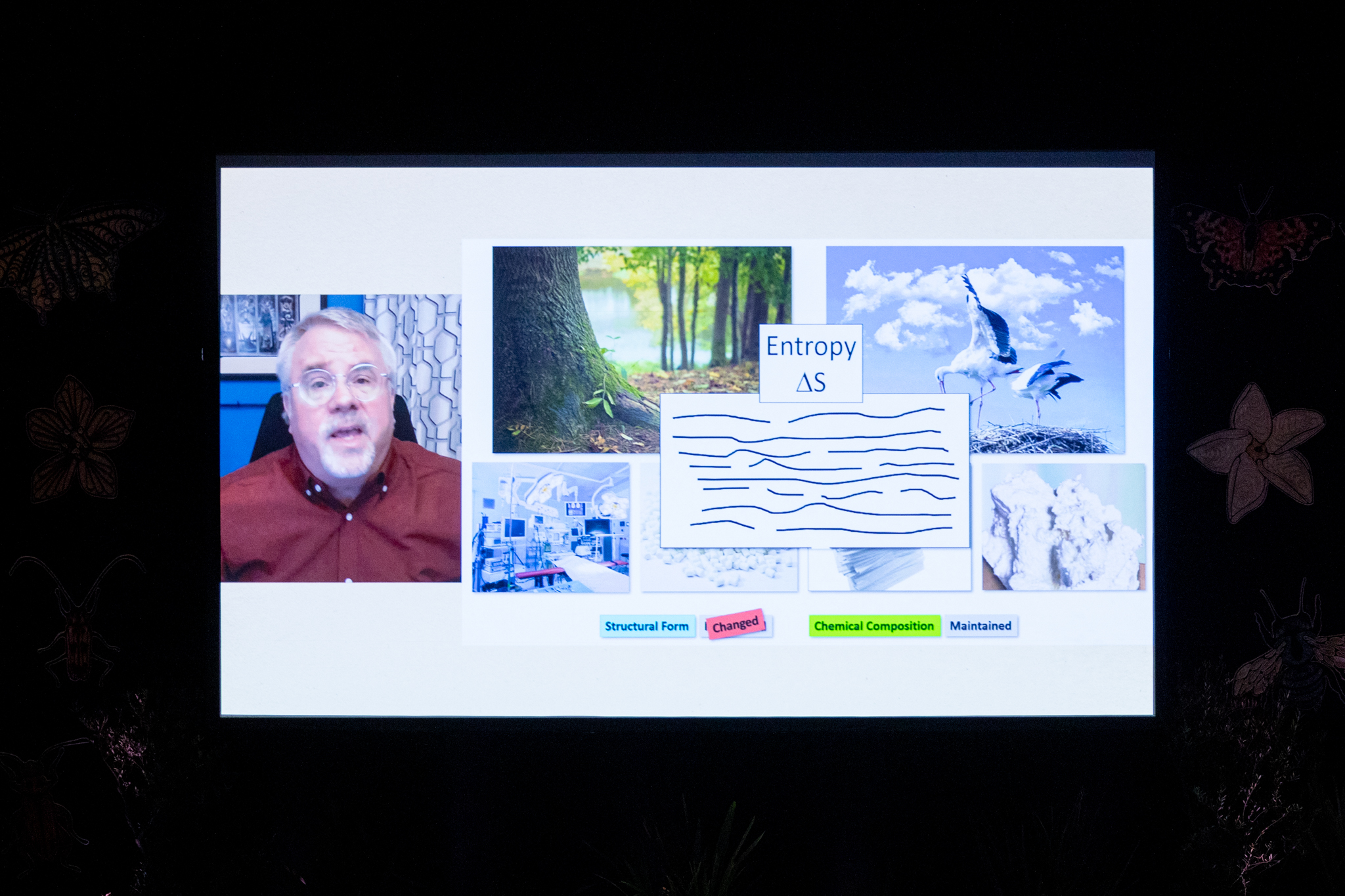
At the 2023 Bioneers Conference, Beyond Benign Co-Founder John Warner discussed the materials metabolism.
For materials from nature to become human-designed products, they have to undergo multiple transformations in processes of assembly and disassembly. Atoms combine to make molecules; molecules combine to make materials; and we humans assemble and disassemble nature’s products to form molecules and materials that we then recombine to create our artifacts and products, but, unfortunately, most of what we produce is fundamentally unsustainable and dangerously incompatible with living systems. However, one of the founding progenitors of the entire field of “green chemistry,” John Warner explains that by using the principles and practices of the discipline he helped birth, we can embrace and emulate nature’s “materials metabolism” to create the products we need without endangering the web of life. By reimagining how we design and build, we can create a new materials economy that is truly in harmony with nature.
VIDEO: John Warner on the Materials Metabolism at Bioneers 2023
April 21, 2023
At the 2023 Bioneers Conference, Beyond Benign Co-Founder John Warner discussed the materials metabolism. For materials from nature to become human-designed products, they have to undergo multiple transformations in processes […]
Categories:
Chemists Celebrate Earth Week: Sea-ing Things Differently
At the Green Chemistry and Catalysis Group of Memorial University of Newfoundland, Prof. Francesca Kerton and Olivia Wyper are looking at the use of algae in a wide range of applications. Olivia began her master’s program by collaborating with 7 Fathoms, a skincare company based in Grates Cove, Newfoundland, Canada. 7 Fathoms wanted to know if their locally grown seaweed and their proprietary seaweed extract had higher concentrations of biologically active compounds than other sources. More specifically, they wanted to determine how much fucoidan, a polysaccharide with a range of beneficial properties (anti-bacterial, anti-coagulant, and anti-inflammatory), is present in their seaweed. By using a range of mass spectrometry methods, Olivia and Prof. Kerton were able to gain a deeper understanding of the structure and level of sulfation of the fucoidan in their extract.
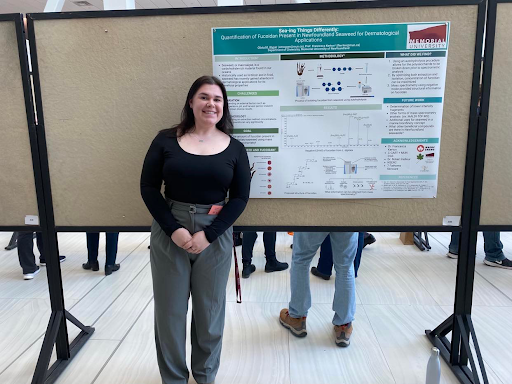 After moving into the Ph.D. program last September, Olivia’s research has moved toward using algae as a renewable energy source, which is in collaboration with the Department of Engineering and Applied Sciences at Memorial University of Newfoundland. This work will look at pre-treatment options for seaweeds to optimize bioethanol and biohydrogen yields. Both of these projects are being actively worked on.
“As we continue to promote renewable materials such as algae, we become closer to eliminating the dependence we currently have on fossil fuels.” By using seaweed instead for energy applications, Olivia and Prof. Kerton are able to adhere to multiple of the United Nations Sustainable Development Goals (SDG 1 – No Poverty, SDG 2 – Zero Hunger, SDG 7- Affordable and Clean Energy), along with promoting the use of the 12 Principles of Green Chemistry (Prevention, Design for Energy Efficiency, Use of Renewable Feedstocks). Along with using seaweed for biohydrogen production, there are many other applications for this material, such as waste-water treatment, degradable and functional plastics, and nutrition.
According to Olivia, she is “continuously grateful for the opportunities that she’s able to access through working on seaweed, such as presenting her research at the Global Conversation on Sustainability and Scientific Endeavours in Academia conference this year.”
 Olivia Wyper is currently a Ph.D. student in the Green Chemistry and Catalysis Group at Memorial University of Newfoundland under the supervision of Prof. Francesca Kerton. She completed her B.Sc (Hons) with Prof. Kerton in the area of renewable catalysts, which led to her interest in green chemistry. Currently, Olivia is looking at Newfoundland seaweed, Laminaria digitata, in dermatological and biorefinery applications. Since the start of her graduate studies, she has been heavily involved in outreach, such as organizing the Global Womens Breakfast in 2022 and 2023, an event organized by IUPAC. Previously, she gave a talk at the Global Conversation on Sustainability and has been involved with Science Rendezvous, an organization that aims to strengthen science knowledge in youth.
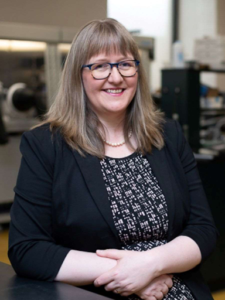 Francesca Kerton is a professor of Chemistry at Memorial University of Newfoundland and has a global reputation for her innovative research on sustainable chemistry related to the oceans. She is a Fellow of The Royal Society of Chemistry and is a member of many scientific panels and committees worldwide. She currently chairs IUPAC’s standing committee on Chemical Research Applied to World Needs (CHEMRAWN) and is chair of the 27th Annual Green Chemistry & Engineering Conference, which will be held in June 2023. She is an Advisory Board member for Reaction Chemistry & Engineering and an Associate Editor for RSC Sustainability. She will chair the 2027 IUPAC World Chemistry Congress and General Assembly, which will be held in Montreal, Canada.
She obtained her Ph.D. in Chemistry at the University of Sussex and was a postdoctoral research associate at the University of British Columbia. In addition to authoring over 70 journal articles, she has contributed several books and book chapters on aspects of green chemistry including “Alternative Solvents for Green Chemistry”. Her current research group is focused on developing environmentally friendly ways to process bio-sourced molecules and materials, catalysis and sustainable polymers. She also performs research in the area of carbon dioxide utilization and is part of an NSERC-funded training network “Centre for Innovation and Research on Carbon Dioxide Utilization in Industrial Technologies.” She received the 2019 Canadian Green Chemistry and Engineering Award and the 2023 SCI-Canada Kalev Pugi Award for exceptional achievements in research and development.
Chemists Celebrate Earth Week: Sea-ing Things Differently
April 14, 2023
At the Green Chemistry and Catalysis Group of Memorial University of Newfoundland, Prof. Francesca Kerton and Olivia Wyper are looking at the use of algae in a wide range of [...]Categories:
MilliporeSigma Announces Expanded Partnership with Beyond Benign to Increase Global Access to Green Chemistry Education
MilliporeSigma Announces Expanded Partnership with Beyond Benign to Increase Global Access to Green Chemistry Education
- Helps grow Beyond Benign’s flagship programs to 175 institutions and 4,000 faculty members globally, reaching one million students annually
- Partnership to support Beyond Benign’s online learning platform and higher education program
Burlington, Massachusetts, March 27, 2023 – MilliporeSigma, the U.S. and Canada Life Science business of Merck KGaA, Darmstadt, Germany, a leading science and technology company, has entered an expanded partnership with global green chemistry education nonprofit Beyond Benign. With plans for a multi-year contribution to the organization, MilliporeSigma is helping transform chemistry education to better prepare next generation scientists with skills to address sustainability through chemistry. It is the largest funded partnership made under the company’s Employee & Community Engagement program.
“We share Beyond Benign’s passion and commitment to making green chemistry an integral part of chemistry education,” said Meeta Gulyani, Head of Strategy, Business Development and Sustainability for the Life Science business sector of Merck KGaA, Darmstadt, Germany. “This partnership underscores our common goal to increase global access to science and science education while reducing environmental impact.”
Together, MilliporeSigma and Beyond Benign will provide expanded access to resources and support needed to apply greener practices in chemistry education. This is key to reducing environmental and human health impact while simultaneously accelerating sustainable science. MilliporeSigma’s contribution will enhance capacity for Beyond Benign’s Green Chemistry Teaching and Learning Community (GCTLC) online platform and expand global access to resources and trainings for more than 4,000 faculty members worldwide.1 It also advances Beyond Benign’s goal of providing 25 percent of the 22,000 graduating chemists annually in the U.S.2 with green chemistry knowledge by 2025.
“In many countries, sustainability is not considered a core concept in undergraduate and graduate chemistry education,” said Dr. Amy Cannon, Co-founder and Executive Director, Beyond Benign. “MilliporeSigma’s support allows us to impact higher education systems worldwide, helping educators to upskill future generations to make more sustainable choices that improve human health and the environment through the reduction or elimination of hazardous substances.”
MilliporeSigma’s partnership with Beyond Benign also supports the goal of its parent company—Merck KGaA, Darmstadt, Germany—to achieve human progress for more than one billion people through sustainable science and technology by 2030.
Chemistry educators interested in signing Beyond Benign’s Green Chemistry Commitment (GCC) program can do so by visiting Beyond Benign’s GCC webpage, or by contacting Dr. Natalie O’Neil, Beyond Benign’s Director of Higher Education, at Natalie_ONeil@beyondbenign.org for any questions.
References
- The GCTLC online platform is being developed and launched in partnership with the American Chemical Society Green Chemistry Institute (ACS GCI).
- Chemistry | Data USA. (n.d.). Datausa.io. Retrieved from: https://datausa.io/profile/cip/chemistry
About the Life Science business of Merck KGaA, Darmstadt, Germany
The Life Science business of Merck KGaA, Darmstadt, Germany, which operates as MilliporeSigma in the U.S. and Canada, has more than 28,000 employees and more than 55 total manufacturing and testing sites worldwide, with a portfolio of more than 300,000 products focused on scientific discovery, biomanufacturing and testing services. Merck KGaA, Darmstadt, Germany, a leading science and technology company, operates across healthcare, life science and electronics.
More than 64,000 employees work to make a positive difference to millions of people’s lives every day by creating more joyful and sustainable ways to live. From providing products and services that accelerate drug development and manufacturing as well as discovering unique ways to treat the most challenging diseases to enabling the intelligence of devices – the company is everywhere. In 2022, Merck KGaA, Darmstadt, Germany, generated sales of € 22.2 billion in 66 countries.
The company holds the global rights to the name and trademark “Merck” internationally. The only exceptions are the United States and Canada, where the business sectors of Merck KGaA, Darmstadt, Germany, operate as MilliporeSigma in life science, EMD Serono in healthcare and EMD Electronics in electronics. Since its founding in 1668, scientific exploration and responsible entrepreneurship have been key to the company’s technological and scientific advances. To this day, the founding family remains the majority owner of the publicly listed company. For more information about Merck KGaA, Darmstadt, Germany, visit www.emdgroup.com.
Follow MilliporeSigma on Twitter @MilliporeSigma, on Facebook @MilliporeSigma and on LinkedIn.
All Merck KGaA, Darmstadt, Germany news releases are distributed by email at the same time they become available on the EMD Group website. In case you are a resident of the U.S. or Canada please go to www.emdgroup.com/subscribehttp://www.emdgroup.com/subscribeto register again for your online subscription of this service as our newly introduced geo-targeting requires new links in the email. You may later change your selection or discontinue this service.
About Beyond Benign
Beyond Benign, a 501(c)3 nonprofit, envisions a world where the chemical building blocks of products used every day are healthy and safe for humans and the environment. Beyond Benign’s mission is to foster a green chemistry community that empowers educators to transform chemistry education for a sustainable future. Beyond Benign is working to equip educators from K-20 with the ability to teach chemistry and STEM through a lens of sustainability grounded in the 12 principles of green chemistry. By providing educators with tools, training and a peer support network, educators are equipped to train the next generation of scientists and citizens with the skills and knowledge to create and choose products that are safe for human health and the environment.
Co-founded in 2007 by Dr. John Warner, the co-founder of the field of green chemistry, and Dr. Amy Cannon, who holds the world’s first Ph.D. in Green Chemistry, Beyond Benign has an extensive history of service. Over the past 15 year, Beyond Benign has trained over 6,500 K-12 teachers in sustainable science and green chemistry, designed over 200 open-access lessons, reached over 35,000 youth and community members through outreach, & partnered with over 110 universities to transform chemistry education. Together we can catalyze the development of green technological innovations that result in safer products and processes in support of a sustainable, healthy society.
Sign-up for Beyond Benign’s newsletter, follow on Twitter @BeyondBenign, on Facebook @BeyondBenign and on LinkedIn.
MilliporeSigma Announces Expanded Partnership with Beyond Benign to Increase Global Access to Green Chemistry Education
March 27, 2023
MilliporeSigma Announces Expanded Partnership with Beyond Benign to Increase Global Access to Green Chemistry Education Helps grow Beyond Benign’s flagship programs to 175 institutions and 4,000 faculty members globally, reaching […]
Categories:
- « Previous Page
- 1
- …
- 7
- 8
- 9
- 10
- 11
- …
- 19
- Next Page »


