

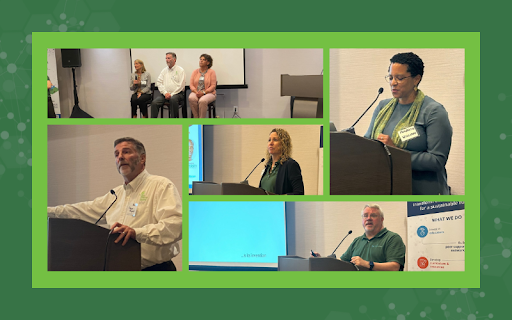
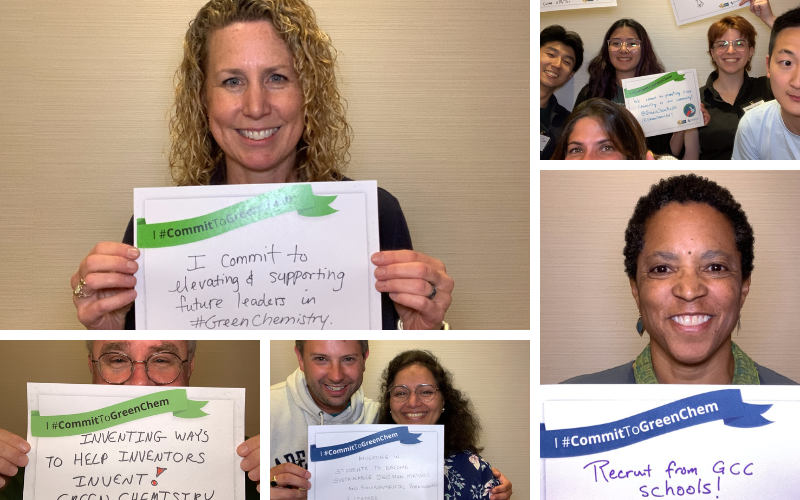
The Green Chemistry Commitment (GCC) Summit held in June brought together passionate leaders and experts in the field of green chemistry, delivering thought-provoking presentations that left a lasting impact. With an emphasis on community support, this event celebrated the GCC’s 10th anniversary and the transformative power of collective action within the green chemistry community.
The summit showcased visionary speakers who ignited inspiration among attendees with their remarkable achievements and innovative ideas. Their words echoed a common theme: the urgent need for a strong sense of community and collaboration within the green chemistry movement. By uniting professionals, educators, and advocates under a shared vision, the summit emphasized that progress in green chemistry goes beyond individual efforts and requires collective support and knowledge sharing.
The GCC launched in June of 2013 with 13 founding signatories. The program was designed around four student learning objectives — theory, toxicology, laboratory skills, and application — as a framework of departmental change at higher education institutions. The GCC program is the result of collaboration between leaders in the green chemistry community, and to date, 130 institutions have signed on, representing approximately 2,900 of faculty members who teach approximately 733,000 students every year. The Commitment is free and open to all chemistry departments.
In this article, we delve into highlights and insights from the GCC Summit, exploring the groundbreaking discussions that took place. By celebrating the contributions of these visionary speakers, we uncover the immense potential for revolutionizing our world toward achieving a sustainable future through green chemistry.
Sign up for our newsletter to learn how to attend future GCC Summit events.
IN THEIR OWN WORDS
Amy Cannon, Co-Founder & Executive Director of Beyond Benign:
“Let’s take a minute to think big. Imagine that you’re not the only champion for green chemistry at your institution. There’s a future where this can happen. Imagine if you didn’t have to explain the value of green chemistry to colleagues or other professionals. Imagine if we had a common grounding in green chemistry. Imagine if research and implementation within the laboratory setting just included toxicity and hazard as key design criteria. Imagine if students entering professional careers were prepared with these skills. Imagine if green chemistry was just the norm, not the exception.
We’re getting closer. How do we get to this future that we can all envision? Our vision is that the molecular building blocks of products that we use every day are safe and healthy for humans and the environment. We think this has to start with education. It has to start at the beginning. And that’s our mission. That’s why we do what we do.
There’s another key piece here, and that’s innovation. These two pieces together, education and innovation, are essential for making that future in which green chemistry is the norm. It starts with all of you.”
Natalie O’Neil, Director of Higher Education at Beyond Benign:
“It starts with you, but it doesn’t end with you. What’s really impactful about the people here is that they bring green chemistry to their own work, and they don’t stop there. You’re out there championing for others to do it too because you truly believe it’s the way that they should teach chemistry. You are my heroes. You are the ones that see the barriers and continue to charge toward them. Thank you for all that you do for you but also for others.”
John Warner, Co-Founder of Beyond Benign:
“There are so many approaches to sustainability. It makes me so sad that we’re in a society where people have decided that some approaches are correct and some are wrong. ‘This is better, and this is not.’ Our world has a diverse set of problems. We humans are a diverse species. Everything is worthy. We just need to find a way to work together to support each other.
Society has reached a point where everything is polarized. But we in chemistry have an entire 150 year history of not taking sides. There’s a lot of serious stuff happening in the world right now. We can’t afford polarization. We need to be disciplined not only in how we communicate to the outside world, but in how we treat one another.
Imagine if tomorrow everyone woke up and wanted sustainability. Every consumer insisted on buying, every retailer insisted on selling, and every manufacturer insisted on creating sustainable technologies. We’ve got a lot of work to do. The vast majority of these technologies haven’t been invented yet. We make a mistake when we think of this as a crisis of desire.”
Areej Nitowski, Green Chemistry Education Manager for MilliporeSigma:
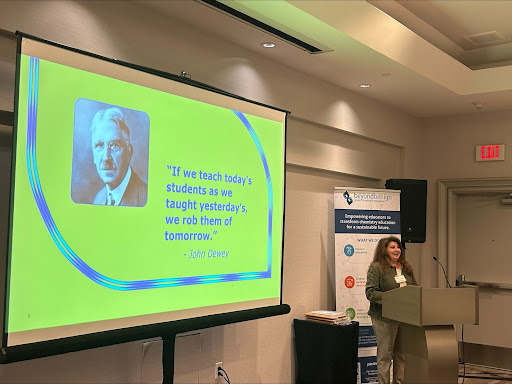
“Education plays a vital role in countering the distrust of science and connecting students with tangible solutions. We must update our curricula to emphasize the importance of chemistry in affecting positive change in our world. By signing the Beyond Benign Green Chemistry Commitment, educators are not entering into a binding contract, but rather expressing their willingness to incorporate green chemistry principles into their teaching practices. As educators, we have a profound influence on students, and we must not lose sight of the impact we can have.
The current perception of science is distorted, and we face challenges in gaining public trust and credibility. Students often question the relevance of what they learn, and we must bridge the gap between their lives and the significance of green chemistry. John Dewey, considered the father of public education, said, “If we teach today as we taught yesterday, we rob our children of tomorrow.” It resonates with me because, as a chemistry educator, I see the need for change in curriculum. I compare the curriculum I studied in the 1980s with today’s, and it is disheartening to find that it remains largely unchanged. We need to make the connection between chemistry and environmental science to empower students to make a difference.
It’s crucial that we amplify our voices and take action. Implementing green chemistry in the curriculum may seem challenging, but it is a necessary step toward a more sustainable future. By taking the Beyond Benign Green Chemistry Commitment, we enhance our institutions’ reputations, curriculums, and degree programs. It also attracts students who are increasingly interested in sustainability. Sustainability cannot be achieved without green chemistry, and we need to make students aware of the professional opportunities and personal impact that green chemistry offers. Let’s continue to inspire and educate, recognizing the multiplier effect our efforts can have.”
Paul Anastas, Professor in the Practice of Chemistry for the Environment at Yale:
“You are all giants. What I mean by that is the challenge you’re undertaking is immense. It’s not just about the daily work; it’s about bringing about a conceptual and cultural change. Your colleagues, although brilliant and accomplished, often know very little about green chemistry. Convincing them to embrace this new way of thinking is not easy. It challenges their intellectual status quo and their sense of importance. Persuading students to embrace green chemistry is also a significant challenge, as it touches their identity. However, I have seen many of you slowly make progress by acknowledging and appreciating their efforts and highlighting the importance of green chemistry. It’s inspiring to witness.
Another remarkable thing I’ve observed is that you are driving a shift in mindset. Rather than focusing solely on measuring the extent of problems related to sustainability, environmental issues, and human health, you are actively seeking solutions. Understanding the problem deeply is crucial, but the ultimate goal is to empower and inform the solution. This change in mindset is essential, and it’s incredible to witness your dedication to thoughtful design and green chemistry solutions.
However, there is always room for improvement. We need to rethink how we teach introductory chemistry and engage students more effectively. We should encourage them to think beyond the prescribed curriculum and ask insightful questions that trigger bigger ideas. While technology like AI can provide answers, it cannot generate the thought-provoking questions that foster deeper thinking. Asking the right questions and guiding students to transform data into knowledge and wisdom is where your expertise truly shines.
I want to reference Isaac Newton’s famous quote about standing on the shoulders of giants. By saying that you are giants, I mean that you are willing to lift others onto your shoulders so they can see new horizons. Knowledge is not isolated; it’s about relevance and sharing wisdom. As giants in your field, you have the power to help students see new possibilities, understand why they matter, and inspire action. Remember, giants may not see the horizon themselves, but they enable others to see it and make a difference.”
INSPIRING SESSION SUMMARIES
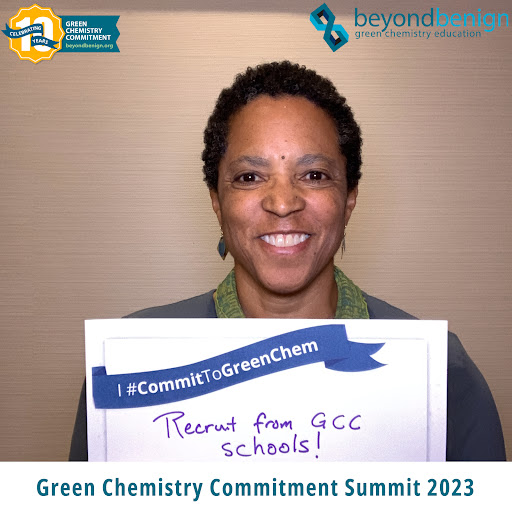
Meredith Williams, Director of the California Department of Toxic Substances Control:
In her presentation, Meredith highlighted the work of the Department of Toxic Substances Control (DTSC) in managing toxic chemicals in California. The DTSC is responsible for remediating the effects of past industrial practices, overseeing cleanup efforts for contaminated lands, and ensuring the safe management of hazardous materials. The DTSC also emphasizes their commitment to promoting safer consumer products by encouraging companies to adopt green chemistry practices and eliminate toxic materials from their products. In her talk, Meredith mentioned the challenges identified in a report commissioned by the California legislature, including gaps in chemical investigation and disclosure, safety measures, and technology innovation. The DTSC has been actively addressing these gaps through regulations, partnerships with academic institutions, and collaborations with other regulatory authorities.
In addition, Meredith discussed the importance of data disclosure and transparency, advancements in computational toxicology, and the role of green chemistry in driving innovation and finding alternatives to harmful chemicals. The DTSC is committed to a precautionary approach, focusing on comprehensive hazard assessments and promoting the use of safer chemicals.
Jane Wissinger, Distinguished University Teaching Professor at the University of Minnesota:
During her presentation, Jane highlighted the importance of green chemistry education at the University of Minnesota. She discussed various initiatives and achievements related to green chemistry within her department and shared how students’ excitement about green chemistry experiments fueled their research program. Jane emphasized the involvement of students, faculty, and the ACS student chapter in promoting green chemistry education. She also mentioned the incorporation of green chemistry principles in lecture and lab courses, as well as the University’s focus on safety and collaboration with Dow Chemical. Lastly, Jane discussed the establishment of a Sustainable & Green Chemistry Committee (SGC) and graduate students’ initiatives in social environmental justice and sustainable research labs. Students’ enthusiasm and involvement, along with faculty support and safety programs, have contributed to the integration of green chemistry principles in various aspects of the University of Minnesota’s curriculum and operations.
Dalila Kovaks, Professor at Grand Valley State University:
At the Summit, Dalila discussed the chemistry department at Grand Valley State University, a predominantly undergraduate institution, focusing on their student population and programs. She highlighted the history of the green chemistry initiative at the university, including the introduction of special topic classes that generated student enthusiasm and led to the development of additional courses. Dalila emphasized the importance of partnerships with local businesses, collaboration with the Michigan Green Chemistry Education Network, and support from the university administration and ACS Green Chemistry Institute. She discussed the challenges she faced in making changes to the school’s curriculum and attracting the attendance needed to keep new courses in session. She also explained the value of the green chemistry certification, and survey responses from local businesses regarding their interest in hiring individuals with green chemistry knowledge. She noted the need for expertise in specific areas, such as polymers, and encourages collaboration and future improvement in green chemistry education and research.
Douglas Raynie, Department Head & Professor Emeritus at South Dakota State University:
In his presentation, Doug discussed his journey with green chemistry over the past 10 years and the challenges he faced in getting administrators on board. He emphasized the importance of administrators embracing green chemistry principles and recommended watching John Warner’s inspiring talks on YouTube. Doug highlighted the integration of green chemistry into his curriculum, including the introduction of the 12 principles in general chemistry courses, toxicology in organic chemistry experiments, and a standalone toxicology course. He mentioned his involvement in research projects and the success of his students’ affiliate club in receiving the green chemistry award. Doug reflected on the debate of standalone green chemistry courses versus integration throughout the curriculum and stressed the need for champions, but involving everyone in the process as champions can not be relied upon. He explored future opportunities such as implementing virtual reality in chemistry education, the potential relationship between the ACS Bridge Program and green chemistry, and the proposal for an online graduate certificate in green chemistry education. Finally, he shared and celebrated the newly updated ACS CPT Guidelines for Bachelor’s Degree Programs. The New CPT Guidelines were released in January of 2023, signposting green chemistry and sustainability as a critical requirement for chemistry coursework at institutions. Additional mention of green chemistry is included as normal expectations and markers of excellence. This is a long needed carrot for the chemistry education community and an indicator that green chemistry is becoming more of the rule, rather than the exception.
 Our higher ed team hosted monthly Green Chemistry Connections events, where higher education and industry leaders actively practicing green chemistry and/or Toxicology shared their experiences. These events provided an opportunity for small group discussions, networking, and resource sharing, following the Green Chemistry Students Learning Objectives as a framework. Throughout the year, we hosted 244 faculty and students during our Connections series, 38% of which attended more than one meeting, for a total of 422 engagements across 9 meetings. Meeting topics ranged from favorite resources, to implementation models from around the world, to useful green chemistry tools used in real-world industry practice. If you’d like to discover our 2022-2023 GCC Connection series, please check out the archived webinar to watch the presentations.
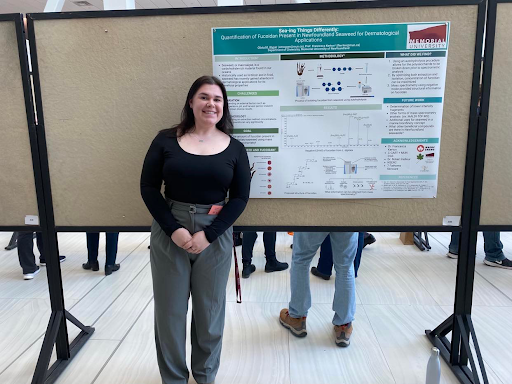 After moving into the Ph.D. program last September, Olivia’s research has moved toward using algae as a renewable energy source, which is in collaboration with the Department of Engineering and Applied Sciences at Memorial University of Newfoundland. This work will look at pre-treatment options for seaweeds to optimize bioethanol and biohydrogen yields. Both of these projects are being actively worked on.
 Olivia Wyper is currently a Ph.D. student in the Green Chemistry and Catalysis Group at Memorial University of Newfoundland under the supervision of Prof. Francesca Kerton. She completed her B.Sc (Hons) with Prof. Kerton in the area of renewable catalysts, which led to her interest in green chemistry. Currently, Olivia is looking at Newfoundland seaweed, Laminaria digitata, in dermatological and biorefinery applications. Since the start of her graduate studies, she has been heavily involved in outreach, such as organizing the Global Womens Breakfast in 2022 and 2023, an event organized by IUPAC. Previously, she gave a talk at the Global Conversation on Sustainability and has been involved with Science Rendezvous, an organization that aims to strengthen science knowledge in youth.
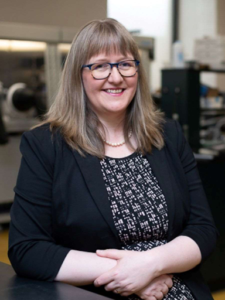 Francesca Kerton is a professor of Chemistry at Memorial University of Newfoundland and has a global reputation for her innovative research on sustainable chemistry related to the oceans. She is a Fellow of The Royal Society of Chemistry and is a member of many scientific panels and committees worldwide. She currently chairs IUPAC’s standing committee on Chemical Research Applied to World Needs (CHEMRAWN) and is chair of the 27th Annual Green Chemistry & Engineering Conference, which will be held in June 2023. She is an Advisory Board member for Reaction Chemistry & Engineering and an Associate Editor for RSC Sustainability. She will chair the 2027 IUPAC World Chemistry Congress and General Assembly, which will be held in Montreal, Canada.
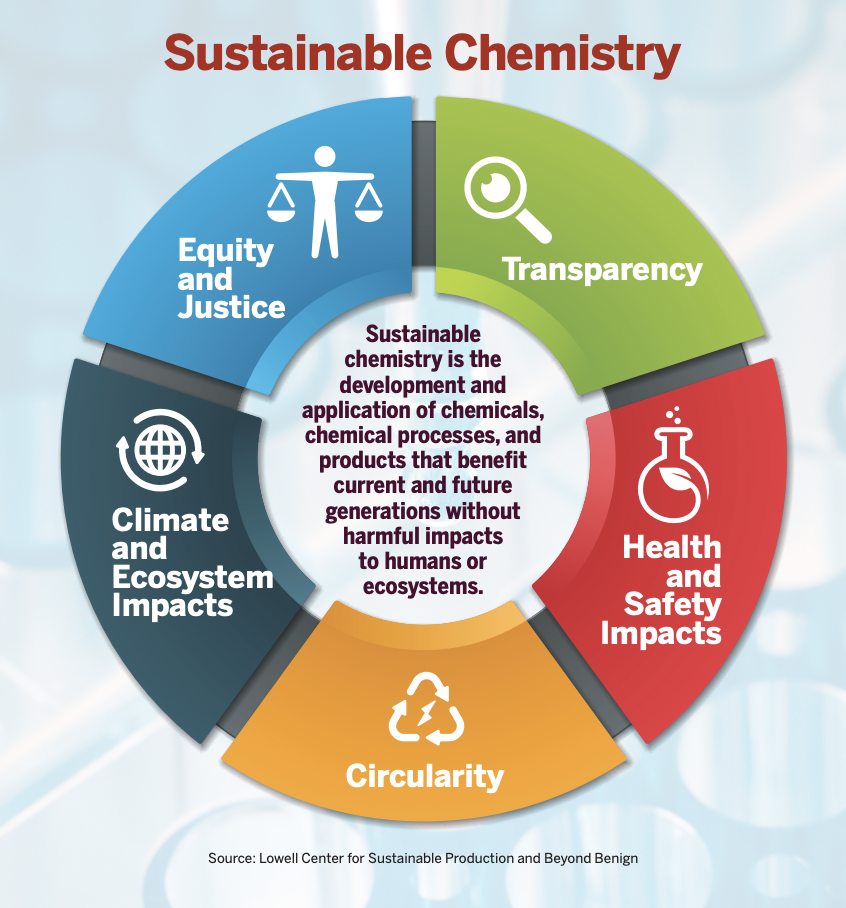
 Over the past year, we teamed up with the UMass Lowell Center for Sustainable Production to form an Expert Committee on Sustainable Chemistry (ECOSChem), a group of 20 leading representatives from industry, government, academic, and non-profit organizations from across the world, to develop an actionable definition and criteria for “sustainable chemistry.” This definition and criteria are to help inform policymakers, industry researchers, educators and so many others in building a more sustainable future through chemistry.