





Preparing the next generation of chemists to design safer, more sustainable materials begins in the classroom and laboratory—and requires a global community committed to transforming how chemistry is taught, practiced, and shared.
Through the Green Chemistry Commitment (GCC), institutions of higher education around the world are working together to embed green chemistry principles into education and prepare students to design safer materials and processes for the future.
Recognizing the need to expand this global movement further, Beyond Benign launched the Community Ambassador Program in 2023—an initiative designed to empower educators, researchers, and emerging leaders to advance green chemistry within their institutions and across regions. Since its launch, the program has grown into a globally connected network of ambassadors spanning institutions and continents, each playing a critical role in accelerating institutional adoption, strengthening collaboration, and increasing access to green chemistry education worldwide.
The Community Ambassador Program is distinct in the sense that it is grounded in institutional transformation—supporting long-term integration of green chemistry into curricula, research, and workforce pathways, rather than one-time outreach or awareness efforts. Throughout its implementation, the program has included 16 ambassadors who continue to expand the reach of green chemistry through collaboration, advocacy, and community-building—helping connect educators and institutions to the global GCC network, the Green Chemistry Teaching and Learning Community (GCTLC), and additional Beyond Benign initiatives aimed at supporting educators to advance green chemistry globally.
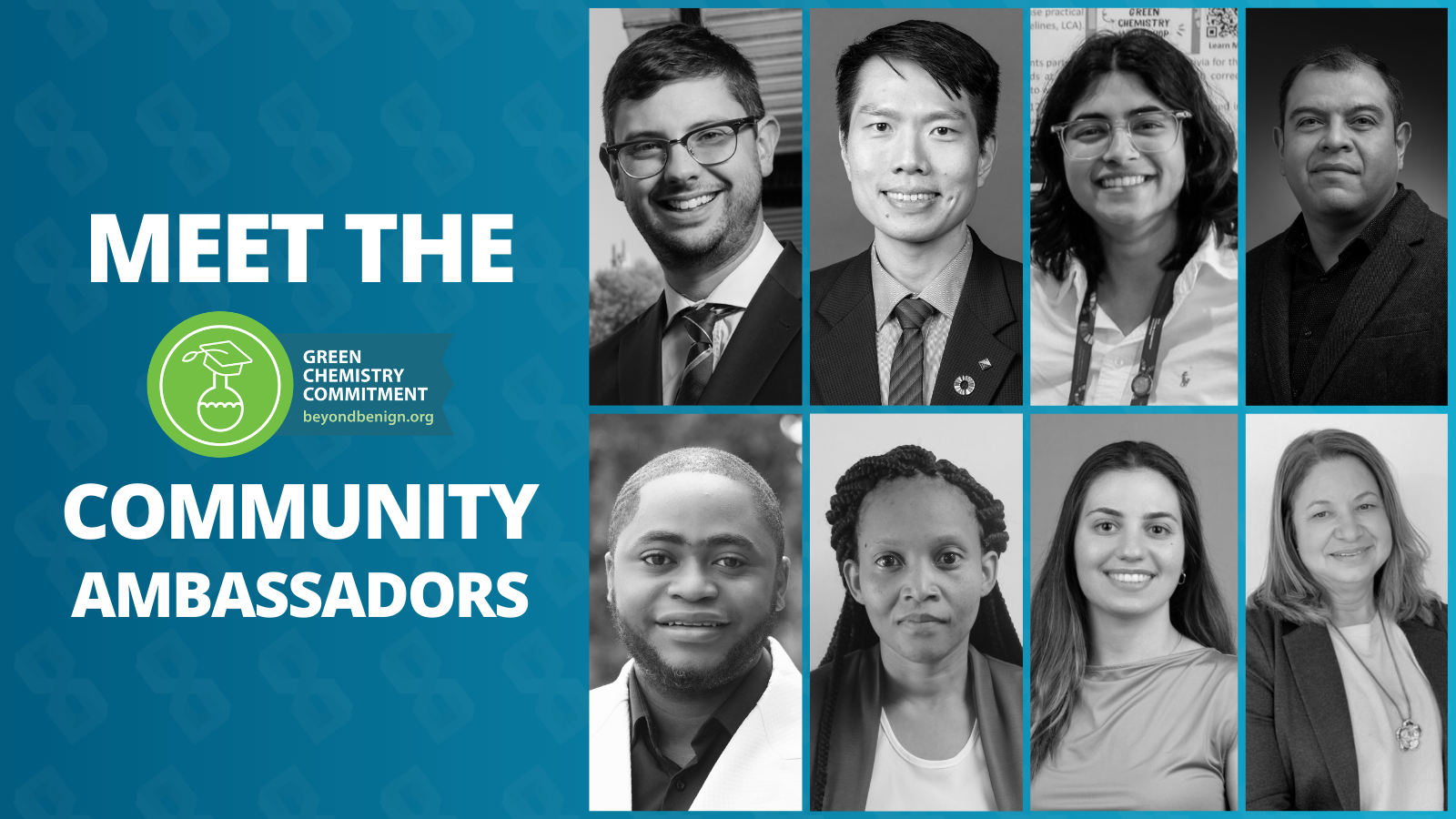
Below, meet this year’s Community Ambassadors and learn how they’re helping grow the green chemistry community worldwide.
Inspired by their work? You may want to consider becoming a Community Ambassador yourself!
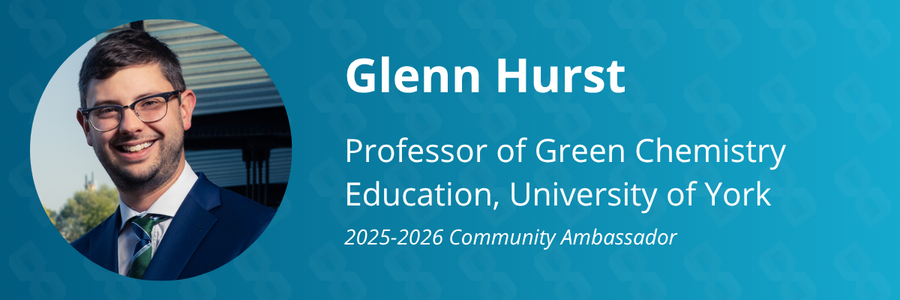 Prof. Glenn Hurst has spent his career advancing green and sustainable chemistry education. A professor at the University of York’s Green Chemistry Centre of Excellence, his work focuses on integrating systems-thinking approaches into chemistry education to help students understand the broader environmental and societal impacts of chemical design.
Through his role as a GCC Ambassador, Glenn helps expand awareness of green chemistry education initiatives and encourages institutions to engage with the growing global community.
He has been particularly proud to support engagement with the GCTLC, which connects educators and researchers working to advance green chemistry education around the world. As part of his ambassador work, Glenn also introduces new audiences to the GCC, helping institutions explore how they can integrate sustainability principles into their chemistry programs.
For Glenn, the role reflects a broader goal: helping ensure that green chemistry principles are embedded across chemistry so that the next generation of scientists is equipped to design safer, more sustainable solutions.
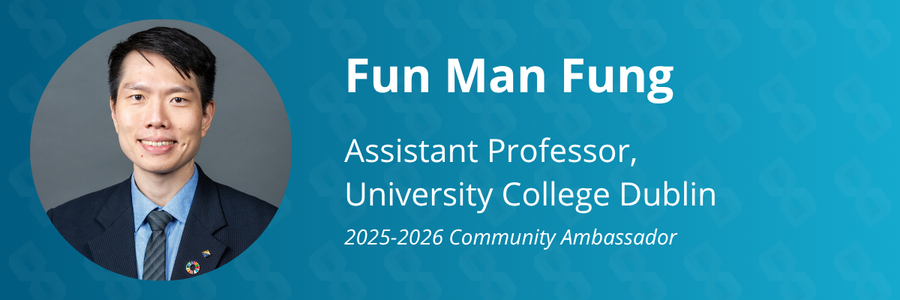 Prof. Fun Man Fung has built a career at the intersection of chemistry education, global collaboration, and sustainability. Trained as a chemistry researcher and educator at the National University of Singapore and Technische Universität München, he has worked with institutions and scientific communities worldwide to strengthen chemistry education and interdisciplinary collaboration.
As a GCC Ambassador, Fun Man sees his role as helping expand the global conversation around green chemistry and bringing more educators and institutions into the community.
One of his proudest accomplishments so far has been helping introduce the GCC to colleagues in Taiwan. In 2024, Fun Man spoke at the Systems Thinking Symposium during the Chemistry National Meeting in Tamkang, where he shared Beyond Benign’s vision for advancing green chemistry education.
The response was immediate: One institution has already signed the GCC, and several others are currently exploring the process. “Bringing this global movement to my colleagues in Taiwan has been incredibly rewarding,” he says. “It shows that the desire for green chemistry is universal—it just needs a spark.”
For Fun Man, ambassador work often happens through everyday conversations: at conferences, through social media, or in discussions with colleagues around the world. Each interaction, he says, is an opportunity to introduce someone new to the possibilities of green chemistry and invite them into the community.
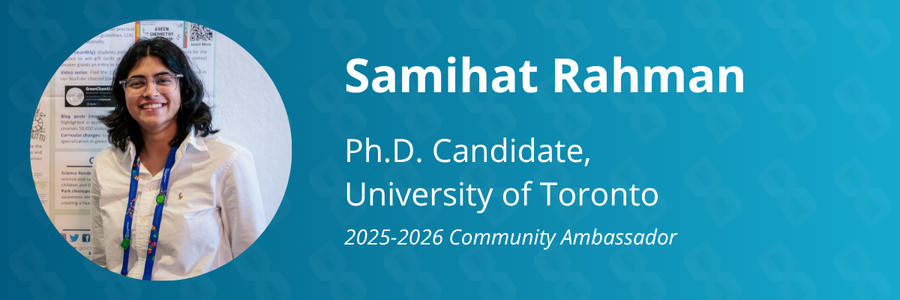 Samihat Rahman is a Ph.D. candidate in physical chemistry at the University of Toronto. Her research combines spectroscopy, materials synthesis, and quantitative analysis to better understand and optimize complex chemical systems.
Alongside her research, Samihat has been actively involved in the student-led Green Chemistry Initiative at the University of Toronto, helping promote sustainable practices in chemistry and foster collaboration between students, researchers, and industry partners.
Samihat became a Community Ambassador to help spread awareness of green chemistry and connect more students and researchers with the global community working to advance sustainable chemistry.
She has especially enjoyed participating in Green Chemistry Connections, Beyond Benign’s webinar series that brings together educators and researchers from around the world. The program has allowed her to meet new collaborators and learn about different approaches to green chemistry across regions and institutions.
Samihat has also helped promote the Green Chemistry Connections webinar series within her university, introducing more students and researchers to the green chemistry community. She hopes to continue raising awareness of green chemistry both at her current institution and at her alma mater.
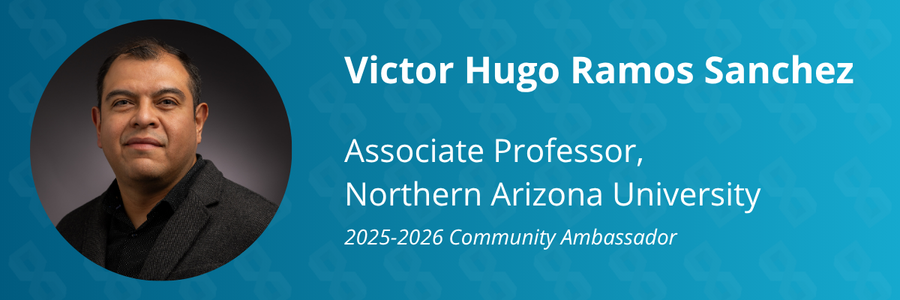 Prof. Victor Hugo Ramos Sánchez brings a global perspective to green chemistry education and research. He earned his Ph.D. in chemistry from the University of Sheffield in the United Kingdom and previously served as a professor at the Autonomous University of Chihuahua in Mexico before joining Northern Arizona University in 2023.
His research focuses on developing sustainable materials and processes for hydrogen production and fuel cells, as well as advancing greener routes for chemical synthesis and analysis. Through this work, he has built a career centered on applying chemistry to real-world sustainability challenges.
Victor was inspired to become a GCC Ambassador after seeing the dedication of the Beyond Benign team to advancing green chemistry education worldwide.
He was particularly motivated by the opportunity to expand awareness of the GCC among Spanish-speaking institutions in Latin America, where the initiative has strong potential to grow.
One of his first initiatives was identifying undergraduate chemistry programs across Mexico and reaching out to them directly to share information about the GCC and its benefits.
Earlier in his career in Mexico, Victor established a research group focused on green chemistry and worked with university leadership to integrate sustainability concepts into the chemistry curriculum—efforts that continue to shape his work as a GCC Community Ambassador today.
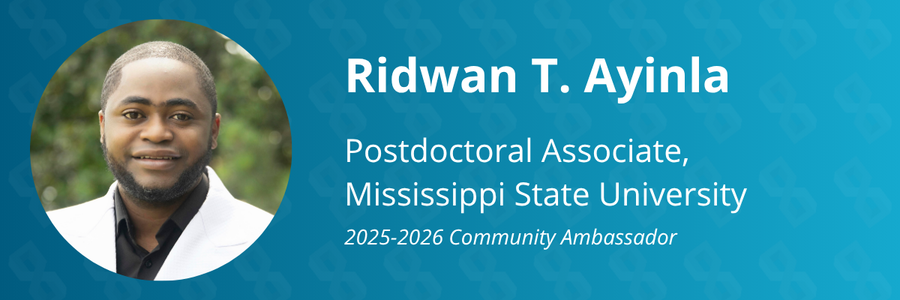 Ridwan Ayinla works at the intersection of materials science, electrochemistry, and energy storage safety. With years of experience in sustainable materials synthesis and battery engineering, his research focuses on improving the safety and resilience of next-generation energy storage systems.
Through his work on battery materials and system-level safety performance, Ridwan has seen firsthand how chemical design decisions influence environmental impact and technological sustainability.
That perspective helped inspire his involvement in green chemistry outreach.
As a Community Ambassador, Ridwan focuses on raising awareness of green chemistry principles and encouraging scientists and students to integrate sustainability into their research and education.
Through seminars, discussions, and online engagement—including outreach in both Mississippi and Nigeria—he has worked to broaden conversations about sustainable chemical design and connect more researchers with the global green chemistry community.
He has also explored ways to incorporate green chemistry concepts into existing science curricula, helping ensure that students encounter sustainability-focused chemical design early in their scientific training.
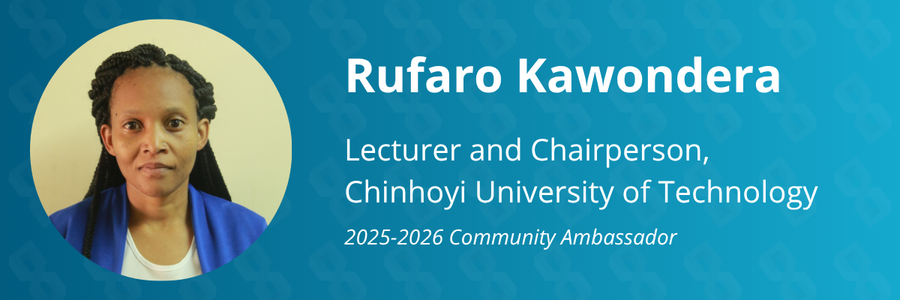 Dr. Rufaro Kawondera is a researcher and lecturer at Chinhoyi University of Technology in Zimbabwe. She earned her Ph.D. in engineering sciences and studies nanomaterials and sustainable energy technologies.
Alongside her research, Rufaro is deeply committed to building stronger scientific communities and expanding access to sustainability-focused education.
She was inspired to become a GCC Ambassador by a passion for mentorship, knowledge sharing, and community development.
Her efforts have focused on expanding the green chemistry community in Zimbabwe, where five universities are now engaged in green chemistry initiatives through the GCC program.
Rufaro has helped connect institutions, researchers, and students interested in sustainability and plans to continue growing the community beyond Zimbabwe’s borders. She is also helping organize a Green Chemistry Challenge in which students will present innovative solutions based on green chemistry principles.
In her own teaching, Rufaro integrates green chemistry concepts into her courses and highlights sustainability in scientific talks and presentations. Beyond the classroom, she shares opportunities and resources through professional networks and online platforms, encouraging more researchers to engage with the global green chemistry community.
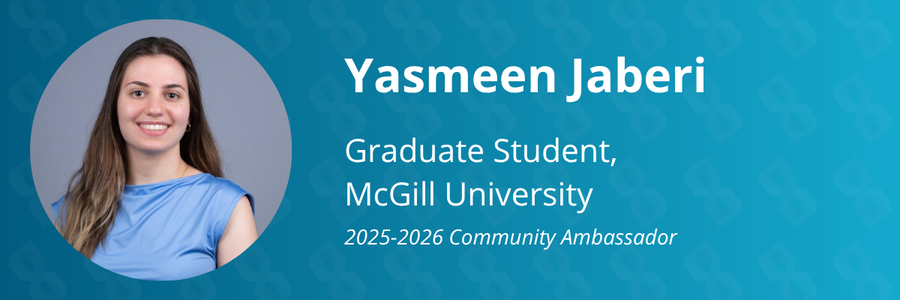 Yasmeen Jaberi is a graduate student at McGill University who is passionate about making science more accessible beyond the lab.
For Yasmeen, becoming a Community Ambassador has been an opportunity to talk more intentionally about green chemistry and help others rethink what the field of chemistry can be.
Yasmeen is looking forward to participating in the upcoming 11th Annual GCM x GCI Symposium: Lab to Landfill at McGill, which will explore the impact of everyday decisions on chemical waste. She also plans to continue working with McGill’s chemistry outreach group, helping integrate green chemistry concepts into public engagement activities.
She believes the growth of the green chemistry movement depends on steady, long-term education and outreach.
Through conversations with high school students, undergraduates, and members of the public, Yasmeen hopes to encourage more creative thinking about the scientific challenges of our time—and to help expand the green chemistry community one conversation at a time.
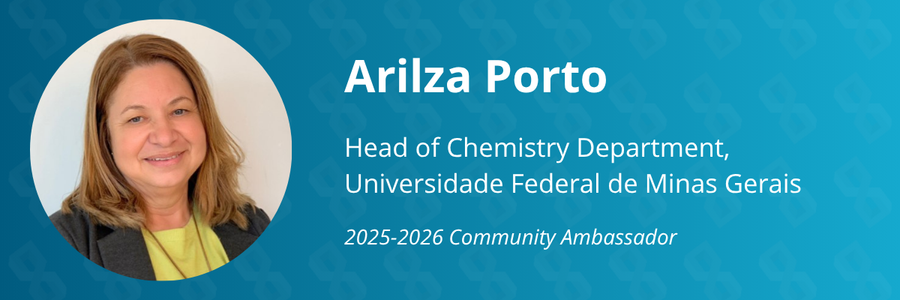 Prof. Arilza Porto is the Head of the Chemistry Department at the Universidade Federal de Minas Gerais in Brazil, where she works to advance green chemistry education and strengthen collaboration within the scientific community.
For Arilza, collaboration and community-building have always been central to her work. Through the GCC Ambassador role, she aims to amplify voices, support the growth of others, and help strengthen the global green chemistry community.
One initiative she is especially proud of at her institution is the restructuring of practical chemistry classes, which serve more than 5,000 students each year. The effort has helped reduce resource use while also emphasizing the importance of designing sustainable solutions to chemical problems.
Arilza and her colleagues have also been actively working to expand awareness of green chemistry within their institution and beyond. Through regular meetings with chemistry professors, department heads, and educational administrators, they are introducing the GCC and encouraging the integration of green chemistry principles into undergraduate curricula.
Through these efforts, Arilza hopes to help build stronger connections across institutions and ensure that sustainability becomes an integral part of chemistry education for future generations.
Get Involved
The Green Chemistry Commitment (GCC) continues to grow as more educators, researchers, and institutions join the movement to redesign chemistry for sustainability.
Interested in learning more or participating?
- Meet the 2024 Community Ambassadors
- Learn how your institution can become a Green Chemistry Commitment (GCC) Signer
- Apply to become a Community Ambassador
- Join the Green Chemistry Teaching and Learning Community (GCTLC) to connect with educators, researchers, and leaders advancing green chemistry worldwide
Together, these efforts are helping build a global community committed to shaping a safer, more sustainable future through chemistry.


