

Across the globe, chemistry classrooms are changing.
Through the Green Chemistry Education Awards, made possible through the generous support of Millipore Sigma (MilliporeSigma is the U.S. and Canada Life Science business of Merck KGaA, Darmstadt, Germany) and Dow, Beyond Benign is honored to support educators and institutions working to embed sustainability more deeply into chemistry education and advance the Green Chemistry Commitment’s (GCC) Student Learning Objectives—a framework guiding institutions in integrating green chemistry across curriculum, research, and community engagement. As part of a global network of colleges and universities, these award-winning GCC signers are integrating green chemistry principles across their curricula and preparing students for more sustainable scientific practice.
This year’s recipients are redesigning legacy lab experiments, introducing greener technologies, launching student sustainability hubs, strengthening teacher preparation programs, and building entirely new pathways for students to engage with green chemistry from their first year through graduation.
Spanning six continents, this year’s awardees reflect the growing global momentum to transform how chemistry is taught, practiced, and connected to sustainability challenges.
Through safer laboratory practices, measurable reductions in resource use, innovative curriculum design, and empowered students who see environmental responsibility as central to scientific practice, this year’s awardees demonstrate what meaningful transformation looks like in action.
Collectively, this year’s awards will impact thousands of students annually through redesigned laboratory experiences, faculty training, and new sustainability-focused learning pathways.
University of San Francisco
At the University of San Francisco, green chemistry is expanding into upper-division coursework. With support from this award, faculty will develop and pilot a new Experimental Biochemistry laboratory focused on the enzymatic synthesis of molecules such as capsinoids and indican, illustrating principles such as less-hazardous synthesis, safer solvents, and catalysis. The team will also create two biochemistry case studies and host a seminar speaker to strengthen connections between green chemistry and biochemistry across campus. Materials will later be shared through the Green Chemistry Teaching and Learning Community (GCTLC).
From the team at USF: “Funding from this award will enable us to make a concerted effort to develop green chemistry materials for our Biochemistry classes. While we have integrated concepts of green chemistry and sustainability into our lower-division lectures and labs for several years, we can now extend this commitment further into our upper-division classes, primarily Biochemistry. This area of the curriculum reaches all of our Chemistry majors as well as a significant number of Biology and pre-health students, making it a strategic focal point for expanding the impact of green chemistry education.”
Universidad de San Carlos de Guatemala
At the Universidad de San Carlos de Guatemala, second-year organic chemistry students will explore mechanochemistry as a greener alternative to traditional synthesis. The project introduces solvent-free extraction of natural products and chitosan from shrimp shell waste, reinforcing sustainable synthesis and waste valorization. Faculty and teaching assistants will receive training, and students will compare traditional and green methodologies throughout the academic year.
From the team at Universidad de San Carlos de Guatemala: “This award is incredible news for our university! With this recognition, we will be able to introduce greener alternatives to create products and materials, while teaching our students that there are safer and more benign ways to carry out chemical reactions. This award will boost our green chemistry transformation and strengthen our commitment to sustainability in education and research.”
Chimie Verte Academy – Université Savoie Mont Blanc
Université Savoie Mont Blanc will launch the “Passport to the Green Chemistry Academy,” a structured pathway spanning L1–L3 designed to introduce undergraduates to green chemistry early and progressively. Through digital content, motion design videos, case studies, quizzes, industry visits, and roundtables with professionals, students will gain both theoretical grounding and real-world exposure. Digital badges aligned with GCC Student Learning Objectives will formally recognize their progress. The program will be piloted locally before expanding to partner universities.
From the team at Université Savoie Mont Blanc: “Because of this award, students will be exposed to green chemistry much earlier in their academic journey and will better understand how chemistry can address real sustainability challenges. Through the Passport to the Green Chemistry Academy, they will gain concrete experiences, digital recognition (badges), and direct interaction with researchers, industry, and master’s students. This will empower them to make informed choices about their studies and future careers in green chemistry.”
Akwa Ibom State Polytechnic, Nigeria
Akwa Ibom State Polytechnic will host a two-day flagship green chemistry program focused on both faculty development and student innovation. Faculty and laboratory staff will receive training in curriculum redesign, safer laboratory practices, and systems thinking. Students will launch the Student Sustainability Accelerator Hub (SSAH), engaging in innovation challenges, mentorship, and peer-led sustainability initiatives that encourage practical, low-cost green solutions.
From the team at Akwa Ibom State Polytechnic: “This award will expose our students to safer, more sustainable laboratory practices and empower them through peer-led innovation challenges and mentorship. It is our hope that this initiative will help them to grow into a new generation of environmentally conscious scientists and sustainability innovators.”
Federal University of Minas Gerais (UFMG)
At the Federal University of Minas Gerais, sustainability will become visible—and measurable—in undergraduate teaching laboratories. The university will install waterless condensers and water-recycling systems to replace conventional water-cooled apparatus, thereby significantly reducing water consumption. Faculty and technical staff will receive training to ensure long-term use and maintenance, and water usage will be monitored to quantify environmental impact and cost savings.
From the team at UFMG: “This award will have a transformative impact on our undergraduate chemistry laboratories by enabling hands-on implementation of green chemistry principles at scale. By reducing water consumption and modernizing laboratory infrastructure, our students will directly experience how sustainability and high-quality chemical education go hand in hand. This project will empower future scientists to integrate environmental responsibility into their professional practice.”
University of Groningen
The University of Groningen is taking a data-driven approach to sustainable laboratory behavior. Through a controlled study across 12 teaching labs, the team will test behavioral interventions designed to increase students’ confidence in acting sustainably and strengthen positive lab norms. Students will set SMART (specific, measurable, achievable, relevant, and time-bound) sustainability goals, use checklists, and collaborate on collective objectives, while researchers monitor energy use, water consumption, chemical waste, and consumables to measure impact.
From the team at University of Groningen: “The award allows us to demonstrate, in measurable terms, how educational labs can genuinely reduce their footprint without compromising learning outcomes. Our proposal combines behavioral interventions from environmental psychology with objective laboratory metrics. This integration offers a unique opportunity to establish an evidence base that connects educational practices, behavioral change, and quantifiable environmental benefits.”
Chinhoyi University of Technology
Chinhoyi University of Technology will convene a Green Chemistry and Sustainability Challenge engaging three faculties and hundreds of students. Participants will identify current processes or products that can be improved through green and sustainable approaches, developing practical solutions that emphasize innovation, teamwork, and systems thinking. The initiative also includes participation in GreenChemAfrica to strengthen regional collaboration.
From the team at Chinhoyi University of Technology: “This award will benefit my students by strengthening their training in green chemistry and sustainable scientific practice. Our proposed project will provide students with a practical platform to design and test environmentally friendly chemical processes, encouraging innovation, teamwork, and critical thinking.”

University of Washington Bothell
At the University of Washington Bothell, first-year chemistry students will participate in community-engaged green chemistry research directly within their general chemistry laboratory courses. Advanced undergraduates and faculty will develop a Course-Based Undergraduate Research Experience (CURE) aligned with the GCC Student Learning Objectives. Students will monitor North Creek, a local waterway on campus, connecting laboratory learning to environmental stewardship and institutional sustainability efforts.
From the team at University of Washington Bothell: “This award will allow our students to participate in community-engaged green chemistry research directly within their general chemistry laboratory courses. Integrating a Course-Based Undergraduate Research Experience (CURE) into a first-year class provides a high-impact learning opportunity at the very start of students’ academic journeys. Because CUREs have been shown to increase students’ confidence and persistence in STEM fields, embedding this model in an introductory course ensures that these benefits reach a broader and more diverse group of students.”
Harvey Mudd College
Harvey Mudd College will develop and implement a new multi-part green polymer and bioconjugation experiment in its Organic I laboratory course. Students will synthesize and functionalize polymers using safer reagents and greener solvents, reflect on sustainability considerations, and characterize their products using advanced analytical techniques. The work will be presented at the Green Chemistry Gordon Research Conference and shared more broadly to support adoption by other institutions.
From the team at Harvey Mudd College: “This grant will enable our team of students and faculty to develop a new, multi-part green chemistry experiment for our organic laboratory course focused on the synthesis and functionalization of polymers. It will also help us share this innovative work at an international green chemistry conference and publish it so other green chemists can use it in their own courses.”
University of Hawai‘i Maui College
The University of Hawai‘i Maui College will deepen green chemistry integration across its curriculum by implementing new green laboratory modules. Faculty participation in the 49th RASBQ Conference in São Paulo will support global engagement and inform the development of modern, engaging instructional materials that emphasize safer laboratory practices and sustainability.
From the team at University of Hawaii Maui College: “This award provides helpful support for our efforts to integrate sustainable science at UHMC. It assists in our transition toward safer laboratory practices and helps ensure our students are exposed to environmentally responsible chemistry.”
University of California, Berkeley
At the University of California, Berkeley, the focus is on preparing future science teachers. The team has designed an online unit that integrates green chemistry and laboratory safety for preservice educators. The unit will be piloted, assessed, and refined through a design-based research cycle, with validated tools measuring gains in green chemistry knowledge, lab safety understanding, and teaching confidence. Classroom observations will help evaluate how green chemistry can be implemented effectively to support student learning.
From the team at UC Berkeley: “This grant will help support pre-service science teachers in not only learning valuable lab safety skills through tangible examples, but learning how green chemistry and lab safety support each other and how they can easily be integrated into existing curricula. Through studying how pre-service teachers are learning lab safety and green chemistry, we aim to build on the existing work and guidance for lab safety and green chemistry courses to continue to improve science education for all.”
How to get involved:
- Not yet a Green Chemistry Commitment (GCC) signer? Bring the GCC to your higher ed institution to unlock opportunities for professional development, funding, and more while expanding green chemistry education.
- Subscribe to the Beyond Benign newsletter to be notified when applications open for the next batch of Green Chemistry Education Awards and stay up to date on other funding opportunities.
- Read more inspiring, replicable stories of green chemistry education in action.
 We are inspired by this reflection from community member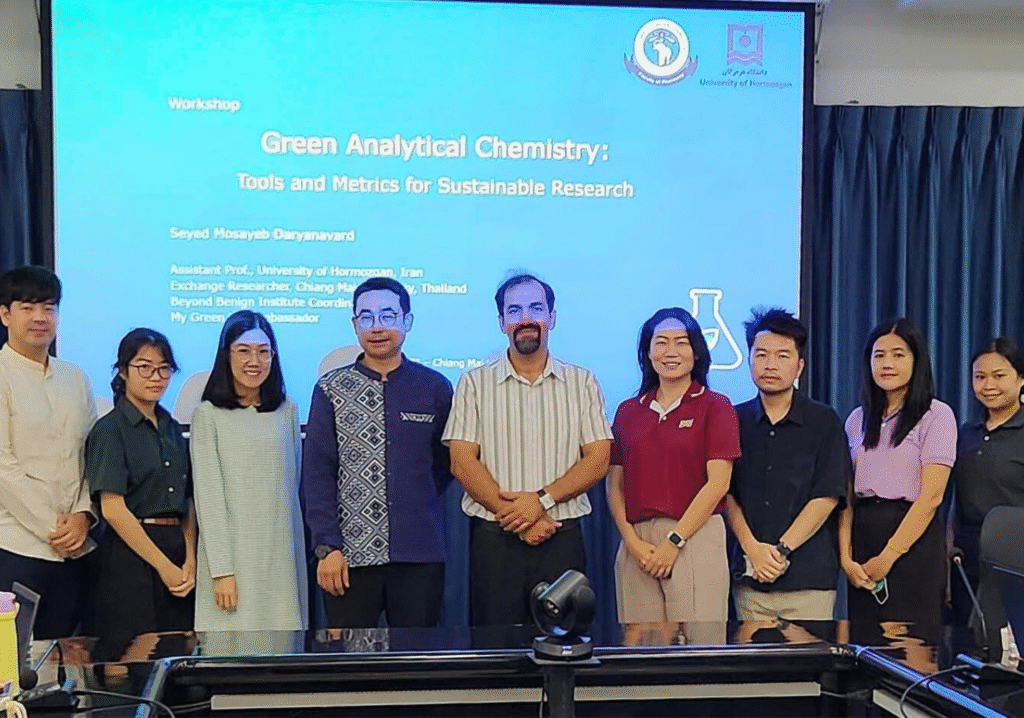
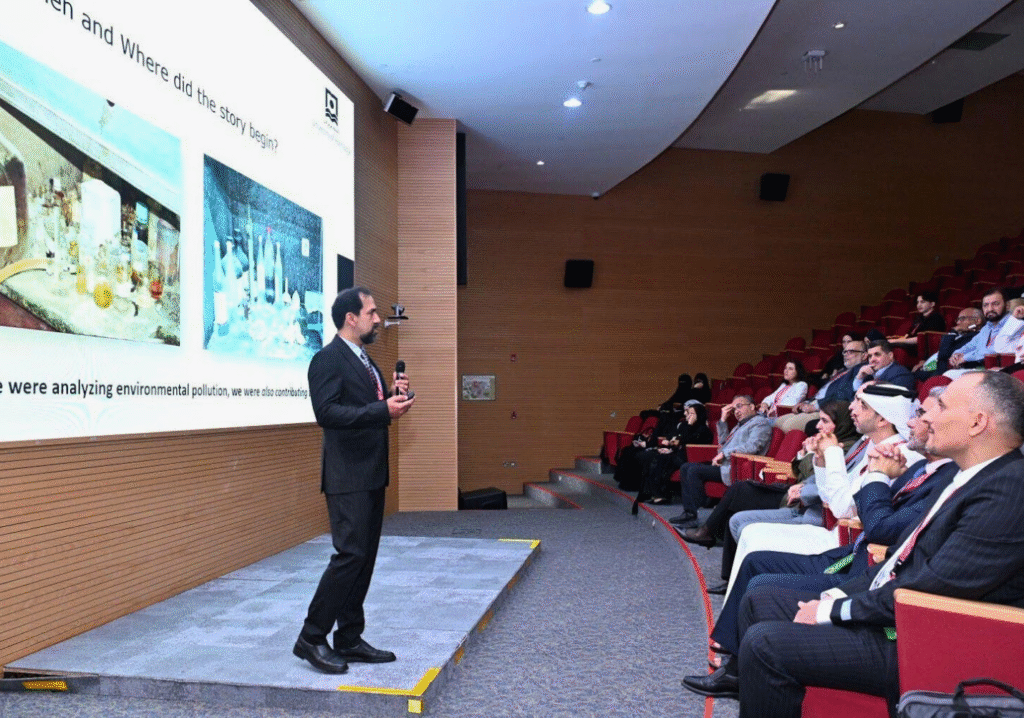
 A look at the moments—from global gatherings to everyday connections—where our team felt the power and momentum of the green chemistry education community in 2025.








 Beyond Benign has been awarded a five-year, $1.83 million grant from the