





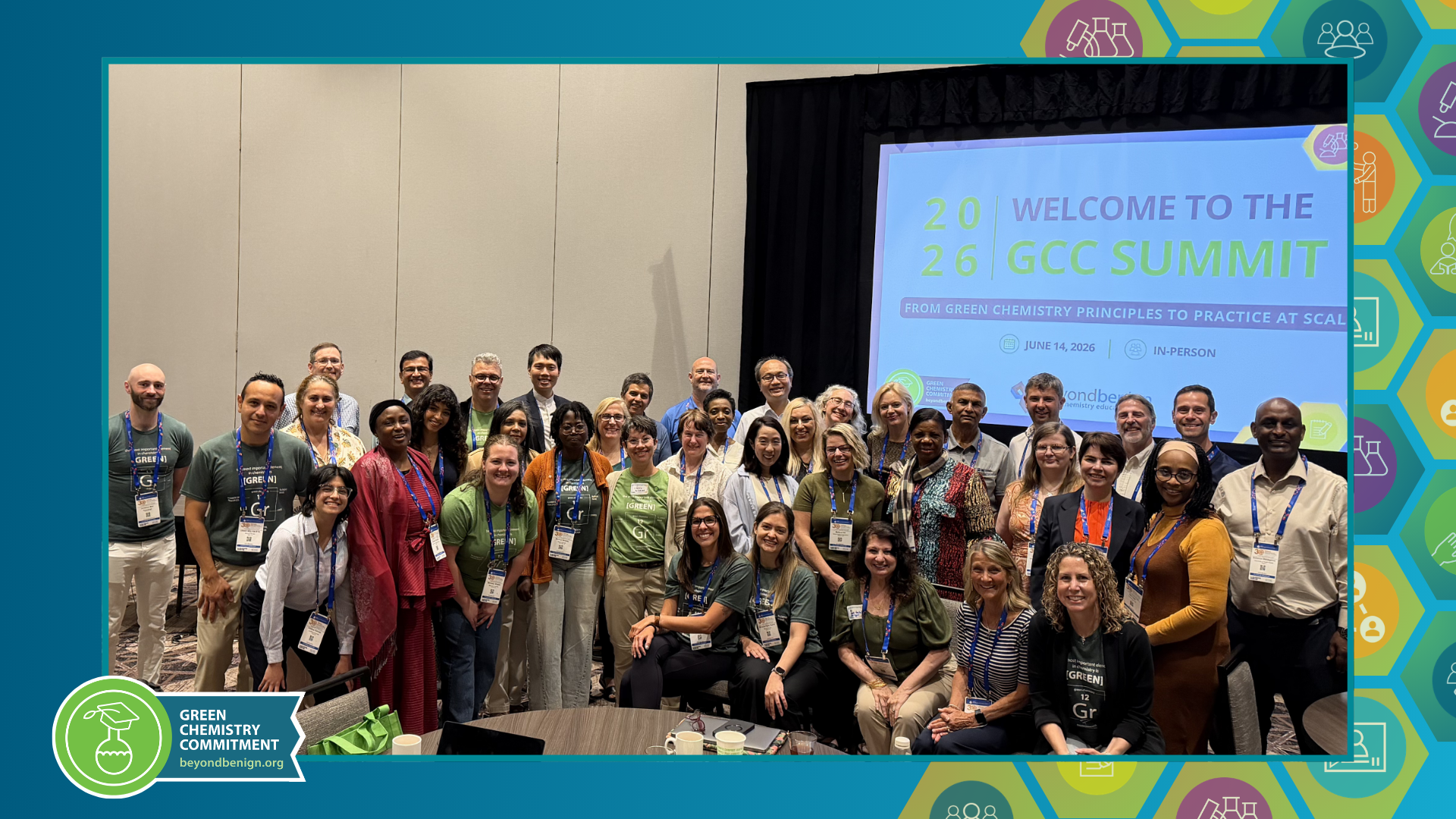
Each year, Beyond Benign’s Green Chemistry Commitment (GCC) Summit brings together educators, researchers, industry leaders, and changemakers from around the world to advance a shared vision for chemistry education. In 2026, the GCC community came together through both a virtual gathering and an in-person event held alongside the 30th Green Chemistry & Engineering Conference (GC&E), welcoming a total of 135 participants from 22 countries. United by the theme From Green Chemistry Principles to Practice at Scale, attendees explored how to move green chemistry beyond guiding principles and into everyday practice.
Across keynote presentations, panel discussions, talks from our GCC signers, and collaborative working groups, participants examined how research can shape curriculum, how education can better prepare students for the workforce, and how global collaboration can accelerate meaningful change across institutions and communities.
Together, the virtual and in-person gatherings reflected a community focused not only on imagining a more sustainable future for chemistry but on building the tools, partnerships, and momentum needed to make that future a reality.
GCC Summit Highlights: Key Conversations & Catalysts
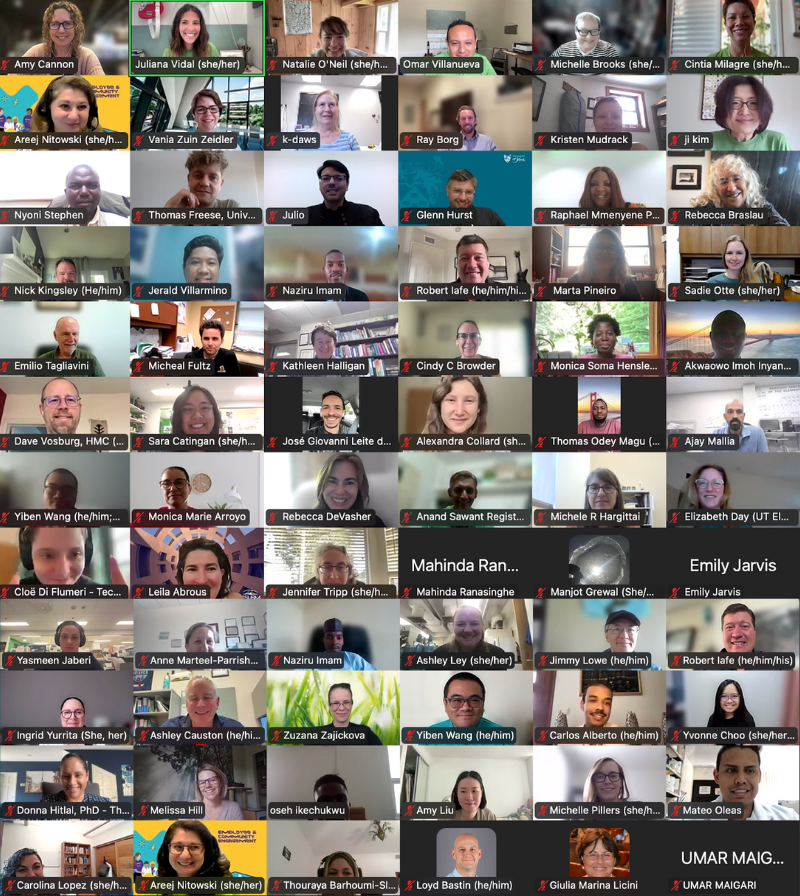
Across both the virtual Summit and the in-person gathering at the 2026 GC&E, several themes emerged, reflecting the GCC community’s shared vision for advancing green chemistry education.
1. From Principles to Practice at Scale
The 2026 GCC Summit centered on a challenge that is becoming increasingly urgent across higher education, research, and industry: How do we move green chemistry beyond a set of guiding principles and into everyday practice?
Throughout both Summit gatherings, speakers returned to the idea that green chemistry education is no longer just about introducing students to the 12 Principles. It’s about preparing them to apply those principles to real-world challenges, from designing safer chemical processes to developing new materials, transforming laboratory practices, and advancing sustainability across industries.
The Summit’s keynote presentations—delivered by Dr. Audrey Moores (McGill University) during the virtual Summit and by Dr. Glenn Hurst (University of York) during the in-person gathering—both explored how advances in green chemistry research can catalyze curriculum transformation. While each speaker brought a unique perspective, both emphasized the importance of connecting cutting-edge research with classroom learning to prepare students for the real-world application of green chemistry.
That emphasis on real-world application was perhaps best captured by Dr. Omar Villanueva, Chief Program Officer at Beyond Benign, who challenged attendees to consider, “Are students actually ready to do green chemistry—or have we simply taught them to name it?” That question became a touchstone throughout the Summit, reinforcing that the future of green chemistry education depends on connecting classroom learning with real-world applications.
2. Bridging Research, Education, and Industry
Throughout the Summit, speakers emphasized that green chemistry advances most effectively when research, education, and industry evolve together, not independently.
Speakers highlighted the importance of breaking down traditional boundaries between the laboratory, the classroom, and the workplace. Rather than viewing education as preparation for future research or industry careers, presenters explored how each of these spaces can actively inform one another. Emerging research can inspire new approaches to teaching, industry can help identify the skills students need to succeed, and educators can prepare graduates to accelerate innovation from day one.
This perspective was reflected throughout both Summit panel discussions, where representatives from academia, industry, and nonprofit organizations—including Boeing, Change Chemistry, Novartis, Green ChemisTree Foundation, and universities across the world—explored how institutions can better align classroom experiences with real-world challenges. Discussions focused on developing graduates who are equipped not only with technical knowledge, but with systems thinking, collaboration, and problem-solving skills needed to drive sustainable innovation.
The theme also emerged in the talks from our GCC signers, where educators shared examples of translating research into curriculum, expanding professional development opportunities, and creating resources to make green chemistry more accessible to faculty and students worldwide. Together, these examples demonstrated that meaningful change doesn’t happen at a single point in the educational pipeline—it happens through ongoing collaboration among researchers, educators, students, and industry leaders.
Students are really craving this change … it’s really on us to support that innovation and, in some cases, just get out of the way.”
Most of our students will go into environments that don’t speak our language. They don’t speak chemistry, they don’t speak chemical engineering, and they need to be able to translate what that means.”
3. Growing a Global Community of Change
The 2026 GCC Summit also highlighted the growing international reach of the GCC program and the power of a global community working toward a shared vision for chemistry education.
Throughout the event, speakers shared examples of green chemistry taking root in diverse educational and cultural contexts. From Canada to France, Brazil, Zimbabwe, India, Ireland, and beyond, presenters demonstrated that while every institution faces unique opportunities and challenges, the underlying goal remains the same: equipping students to build a more sustainable future through chemistry.
The presentations from our GCC signers offered compelling examples of how this work is expanding around the world. Speakers highlighted the development of regional Communities of Practice, institutional transformation efforts,, and new academic pathways for green chemistry education, alongside professional development opportunities and teaching resources that support educators.
One particularly inspiring example came from Zimbabwe, where educators are building new pathways for green chemistry education through curriculum development, faculty collaboration, and the creation of new academic programs. Their work reflected a broader theme that emerged throughout the Summit: As the GCC community grows, so does its capacity to inspire local leadership and create lasting impact within institutions, regions, and countries.
“A structured community of practice is essential for knowledge exchange, policy influence, curricular development…”
4. Giving Educators Practical Pathways to Action
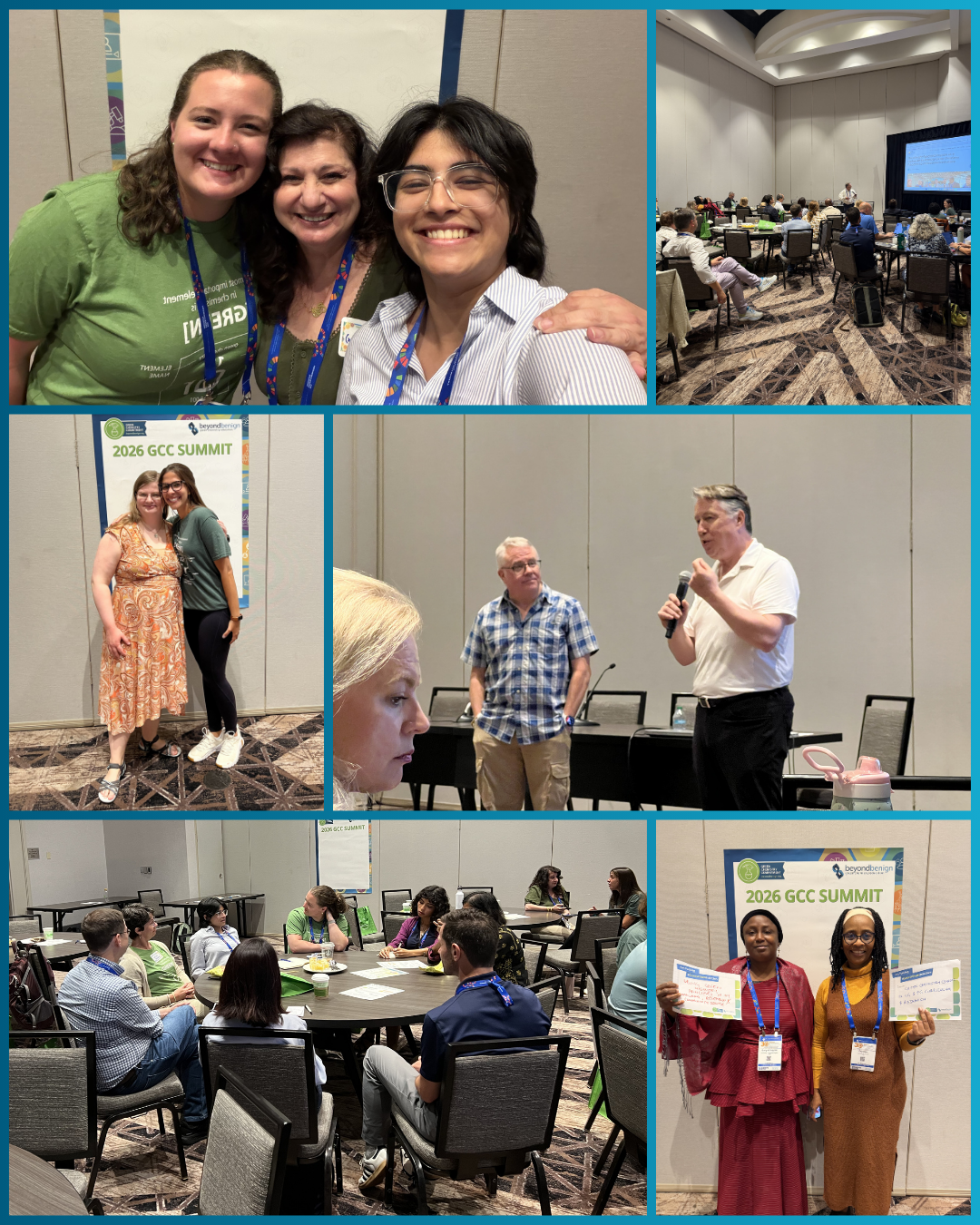
While the Summit explored ambitious ideas for the future of chemistry education, educators remained firmly grounded in practical implementation. Across presentations, panel discussions, and collaborative sessions, speakers shared tangible strategies, teaching tools, and resources that educators can begin applying in their own classrooms and institutions.
Across both Summit gatherings, presenters showcased a wide range of approaches for embedding green chemistry into existing curricula—from redesigning laboratory experiments and introducing emerging research topics to developing professional development opportunities and creating accessible teaching resources. Rather than suggesting that meaningful change requires a complete curriculum overhaul, many speakers emphasized that transformation often begins with thoughtful, incremental steps that build momentum over time.
Sessions also highlighted resources designed to make those steps more accessible. During the virtual Summit, Dr. Deborah Bromfield Lee (Florida Southern College) shared Beyond Benign’s An Introduction to Undergraduate Green Chemistry Teaching and Practice course, which supports educators in bringing green chemistry into undergraduate teaching and curriculum design. At the in-person Summit, Dr. Tom Umile (Villanova University) introduced an easy-to-use template for creating green chemistry case studies, developed with support from Beyond Benign and ACS GCI, to help instructors create classroom materials based on real-world chemistry examples.
This focus on action continued throughout the Summit’s collaborative working groups, where participants exchanged ideas, discussed common challenges, and explored solutions related to curriculum development, resource sharing, institutional change, and student engagement. These conversations provided attendees with opportunities to learn from peers facing similar challenges while building new professional connections across the GCC community.
The Summit also introduced a new GCC signer benefit developed through Beyond Benign’s partnership with Vernier Science Education: a discounted Green Chemistry Starter Package featuring sensors, accessories, and ready-to-teach laboratory experiments designed to support safer, lower-waste chemistry instruction. Together with the many resources highlighted throughout the Summit, this new offering reflects Beyond Benign’s ongoing commitment to providing partnerships and equipping educators with practical tools that make implementing green chemistry more accessible.
The students are hungry for this stuff.”
5. Students as the Next Generation of Green Chemistry Leaders
Underlying each of these conversations was a shared commitment to preparing the next generation of green chemistry leaders.
Speakers repeatedly emphasized that preparing students for this role requires more than teaching foundational concepts. It means creating learning experiences that encourage curiosity, critical thinking, collaboration, and systems thinking while empowering students to address complex sustainability challenges with confidence.
Several presenters shared examples of students engaging directly with real-world research, contributing to curriculum innovation, and helping advance greener laboratory practices. Others highlighted how exposing students to industry perspectives, interdisciplinary collaboration, and emerging research areas can help them better understand the broader impact of chemistry beyond the classroom.
The Summit’s closing presentations placed this focus on the next generation within the larger challenge of moving green chemistry from principles to widespread practice. During the virtual gathering, Dr. John Warner, Beyond Benign co-founder and Chief Executive Officer and Chief Technology Officer of Technology Greenhouse, explored the connections between research innovation and industrial implementation. At the in-person gathering, Warner joined Dr. Paul Anastas, Professor at Yale University, to reflect on what it will take to accelerate the broader adoption of green chemistry. Their closing perspectives reinforced the importance of preparing the scientists entering classrooms, laboratories, and workplaces today to help shape how chemistry is practiced tomorrow.
This commitment to student leadership was also reflected in the Summit’s collaborative working groups, which were facilitated by educators, graduate students, and emerging leaders from across the GCC community. Together, participants explored how educators can create opportunities for students to take active roles in advancing green chemistry within their institutions and communities, recognizing that lasting transformation depends on equipping learners not only with knowledge, but with the confidence to apply it.
As the GCC community continues to grow, investing in students remains central to its mission. By preparing graduates to think critically, collaborate across disciplines, and lead with sustainability in mind, GCC signers are helping cultivate a generation of scientists ready to move green chemistry from aspiration to action.
#GreenChemInAction: A Global Movement
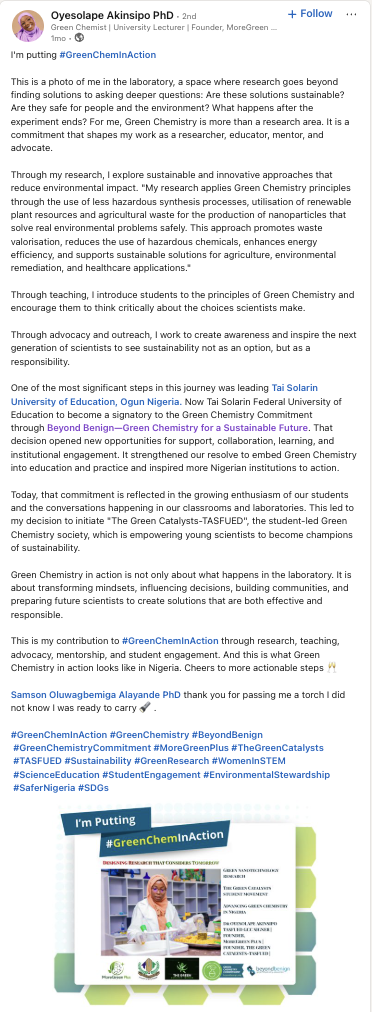
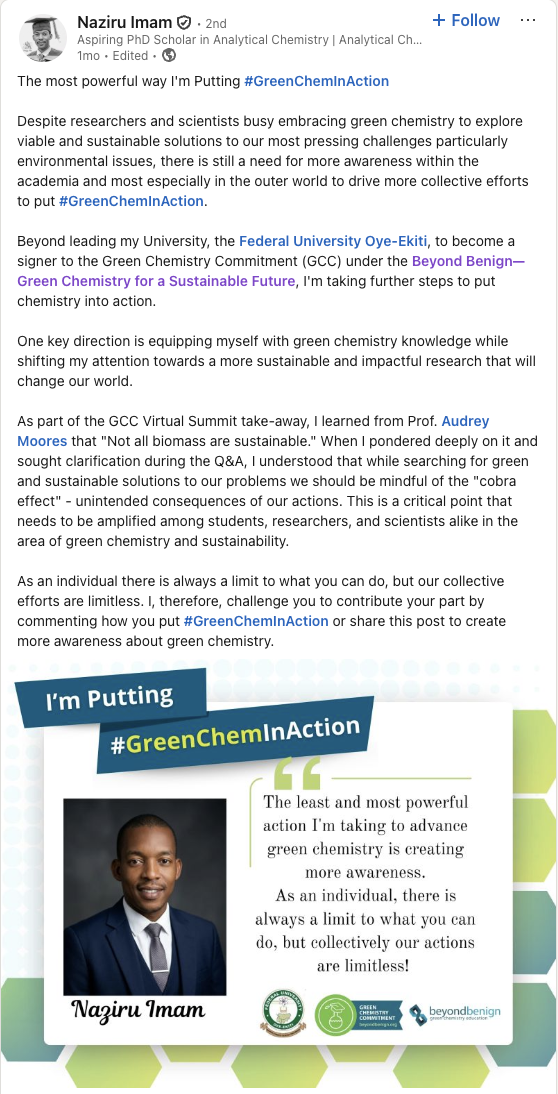
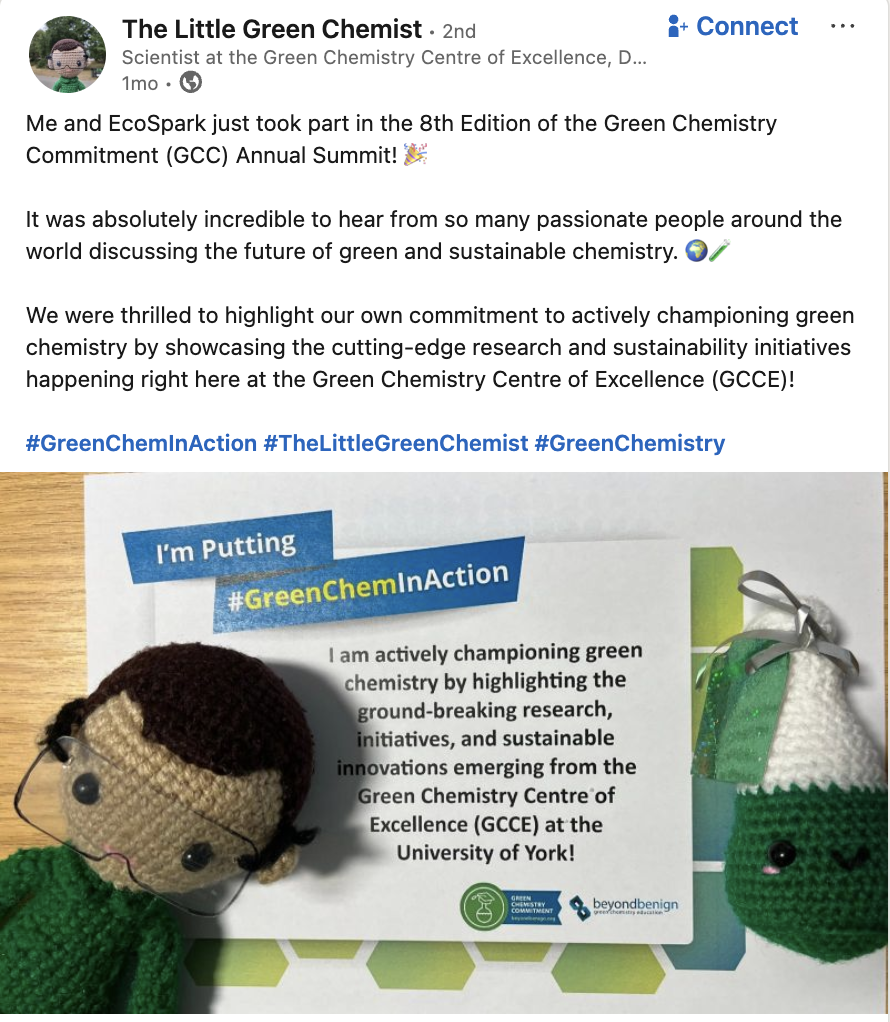
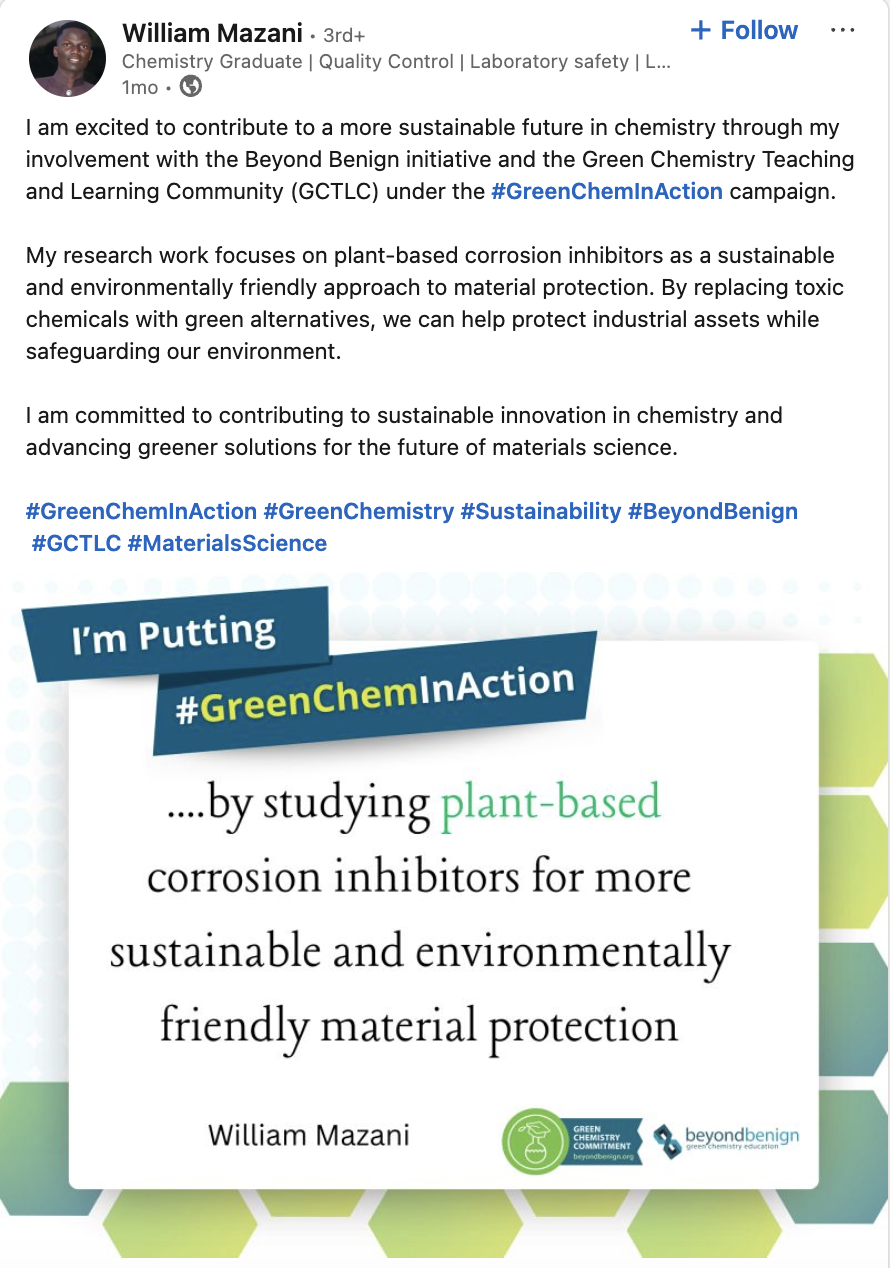
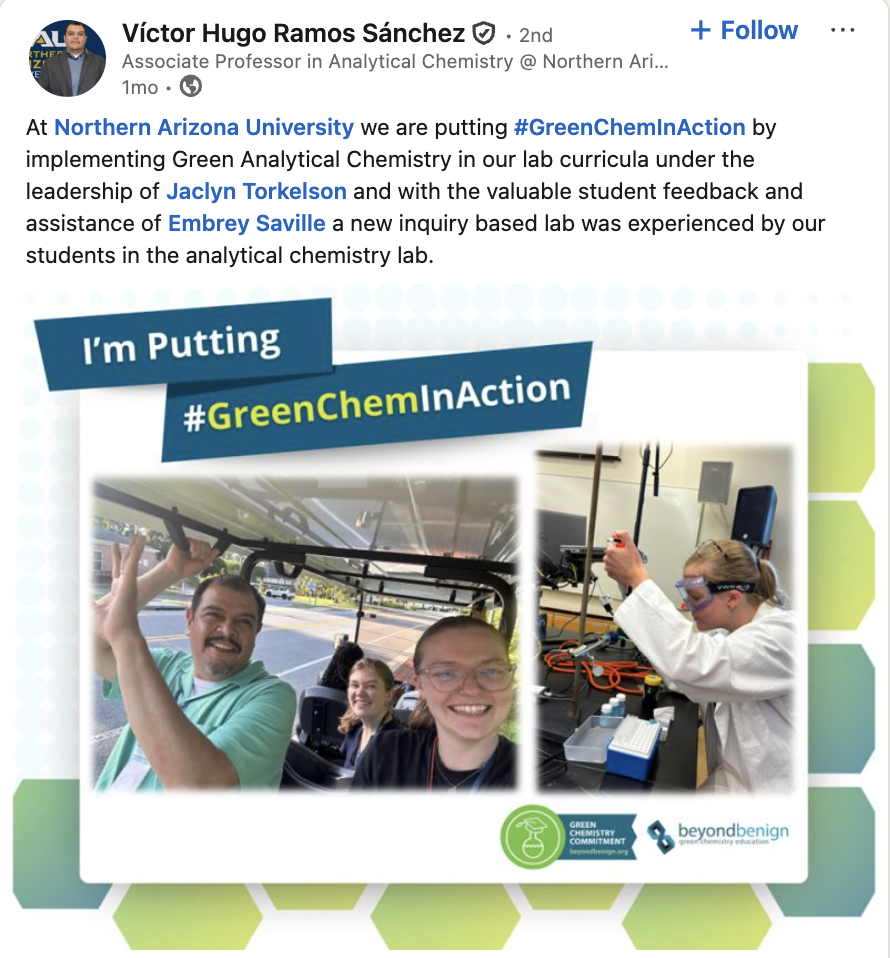
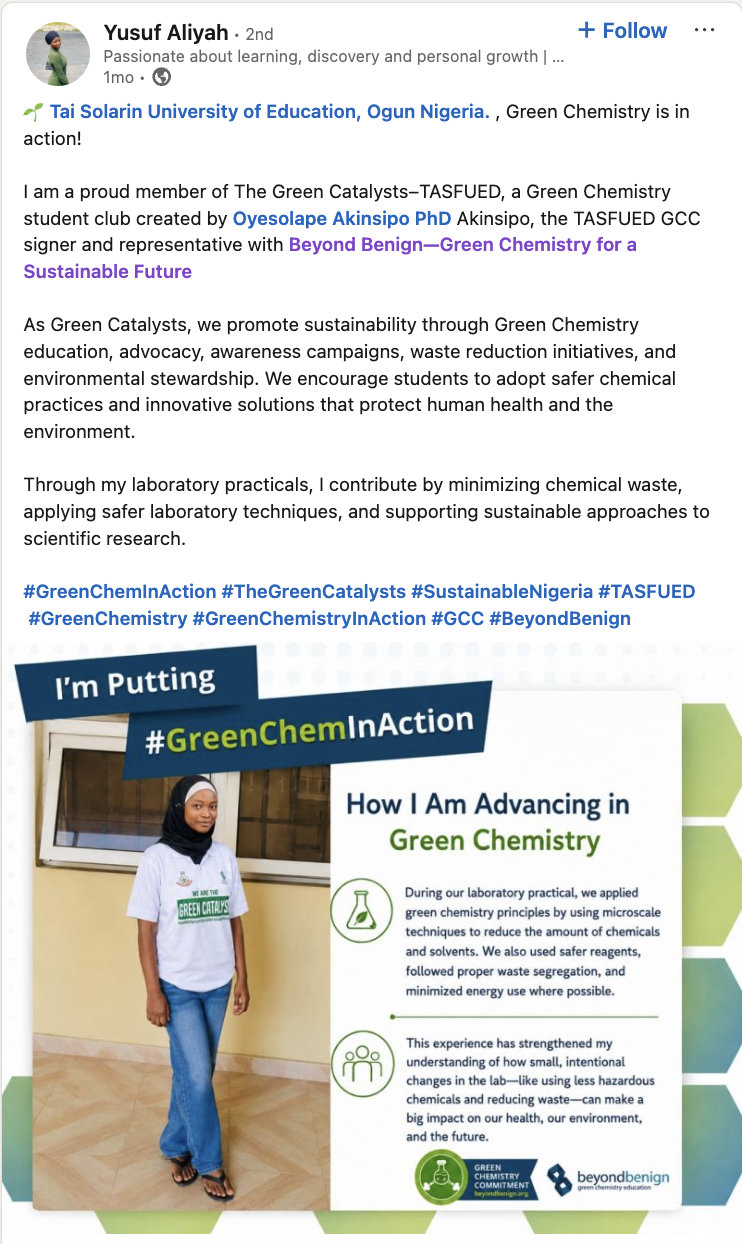
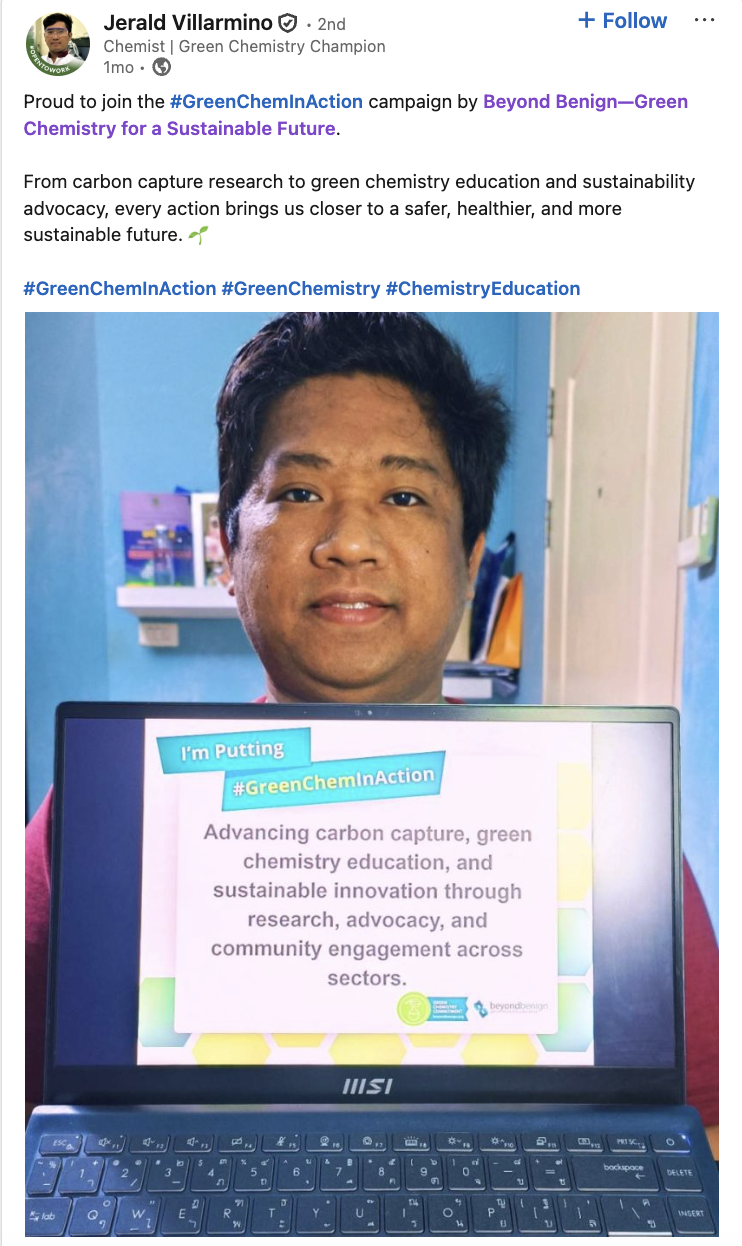
Launched alongside the 2026 GCC Summit, the #GreenChemInAction campaign invited members of the broader green chemistry community to share how they’re advancing change in classrooms, laboratories, institutions, companies, and communities around the world. Educators, researchers, students, and practitioners shared their work, offering a glimpse into the many ways green chemistry is being put into practice.
Together, these posts offer a snapshot of the creativity, collaboration, and commitment driving the global green chemistry movement.
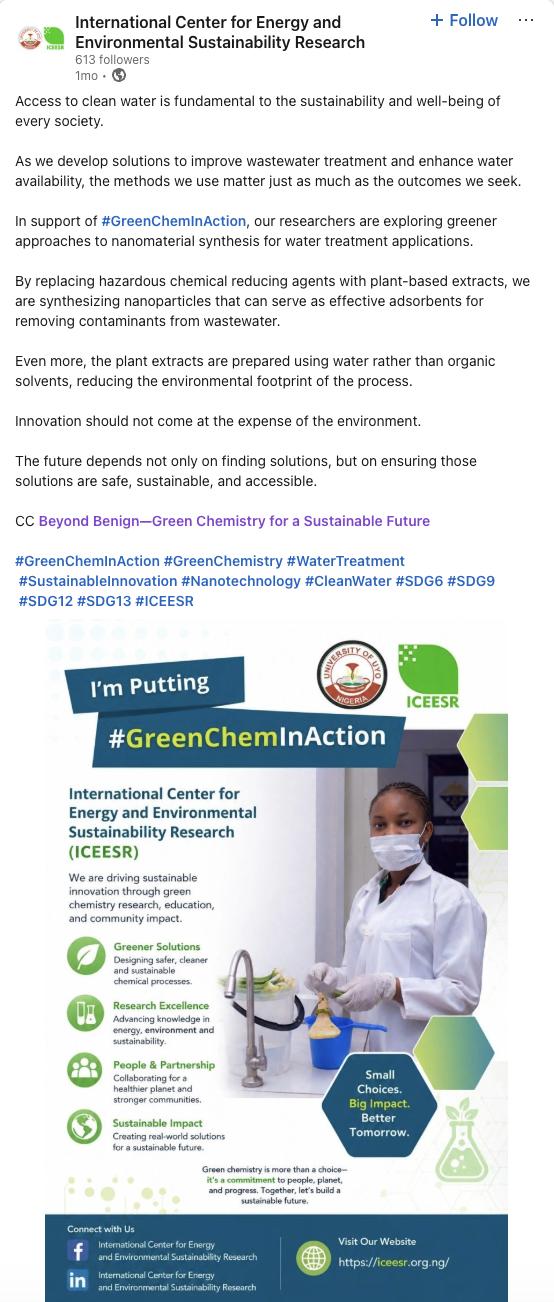
Use the arrows to move between posts. You can also swipe or scroll horizontally through the gallery.
Looking Ahead
The 2026 GCC Summit demonstrated how much momentum is building across the green chemistry education community—and how much becomes possible when educators, researchers, students, and industry leaders work together.
The conversations shared across the virtual and in-person gatherings made clear that scaling green chemistry will require continued collaboration, practical support, and a willingness to keep learning from one another. From redesigning individual laboratory activities to transforming entire curricula and institutions, every step contributes to a larger shift in how chemistry is taught and practiced.
Between Summit gatherings, the Green Chemistry Teaching and Learning Community (GCTLC) offers a year-round space for educators to continue those conversations, exchange resources, find collaborators, and learn from peers around the world. GCC signers can also access an expanding collection of professional development opportunities, teaching tools, and implementation support designed to help turn ideas into action.
For institutions ready to deepen their commitment, becoming a GCC signer provides a framework for advancing green chemistry education while joining a global network working toward the same goal.
The path from principles to practice will look different in every classroom, department, and region. But as the 2026 Summit affirmed, lasting change does not happen in isolation. It grows through shared knowledge, collective action, and a community committed to building a safer and more sustainable future through chemistry.


