












Sign up to receive quarterly newsletters and announcements.

social impact
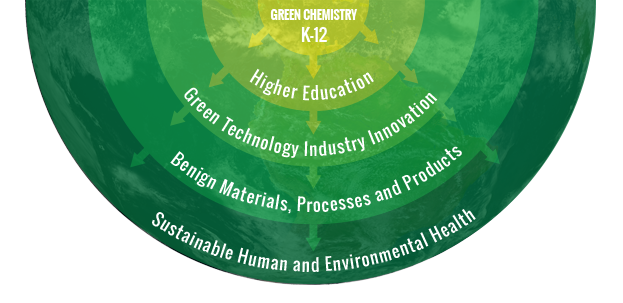
Green chemistry education is at the core of a sustainable future.
“We need to make green chemistry education a more generalized and broad component to the education of all chemists and scientists.”
–Dr. William Tolman, Dept. of Chemistry, University of Minnesota
“Teaching students the principles of green chemistry through the lens of sustainability is exciting and fulfilling.”
–Ann Lambert, King Philip High School
“There are many students who are now interested in the sciences because of us Fellows and that alone has made this experience worthwhile.”
–Stephanie Intriago, Simmons College graduate
what's new
From March 17-21, the Beyond Benign team was engaged in discussions, presentations, and networking sessions at the ACS Spring National Meeting in New Orleans, Louisiana, USA. Colleagues from all over […]
WILMINGTON, Mass., March 26 – Today, Dow (NYSE: DOW), a global leader in materials science, and Beyond Benign, a nonprofit organization focused on making green chemistry an integral part of education, announce an […]
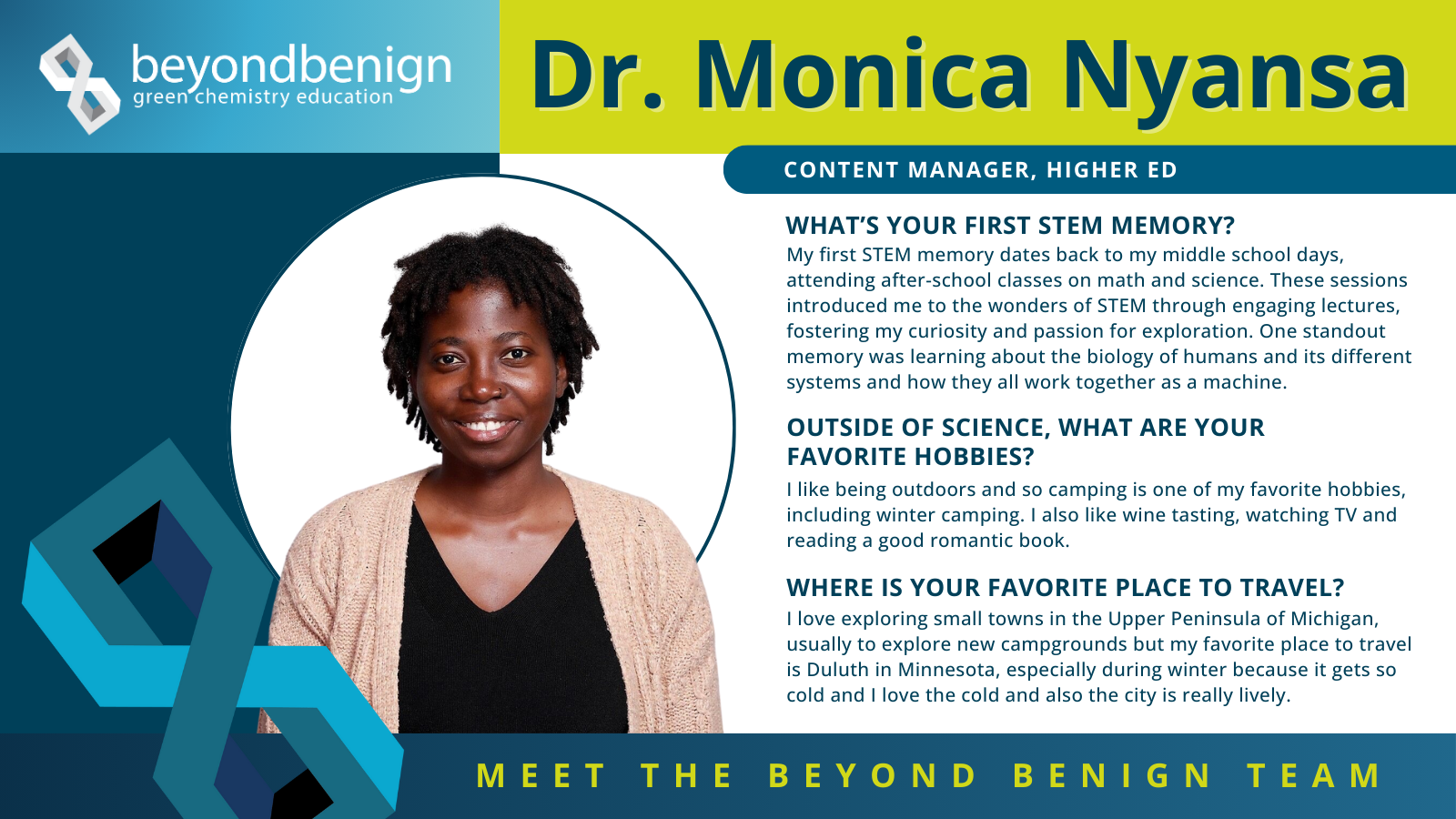
Meet Beyond Benign’s newest team member, Dr. Monica Nyansa! We are proud to welcome Monica to our team as the Content Manager of Beyond Benign’s Higher Education programming. After graduating […]
upcoming events
Observe, Wonder, Think: A Green Chemistry Interactive Webinar Series
April 18, 2024 @ 6:00 pm - 7:00 pmCalling all K-12 teachers! Create safer, more engaging learning environments by integrating green c...
Find out more »
Info Session: Green Chemistry Commitment
April 24, 2024 @ 12:00 pm - 1:00 pmEvent Description The Green Chemistry Commitment (GCC) is a framework to unite the Green Chemist...
Find out more »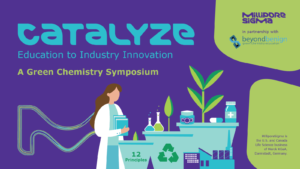
Catalyze: Education to Industry Innovation
April 25, 2024 @ 8:00 am - 6:00 pmBeyond Benign and MilliporeSigma are thrilled to invite you to ‘Catalyze: Education to Industr...
Find out more »
